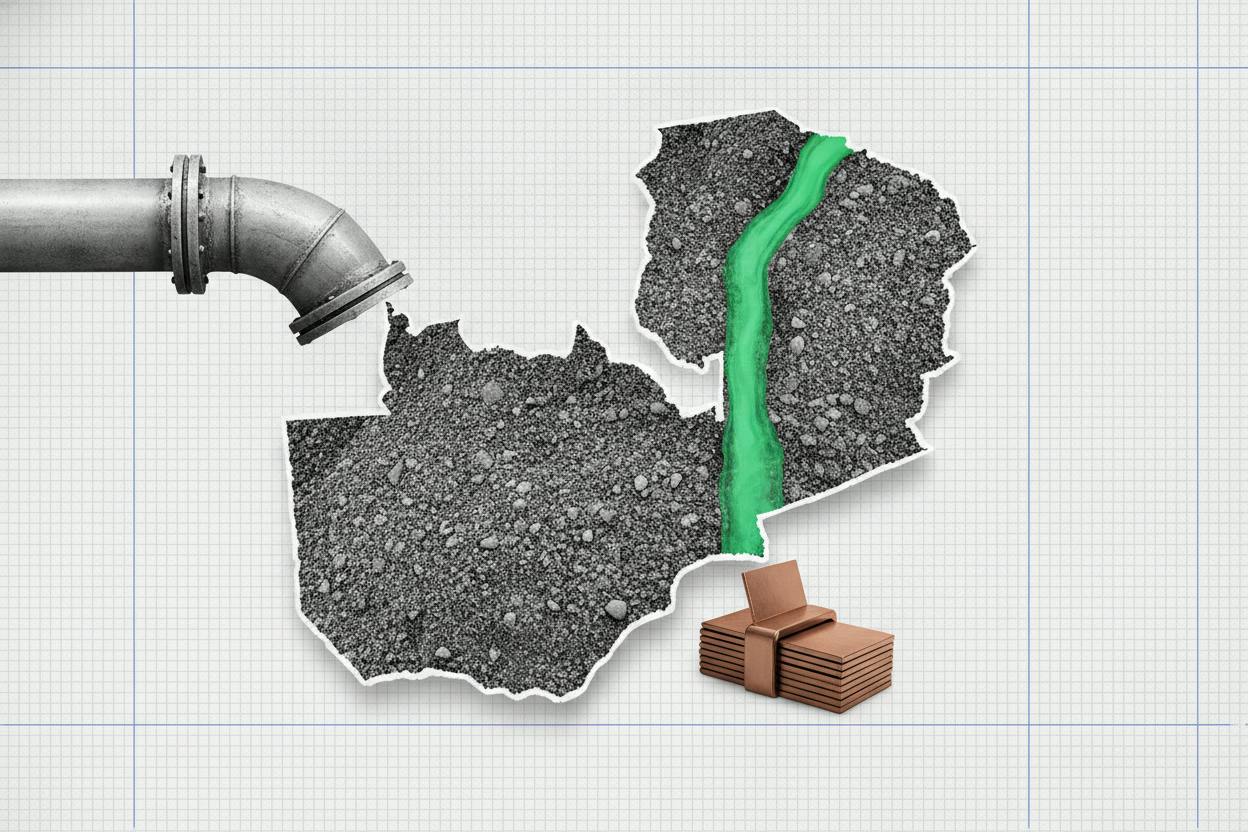
Zambia's Konkola Copper Mines (KCM), a subsidiary of India's Vedanta Resources, is moving forward with a $498 million investment to extract more copper from the waste left behind by decades of mining. The company has brought in China's NERIN Engineering to build a new processing plant in the town of Chingola, a project that could add roughly 70,000 metric tons of copper each year.
The plant will use a technique called leaching, which involves using chemicals to dissolve copper out of tailings — the crushed rock and slurry that remain after traditional mining has already pulled out the most accessible ore. For KCM, this is a way to boost production without the cost and risk of digging new open pits or sinking new shafts.
Why tailings are attractive
Tailings are often seen as a liability for mining companies — they need to be stored safely and can pose environmental risks. But they also contain valuable metals that older mining methods couldn't fully extract. Advances in processing technology have made it economically viable to go back and recover that leftover copper.
Because the material has already been mined and measured, companies know exactly what they're working with. That reduces the geological uncertainty that comes with exploring new deposits. For KCM, this means a more predictable path to higher output, which is a key part of Vedanta's strategy to turn around the Zambian operation.
The project also aligns with Zambia's national ambition to nearly double its copper production to 3 million tons by 2031. The country is one of Africa's largest copper producers, and the metal is central to its economy. Copper is used in everything from electrical wiring to electric vehicle batteries, and global demand is expected to keep rising as the world transitions to cleaner energy.
China's role in African mining
NERIN Engineering, the Chinese firm hired for the project, will handle engineering, procurement, and construction. It will also assist with commissioning and training local workers once the plant is built. This is part of a broader trend of Chinese companies playing a larger role in African mining and infrastructure projects.
China is also a major buyer of copper, and its economic health often influences global copper prices. Recent reports of Chinese buyers returning to the physical copper market have helped support prices, which is good news for producers like KCM. However, the broader market remains sensitive to shifts in China's economy, as seen in recent stock market moves tied to the Federal Reserve's interest rate decisions.
What it means for investors
For investors in Vedanta or in copper more broadly, this project is a signal that the company is serious about expanding its copper output in a cost-effective way. By focusing on tailings, KCM can increase production without taking on the high capital costs and risks of new mines. That could improve profit margins if copper prices stay strong.
However, there are risks. The $498 million price tag is significant, and there's always the chance of construction delays or cost overruns. The success of the leaching process also depends on the specific chemistry of the tailings at Chingola. If the process doesn't perform as expected, the projected 70,000-ton annual increase might not materialize.
For everyday investors, this story is a reminder that mining companies often have multiple ways to grow — not just by finding new deposits, but by getting more out of what they already have. It also highlights the growing importance of copper in the global economy, as demand for electric vehicles and renewable energy infrastructure continues to climb.
Zambia's push to boost copper output is part of a larger trend across the industry. Other producers are also looking to expand, though not all are succeeding. For example, Kazakhstan's copper output slipped 1.7% in the first eight months of the year, showing that even established producers face challenges. Meanwhile, exploration projects in Chile are still in early stages, meaning new supply could take years to come online.
In the near term, copper prices will likely remain a key driver for KCM's profitability. The company's ability to execute this project on time and on budget will be closely watched by investors who see copper as a long-term bet on electrification.