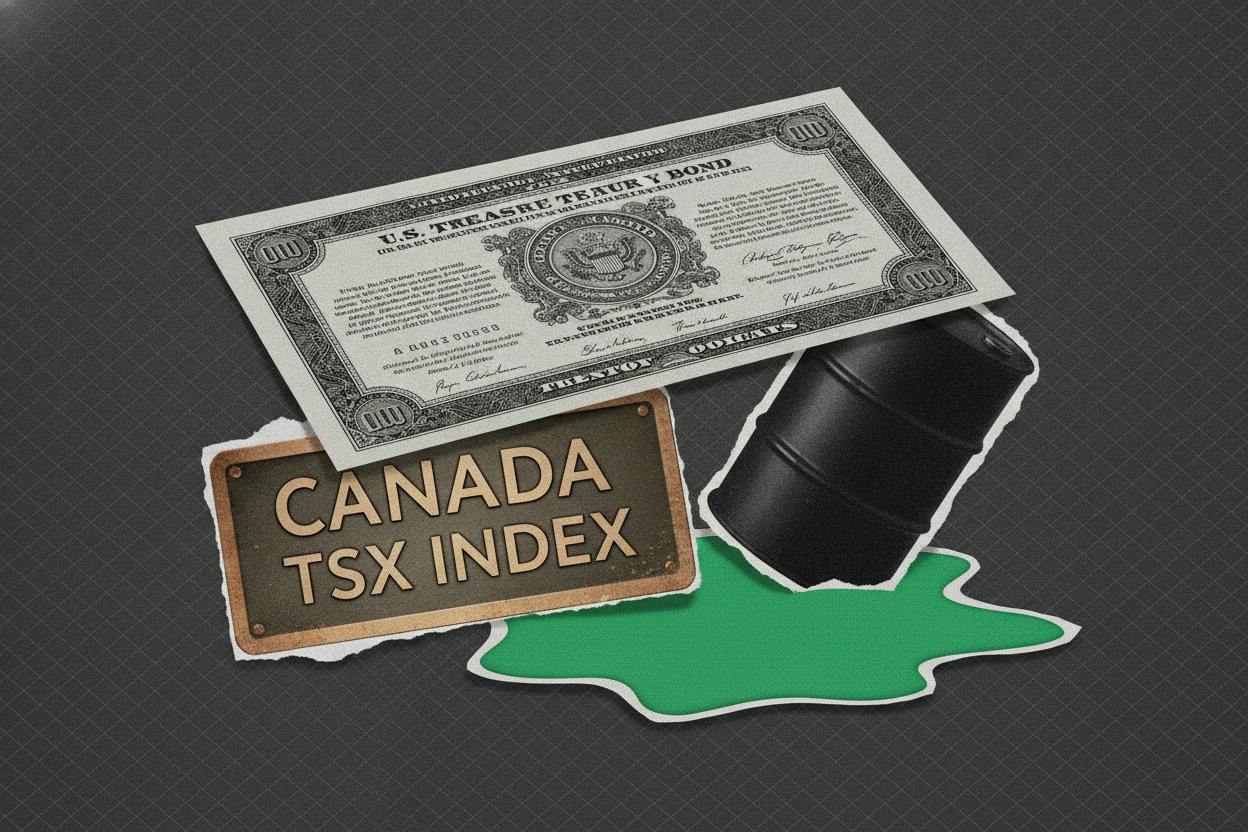
Canadian stock futures sank to their lowest level in three months on Thursday, as a fresh surge in US bond yields and a sharp jump in oil prices reignited fears that inflation will keep interest rates elevated for longer than investors had hoped.
December futures on the S&P/TSX Composite were down about 0.5% in early trading, after briefly touching their weakest point since early July, according to Reuters. The move puts Canada’s main stock index on track for another down day, extending a rough stretch for global equities.
Why yields are the main culprit
The biggest headwind is the global interest-rate backdrop. The US 10-year Treasury yield hovered near 5.3327%, a level not seen in years. That matters far beyond the bond market: higher yields raise borrowing costs for companies and consumers, and they also increase the “discount rate” that investors use to value future profits. When that rate goes up, the present value of a company’s future earnings falls, which puts downward pressure on stock prices today.
This dynamic has been playing out across markets worldwide. European shares slipped as bank stocks hit a three-month low on rising yields, and Hong Kong stocks slid 1.4% as oil and bond yields climbed. The same forces are squeezing Canadian equities, which are heavily weighted toward financials and energy—two sectors that are particularly sensitive to interest rates and commodity prices.
Oil adds a second inflation impulse
Oil prices added to the inflation worry. Crude climbed more than 3% on supply concerns, giving investors another reason to think price pressures are not going away quickly. Higher energy costs feed directly into consumer prices, from gasoline to heating bills, and they can push central banks to keep policy tight.
The combination of high bond yields and rising oil is a classic recipe for “stagflation” fears—slower growth alongside stubborn inflation. That is an uncomfortable mix for stock investors, because it leaves central banks with little room to cut rates even if the economy weakens.
Bank of Canada hike still on the table
Traders are still pricing in a chance that the Bank of Canada will raise its policy rate before the end of the year. The central bank has already hiked aggressively over the past two years to fight inflation, but if price pressures persist, another move is possible. That would further increase borrowing costs for Canadian households and businesses, and it would likely weigh on corporate earnings and stock valuations.
For everyday investors, the key takeaway is that the “higher for longer” narrative is back. When bond yields are this high, the risk-free return on government debt becomes more attractive relative to stocks, which can pull money out of equities. It also makes it more expensive for companies to finance growth, which can squeeze profit margins.
What it means for investors
For Canadian investors, the immediate impact is visible in their portfolios. The TSX’s heavy weighting in financials means that banks and insurers—which often benefit from higher interest rates on loans—could see some support, but they also face higher funding costs and the risk of a slowing economy. Energy stocks, meanwhile, are getting a boost from higher oil prices, but that could be offset by broader market weakness.
It’s important to remember that market moves like this are normal, even if they feel unsettling. A three-month low is not a crash, and futures trading can be volatile. What matters more is the trend: if yields keep climbing and oil stays elevated, the pressure on stocks could persist. If inflation data cools or central banks signal a pause, markets could quickly rebound.
Investors should also keep an eye on the global ripple effects of these moves. Asian markets have already felt the pain, with the Nikkei sliding again on US yields and shipping risks, and the KOSPI logging a second weekly loss as chip stocks and oil prices weighed. The interconnectedness of global markets means that what happens in Toronto is often tied to what’s happening in New York, London, and Tokyo.
For now, the message from the markets is clear: inflation is still the dominant force, and interest rates are likely to stay higher for longer. That’s a challenging environment for stocks, but it also creates opportunities for investors who are patient and diversified. As always, the best approach is to focus on long-term goals rather than short-term noise.