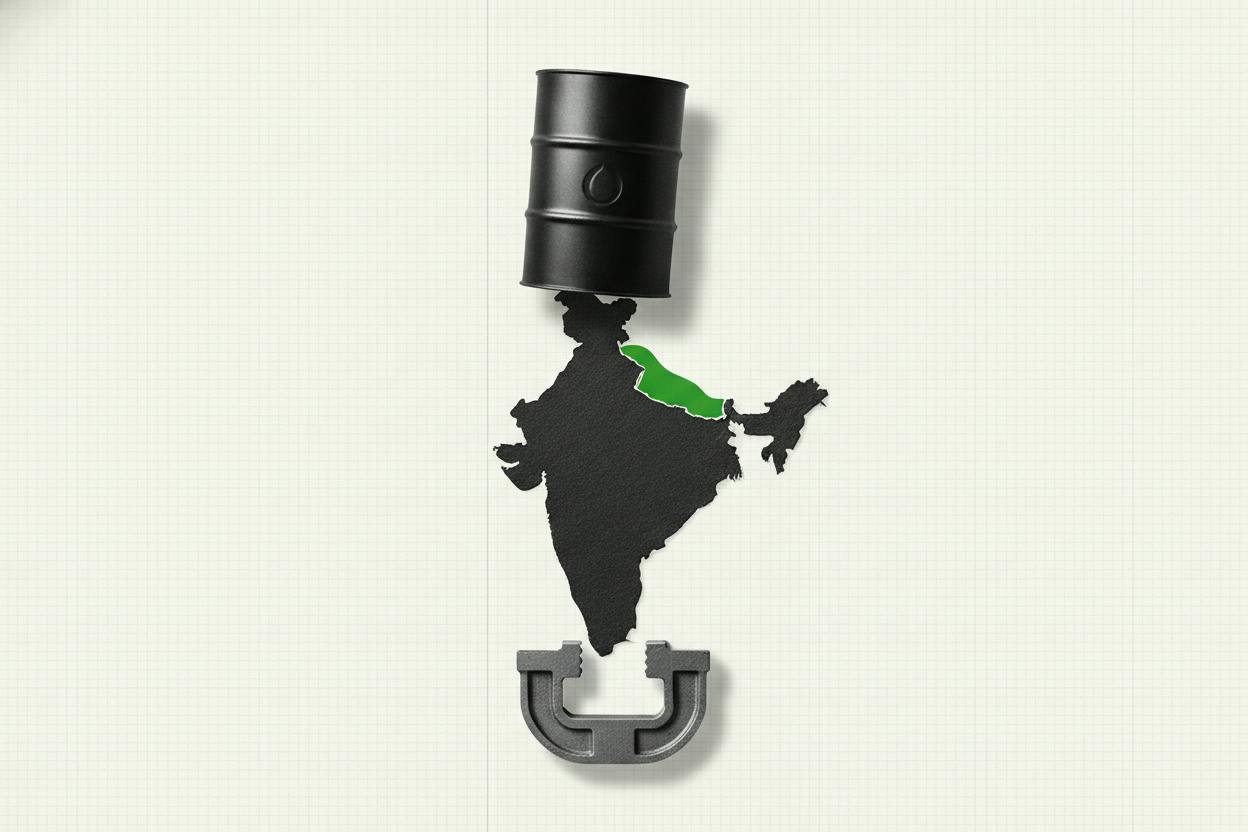
Indian stocks extended their slide this week, with the Sensex closing at a 32-month low as a combination of pricier oil, a weaker rupee, and the central bank's latest rate increase weighed on investor sentiment. The broader Nifty 50 index also logged its lowest close in 18 months, while small- and mid-cap shares fell even more sharply, signaling broad-based selling across the market.
What's driving the selloff?
The immediate trigger was energy: Brent crude jumped 4% to above $104 a barrel on renewed supply worries. For India, which imports most of its oil, a higher fuel bill is a direct economic headache. It can widen the trade deficit, pressure the rupee, and feed into what economists call "imported inflation" — the higher prices that come from a weaker currency and costlier imports.
That timing is awkward. Just a day earlier, the Reserve Bank of India (RBI) raised its key policy rate — the repo rate — by 0.25 percentage points to 5.5%. The central bank signaled it remains focused on cooling prices, even as growth expectations get rechecked. For investors, that means borrowing costs are likely to stay higher for longer, which can tighten credit conditions and slow economic activity.
The move also comes amid sustained foreign selling. Reuters noted that overseas investors have been pulling back from Indian equities, a trend that can amplify market declines. When currency risk and interest rates move against them, foreign funds often retreat faster than domestic players, reducing the pool of buyers just when markets try to stabilize.
Why oil and rates matter for India
India's reliance on imported oil makes it especially vulnerable to swings in crude prices. A larger energy bill can set off a chain reaction: it weighs on the rupee, which then makes all imported goods more expensive, feeding back into inflation. If inflation risks rise, the RBI has more reason to keep rates elevated, which usually tightens credit and raises the "discount rate" investors use to value future profits.
That combination tends to hit rate-sensitive areas first. Smaller companies, which often depend more on financing and steady liquidity, can feel the pinch more acutely than large-cap firms with stronger balance sheets. The sharper decline in small- and mid-cap stocks this week reflects that dynamic.
The pain isn't confined to India. Across Asia, emerging market stocks and currencies have slid as oil tops $104 and global bond yields rise. In Hong Kong, stocks fell 1.4% as oil and yields climbed, while South Korea's KOSPI logged a second weekly loss as chip stocks and oil prices weighed. The common thread: higher energy costs and tighter monetary policy are squeezing markets across the region.
What it means for investors
For everyday investors, the key takeaway is that India's market is facing a double squeeze. On one side, expensive oil threatens to push inflation higher and weaken the rupee. On the other, the RBI's rate hikes make borrowing costlier and reduce the appeal of riskier assets.
Even if major indexes look "oversold" by some technical measures, persistent foreign outflows can keep pressure on sentiment. Less offshore money often means fewer marginal buyers when markets try to bounce back. That doesn't mean a further drop is guaranteed, but it does suggest that volatility could remain elevated in the near term.
Investors should also watch how the RBI balances its inflation fight with growth concerns. If oil prices stay above $100, the central bank may feel compelled to keep rates higher for longer, which could weigh on corporate earnings and stock valuations. Conversely, any easing in crude prices or a pause in rate hikes could provide some relief.
For now, the message from the market is clear: in an import-heavy economy, the cost of energy and the path of interest rates are two forces that can quickly reshape the outlook for stocks. Keeping an eye on both — along with the direction of foreign flows — will be essential for anyone navigating Indian equities in the weeks ahead.