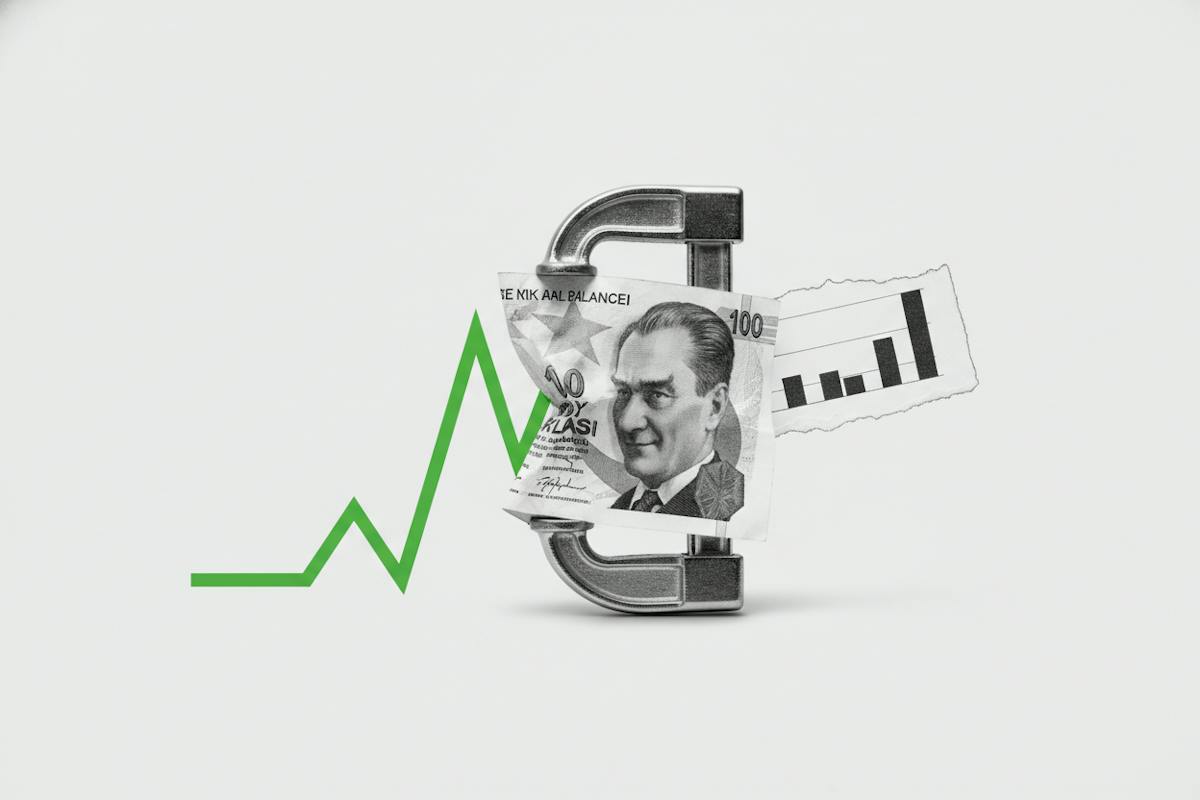
Turkey's central bank is tightening monetary policy through the back door, using operational tweaks rather than a headline rate hike to defend the lira. The Central Bank of the Republic of Turkey (CBRT) has paused its one-week repo auctions and raised the remuneration it pays on bank reserves, effectively pushing overnight interest rates closer to its 39% lending rate.
The moves are subtle but significant. By withholding the cheap, predictable funding that banks typically rely on, the CBRT forces them to borrow at higher overnight rates. That pressure is already visible in TLREF, Turkey's key overnight reference rate, which climbed to 37.87% from 35.95%, according to Reuters. The rate is now edging toward the central bank's 39% lending rate, a level that signals a de facto tightening even as the official policy rate remains at 36%.
Why the central bank is acting quietly
The CBRT has been under pressure to support the lira, which has slid against the dollar amid persistent inflation and investor concerns about the country's economic direction. A formal rate hike would be a blunt and politically sensitive tool, especially after the central bank spent heavily in recent months to prop up the currency. In fact, Turkey's central bank burned through $17 billion in reserves earlier this year as lira pressure mounted, a sign of how costly defending the currency can be.
By using administrative measures instead of a rate hike, the CBRT can tighten financial conditions without drawing as much attention or triggering market volatility. This approach is not new—central banks often use reserve requirements and auction operations to fine-tune liquidity—but it is notable for its timing and intensity.
The lira's weakness is also tied to broader concerns about Turkey's compliance with international investment standards. The country has been racing to meet MSCI upgrade rules as the lira slides, and any perceived policy misstep could hurt its chances of attracting foreign capital. A stronger lira would help, but the central bank's toolkit is limited.
What this means for investors
For everyday investors, the key takeaway is that Turkey's central bank is willing to tighten policy, but it is doing so in a way that avoids a formal rate hike. This could be seen as a positive sign—showing a commitment to fighting inflation and defending the currency—but it also carries risks.
Higher overnight rates make lira-denominated assets more attractive to foreign investors, which could support the currency. However, the measures also squeeze domestic banks, which may pass on higher funding costs to consumers and businesses through higher loan rates. That could slow economic growth, a trade-off the central bank seems willing to accept.
For those holding Turkish assets or considering them, the situation is fluid. The central bank's actions are a stopgap, not a permanent fix. Investors will be watching to see whether the CBRT eventually raises its official policy rate, and whether the lira can stabilize without further reserve depletion.
The broader context is also important. Turkey is not alone in facing currency pressure. Central banks globally are leaning hawkish as oil prices top $95, pressuring bonds and currencies in emerging markets. Turkey's inflation problem is more entrenched, but the global environment is making it harder for any central bank to ease.
What to watch next
Investors should monitor the TLREF rate and the gap between it and the policy rate. If the central bank continues to push overnight rates toward 39%, it may signal that a formal hike is on the table. Conversely, if it reverses course, the lira could come under renewed pressure.
Also watch for any statements from CBRT officials. The central bank has been tight-lipped about its operational changes, but any clarification could move markets. And keep an eye on Turkey's inflation data, which remains the ultimate test of whether these measures are working.
For now, the central bank is walking a tightrope: defending the lira without spooking markets or choking off growth. The quiet tightening is a delicate balancing act, and investors should stay alert to the next move.