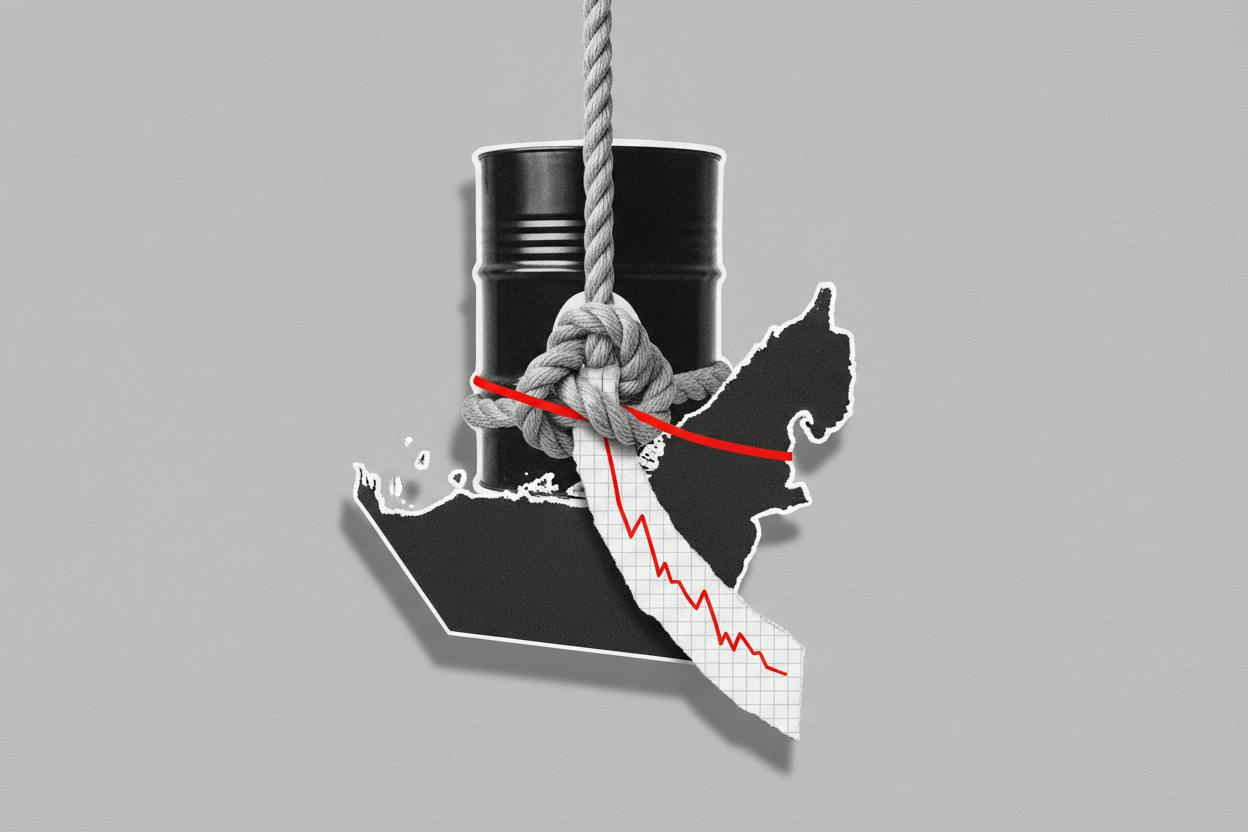
Stock markets in the United Arab Emirates slipped on [day], even as oil prices rebounded, as fresh friction between the US and Iran kept investors focused on regional risk. Abu Dhabi's FTSE ADX index closed down 0.614%, while Dubai's DFM index lost 0.416%. The declines came as Brent crude, the international benchmark, snapped a five-day losing streak to trade near $104.81 a barrel.
For everyday investors, the day's action is a useful reminder that higher oil doesn't always lift local stocks. When crude prices climb because of stronger demand—say, a booming global economy—energy-heavy markets like the UAE often benefit. But when the driver is geopolitical tension, the calculus changes: investors worry about supply disruptions, shipping disruptions, and broader instability, and that risk premium can weigh on equities even as oil rises.
Why oil and stocks moved in opposite directions
The recent rise in oil prices has been closely tied to tensions in the Middle East, particularly between the US and Iran. Any escalation raises the possibility of supply disruptions in a region that pumps a significant share of the world's crude. That fear pushes oil prices up, but it also makes investors nervous about the stability of the region itself—and that nervousness tends to hit local stock markets.
In this case, the UAE indexes fell even as Brent climbed. That divergence is a classic sign that the market is pricing in risk rather than optimism. When oil rises on demand, energy companies and related sectors often rally, pulling the broader index higher. When it rises on fear, the opposite can happen: investors sell stocks and move to safer assets, or simply take profits after a run-up.
The UAE's two main exchanges are heavily weighted toward financials, real estate, and other sectors that are sensitive to economic sentiment. A geopolitical shock can hurt those sectors even if energy producers benefit. That's why a single day's move can look counterintuitive to someone who assumes oil and Gulf stocks always move together.
What this means for your portfolio
For investors with exposure to UAE equities—whether through direct holdings, mutual funds, or exchange-traded funds—the key takeaway is to watch the driver behind oil price moves, not just the price itself. If crude is climbing because of strong global growth, that's generally a positive for the region. If it's climbing because of conflict or the threat of supply cuts, the effect on local stocks is less clear-cut.
It's also worth remembering that oil prices remain elevated by historical standards. Brent near $104 a barrel is well above the levels seen in much of the past decade, and that has implications for inflation and central bank policy worldwide. Higher energy costs feed into consumer prices, which can prompt central banks to keep interest rates higher for longer—a headwind for stocks everywhere, not just in the Gulf. As we've noted, stocks are bracing for a familiar Fed hike hangover as rates climb, and that dynamic is playing out across global markets.
For UAE investors, the local market's performance is also tied to global sentiment. When US or European markets wobble, Gulf indexes often follow, even if the local economy is fundamentally sound. That's why a geopolitical headline can ripple through portfolios far beyond the region.
What to watch next
Investors will be keeping an eye on several things in the coming days. First, any further news on US-Iran relations could move oil and stocks sharply. Second, oil inventory data and production decisions from major exporters will signal whether supply is tightening or loosening. Third, global central bank moves—especially the Federal Reserve—will continue to influence risk appetite.
In the meantime, the UAE market's dip is a reminder that even in an oil-rich region, geopolitics can cut both ways. For those with a long-term horizon, such volatility is normal, but it underscores the importance of diversification. As always, it's wise to consult a financial advisor to see how these moves fit into your own goals and risk tolerance.
For broader context, European stocks also dipped as oil topped $100 and US yields hit a 2007 high, showing that the oil-price surge is a global story. And India stocks slid as oil neared $102, another example of how rising crude can pressure markets that depend on energy imports.
Ultimately, the UAE's slip on this day is a snapshot of a market caught between the benefits of high oil prices and the costs of regional uncertainty. For investors, the lesson is to look beyond the headline number and understand what's really driving the move.