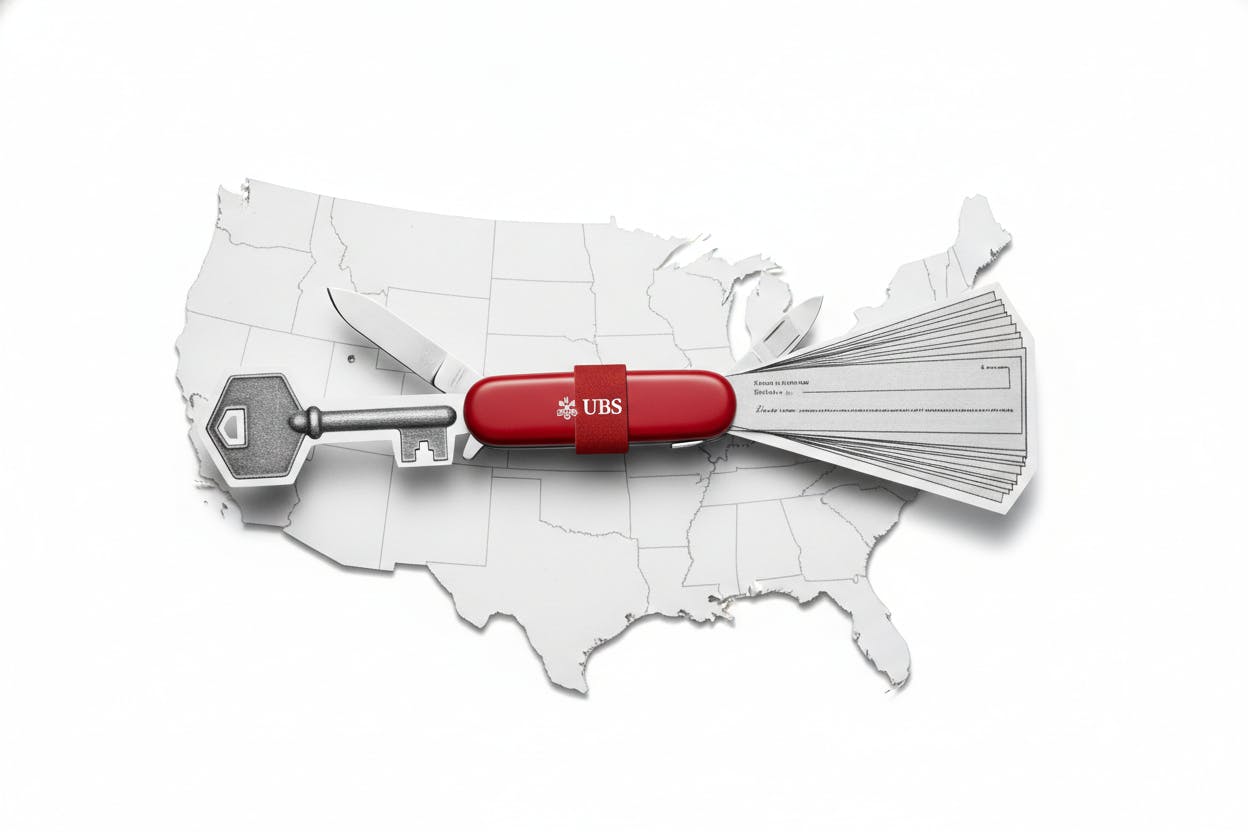
UBS, Switzerland's largest bank, is moving beyond its traditional wealth management role in the United States. The bank plans to launch a full-service US bank that would offer everyday banking services like checking accounts, bill payment, and cash savings to wealthy clients, according to a report from the Financial Times.
What UBS Is Planning
UBS already manages money for many wealthy Americans through its wealth management division. But the new initiative would add basic banking services that the bank currently does not offer directly in the US. A staff trial is scheduled for December, where UBS employees will test the new banking products and pricing. The bank aims to roll out the services to clients by mid-2027.
The target market is households with between $2 million and $10 million in investable assets. This group is large enough to be profitable for the bank but often falls outside the ultra-exclusive services reserved for the very richest clients. By offering both investment management and everyday banking, UBS hopes to deepen its relationships with these clients and capture more of their financial business.
Why This Matters for Investors
For investors, this move signals UBS's ambition to become a more comprehensive financial partner for wealthy Americans. The bank already has a strong foothold in US wealth management, but adding banking services could increase client loyalty and generate more stable fee income from deposits and transaction accounts.
The strategy also reflects a broader trend among global banks. Many are trying to offer a full range of services—from checking accounts to investment advice—to capture more of a client's financial life. This approach can reduce the risk that clients move their money to competitors for different needs.
UBS's focus on the $2 million to $10 million segment is notable. This group is often underserved by traditional private banks, which tend to cater to clients with $25 million or more. At the same time, mass-market banks may not offer the personalized service these households expect. UBS is betting that a tailored offering can fill this gap.
Broader Context
The US banking market is highly competitive, with established players like JPMorgan Chase, Bank of America, and Wells Fargo dominating retail and wealth management. However, UBS's strength lies in its global reach and expertise in managing large portfolios. By adding everyday banking, the bank can offer a more seamless experience for clients who want both investment advice and a place to park their cash.
The employee trial in December will be a key test. UBS will use feedback from staff to refine pricing, features, and the user experience before opening the services to external clients. This cautious approach is typical for large financial institutions rolling out new products.
UBS's expansion comes as the broader banking sector faces headwinds from interest rate changes and economic uncertainty. In Switzerland, for example, Swiss shares have slipped recently as manufacturing cools and geopolitical tensions rise. A more diversified US banking business could help UBS offset some of these regional risks.
What to Watch Next
Investors should watch for updates from the December employee trial. If the pilot goes well, UBS may accelerate its timeline or expand the range of services offered. The bank's ability to attract deposits and compete on pricing will be critical, especially if interest rates remain elevated.
Another factor is regulatory approval. Offering banking services in the US requires compliance with state and federal banking laws. UBS already operates in the US, so it has some infrastructure in place, but adding new products may require additional approvals.
For everyday investors, this story is a reminder that large financial institutions are constantly evolving to capture more business. While UBS's move is unlikely to directly affect most retail investors, it shows how banks are competing for the wallets of wealthy clients—a segment that often influences broader market trends.
UBS's plan also highlights the importance of the US market for global banks. Despite challenges like trade tensions and regulatory complexity, the US remains the world's largest and most profitable banking market. Other international banks may follow UBS's lead if this initiative proves successful.