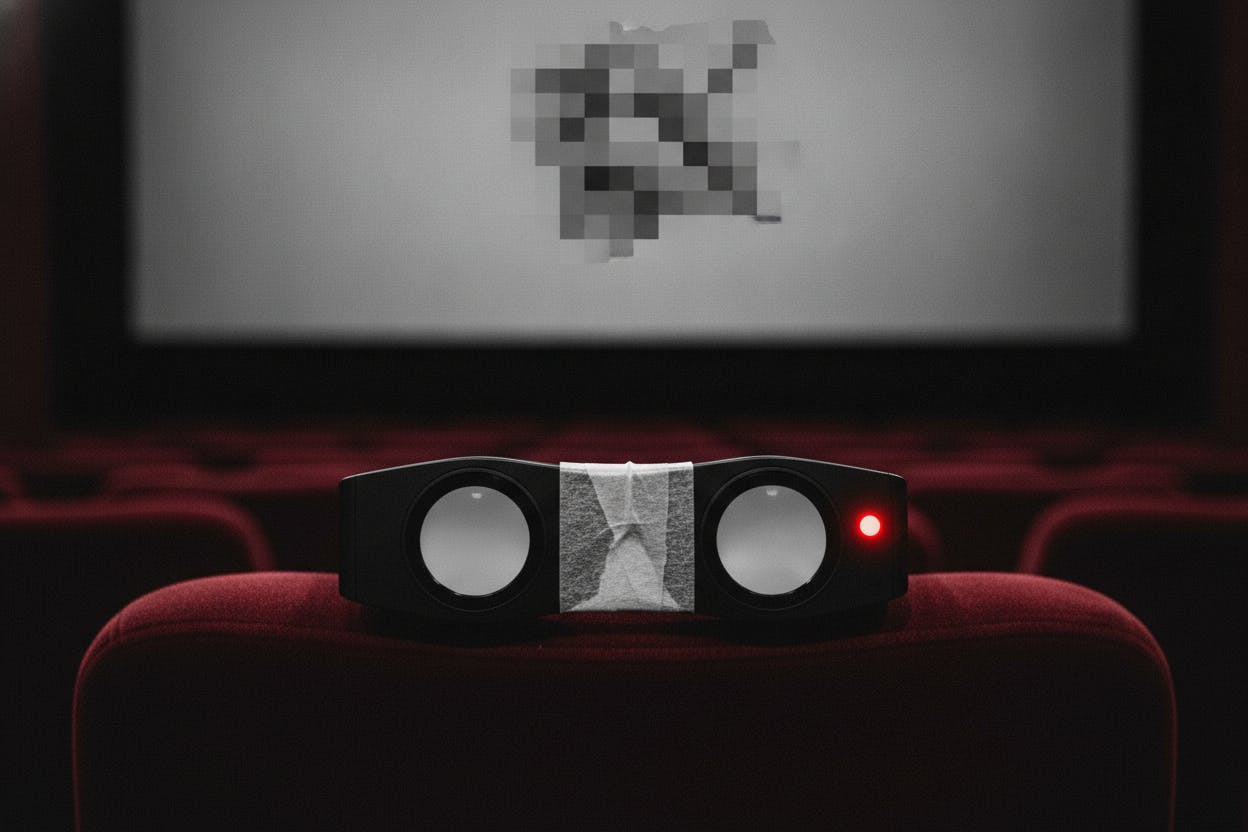
UK cinema operators are starting to tell moviegoers to leave their camera-enabled smart glasses at home. The UK Cinema Association, an industry group representing many of the country's theater chains, said Thursday that a growing number of operators are introducing policies that prohibit or restrict these wearable devices.
The move targets products like Meta Platforms' Ray-Ban smart glasses, which pack cameras and microphones into a familiar eyewear frame. While the glasses are popular for capturing everyday moments, they raise a specific set of problems inside a darkened theater.
Why cinemas are cracking down
For cinema operators, the concerns are twofold. The first is privacy. Moviegoers generally expect not to be recorded while watching a film, and the presence of a camera on someone's face can make others uncomfortable. The second, and arguably more pressing, issue is film piracy. A high-quality recording taken with a pair of smart glasses could be uploaded online, undercutting the box-office revenue that studios and theater chains depend on.
Piracy has long been a headache for the film industry. Even a single leaked copy of a new release can spread quickly across the internet, potentially costing millions in lost ticket sales. Camera-enabled wearables make it easier than ever for someone to capture a film discreetly, which is why operators are moving to restrict them before they become a widespread problem.
The UK Cinema Association's announcement suggests this is not a single chain's decision but a broader industry trend. The group said "many" operators are rolling out the new rules, though it did not specify which companies or how the restrictions would be enforced.
Meta pushes back on accessibility grounds
Meta, which has been one of the biggest backers of smart glasses, argues that the restrictions could hurt people with low vision. The company's glasses include features designed to assist users with visual impairments, such as reading text aloud or identifying objects. For some users, these tools are not a luxury but a daily necessity.
Meta's argument highlights a tension between security and accessibility. Cinemas want to protect their content and their customers' privacy, but they also don't want to exclude people who rely on assistive technology. The company has previously faced similar debates over privacy concerns with its AI glasses, including tests of models that could record without a visible indicator.
The outcome of this dispute could set a precedent for how other venues—from concerts to sports arenas—handle camera-enabled wearables. It also comes at a time when the broader smart-glasses market is still finding its footing. While Meta has sold millions of its Ray-Ban models, the category has yet to become a mainstream necessity for most consumers.
What it means for investors
For investors, the news is a reminder that hardware products can face unexpected regulatory and social hurdles. Smart glasses are a key part of Meta's long-term bet on wearable technology and the metaverse, but restrictions like these could slow adoption in certain settings. That said, cinemas represent a relatively small slice of where people might wear such devices, so the direct financial impact on Meta is likely limited for now.
The bigger picture is about the growth trajectory of smart glasses as a category. Analysts have been watching whether devices like Meta's Ray-Bans can move beyond early adopters and into the mainstream. Any friction—whether from privacy rules, battery life, or social awkwardness—can affect that trajectory. A recent note from RBC Capital Markets trimmed its growth forecast for EssilorLuxottica, the eyewear giant that partners with Meta on Ray-Ban glasses, after an AI smartglasses miss. That suggests the market is still sensitive to how quickly these products catch on.
For investors in cinema chains, the restrictions are unlikely to move the needle much on their own. But they reflect a broader industry focus on protecting the theatrical experience, which remains a key revenue source for studios and exhibitors. The smartest AI model may not always be the best investment, and similarly, the most feature-packed gadget may not always win if it clashes with real-world rules.
For everyday investors, the takeaway is to keep an eye on how regulatory and social factors shape the adoption of new technology. A product can be innovative and still face headwinds. The smart-glasses story is still being written, and this week's news from the UK is one more chapter.