United Parcel Service (UPS) on Tuesday raised its 2026 revenue forecast, signaling that a deliberate pullback from lower-margin Amazon deliveries is starting to pay off. The world's largest parcel delivery company now expects about $92.6 billion in revenue for 2026, up from the $91.2 billion it projected in July. Adjusted earnings per share are seen at roughly $7.28, compared with the earlier estimate of $7.22.
The updated guidance came alongside a quarterly report that showed softer profits. Adjusted earnings slipped to $1.69 per share from $1.74 a year earlier. That dip reflects the costs of restructuring and the ongoing shift in what UPS carries and how it carries it.
A strategy of fewer, better packages
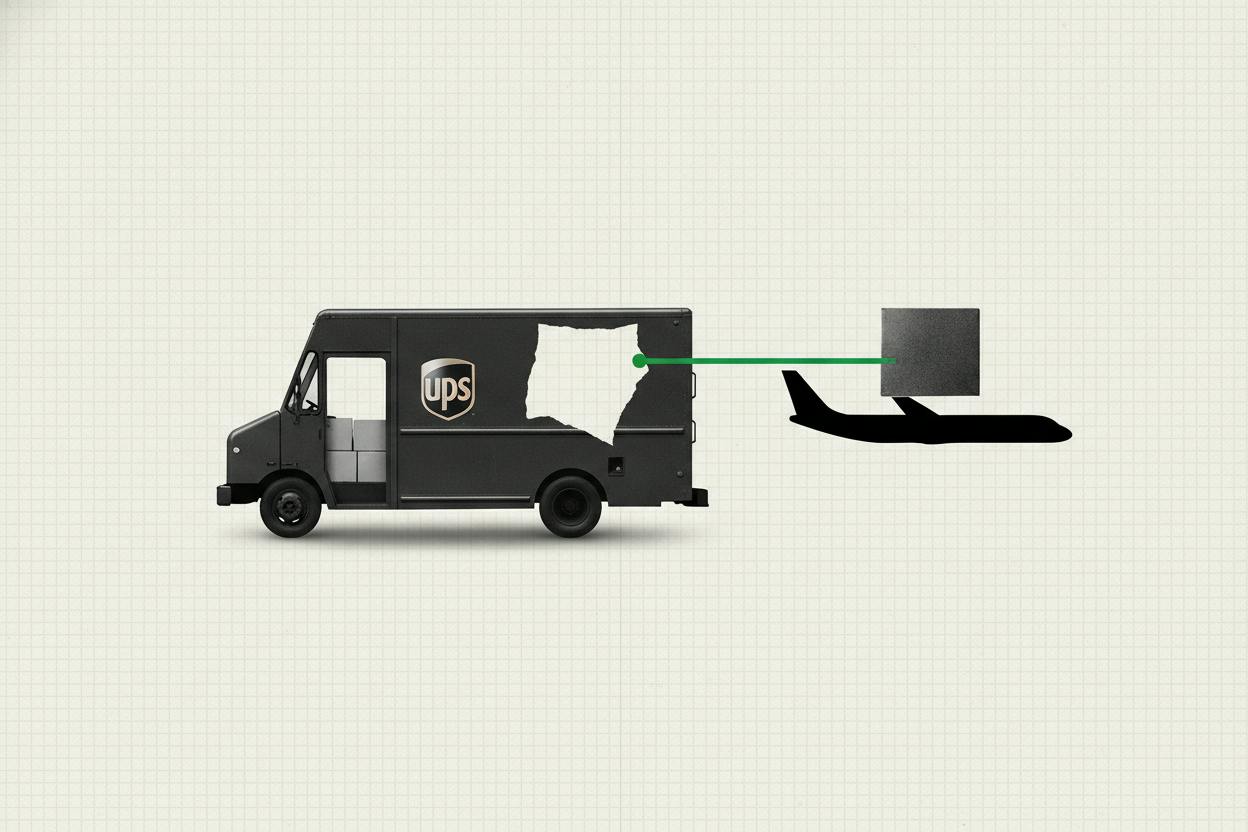
UPS has been publicly reducing its reliance on Amazon, which historically accounted for a large share of its volume but at thin margins. By cutting back on millions of those deliveries, UPS is freeing up capacity in its network. At the same time, it is pushing harder into higher-margin international air shipments, where customers pay a premium for speed and reliability.
This is a classic mix-shift strategy. Delivery networks carry heavy fixed costs—planes, trucks, sorting hubs, and labor. When a company can fill those assets with more profitable shipments, each package contributes more to the bottom line. The goal is not to move the most boxes, but to move the most profitable ones.
Management has also committed to a $3 billion cost-cutting program, which includes closing facilities and reducing headcount. Combined with the revenue mix change, UPS is betting that a leaner operation focused on higher-yield routes will boost earnings more than chasing maximum volume ever could.
Why UPS matters to the broader economy
UPS is often viewed as a bellwether for economic activity. When businesses and consumers are shipping more, it suggests commerce is humming. When volumes fall, it can signal softening demand. But the company's latest moves complicate that simple reading. A decline in total volume may not mean the economy is weakening—it could just mean UPS is choosing to carry fewer low-paying packages.
That distinction is important for investors. The market's scorecard for UPS is shifting from raw shipment numbers to margin performance and cost execution. The company is effectively telling investors: watch how much profit we squeeze out of each delivery, not just how many deliveries we make.
What it means for investors
For shareholders, the raised 2026 outlook is a vote of confidence in the strategy. But it also raises the stakes. If UPS can execute on its cost cuts and keep its planes and trucks focused on premium routes, each remaining shipment should generate more profit. If the economy slows or international air demand falters, the company could find itself with less volume and higher fixed costs per package.
Investors will likely be watching rival FedEx, which reports earnings on Wednesday. FedEx has also been talking up a push toward higher-value shipping, and analysts expect to see a similar pattern of margin improvement over volume growth. A strong showing from FedEx would reinforce the idea that the parcel industry is entering a phase where profitability matters more than package counts.
For everyday investors, the takeaway is that UPS is making a strategic bet on quality over quantity. That can be a smart move in a mature industry, but it carries execution risk. The company's ability to hit its 2026 targets will depend on how well it manages the transition and whether demand for premium shipping holds up.
In the meantime, UPS's outlook offers a glimpse into how a major logistics player is adapting to a changing retail environment—one where e-commerce growth has slowed and carriers are competing on service rather than sheer volume.