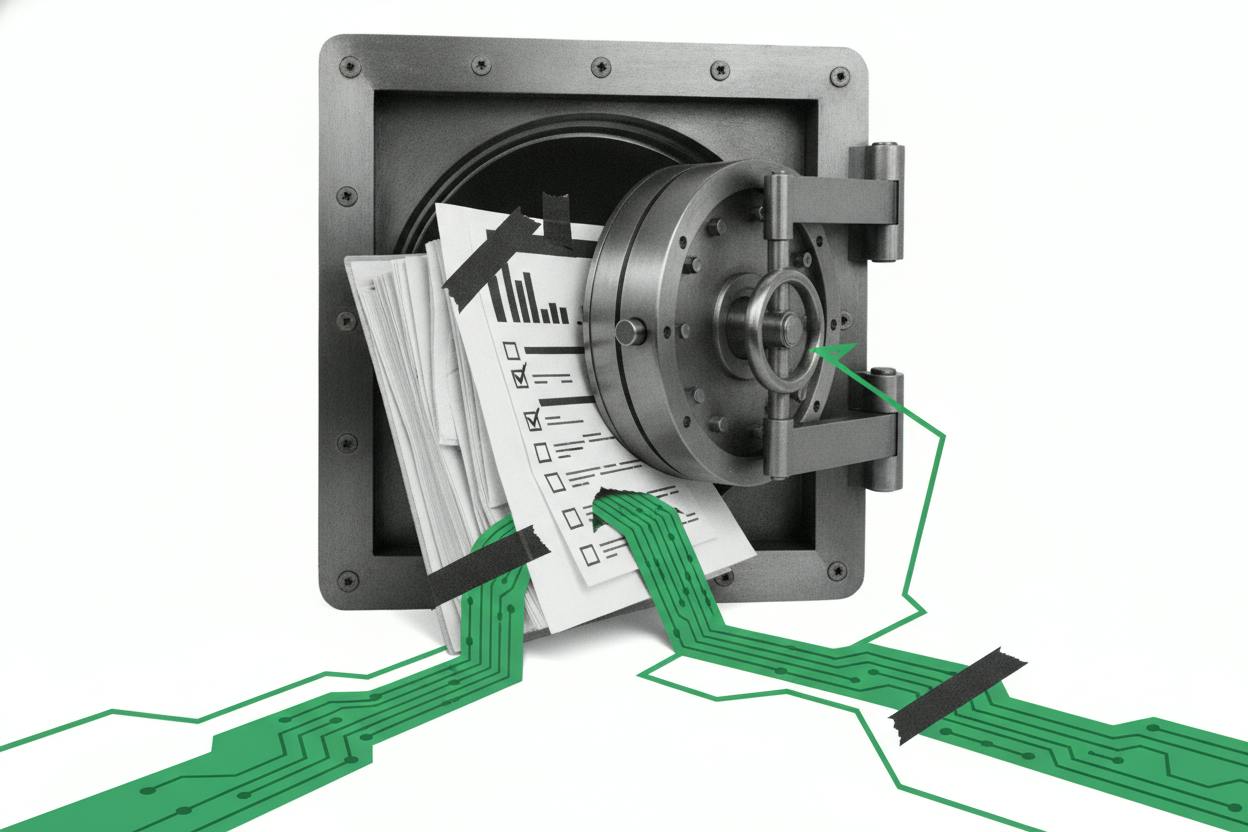
Bank regulators on both sides of the Atlantic are turning their attention to artificial intelligence, and the message is clear: AI is no longer just an innovation project—it's a safety concern. According to Reuters, US supervisors are questioning banks about where they use advanced AI models and what could go wrong, while the European Central Bank (ECB) has set an end-of-October deadline for lenders to submit plans for handling AI-driven cyber threats.
The Federal Reserve, the Office of the Comptroller of the Currency (OCC), and the Federal Deposit Insurance Corporation (FDIC) are all involved in the US push. They're asking banks to identify where AI is deployed, from customer service chatbots to credit underwriting and fraud detection, and to spell out the potential failure points. That includes AI-enabled cyberattacks, where malicious actors use AI to craft more convincing phishing emails or find vulnerabilities faster, as well as systems that behave unexpectedly—producing biased decisions, hallucinated outputs, or simply failing in ways that are hard to predict.
Regulators are also focusing on third-party risk. Many banks don't build their own AI models; they buy or rent them from vendors. The regulators want to ensure that even if a model comes from outside, the bank retains clear oversight, testing, and accountability. In other words, you can't outsource the responsibility.
Europe's deadline and the 'prove it works' shift
Across the Atlantic, the ECB is taking a slightly different but complementary approach. It wants banks to demonstrate how they would keep operating and recover if an AI-linked cyber incident hit. That means having backups, restore procedures, and a clear plan for getting back to normal. The end-of-October deadline turns this from a suggestion into a compliance requirement.
This is part of a broader trend. Regulators have long stress-tested banks for financial shocks—like a sudden rise in loan defaults or a market crash. Now they're applying the same logic to technology. AI is moving out of the innovation sandbox and into the same 'prove it works under stress' rulebook that applies to other critical bank systems, such as payment processing or core deposit systems.
For banks, this is a significant shift. In the past, AI projects could be piloted in a corner of the bank with relatively little oversight. Now, supervisors want evidence, not demos. That means banks have to add layers of documentation, validation, monitoring, and sign-offs before a tool can go into production. It's a more rigorous, and more expensive, process.
What it means for investors
For investors, the immediate impact is likely to be on bank costs. When supervisors demand evidence, banks have to hire compliance staff, run more audits, and conduct more testing cycles. That tends to raise non-interest expense in the near term. It can also slow down the rollout of AI tools, because decisions get pushed up to centralized risk and technology committees. The promised efficiency gains from AI—like faster loan processing or cheaper customer service—may take longer to show up on the bottom line.
Cost-to-income ratios, a key metric for bank profitability, could look a bit worse before they get better. That's a risk for investors who have been banking on AI to boost margins. But there's a positive side too: banks that manage this transition well could build a competitive advantage. Those that can demonstrate robust AI governance may find it easier to get regulatory approval for new products, and they may be less exposed to costly failures or fines.
The regulatory focus also highlights the growing importance of AI in the financial system. As AI safety testing gains momentum in other sectors, banks are being pulled into the same orbit. For investors, it's worth watching how banks talk about AI in their earnings calls. If they start mentioning 'AI governance' and 'model risk management' more often, that's a sign they're taking the regulatory pressure seriously.
The news comes as big banks have mostly beaten earnings, but with some cautionary notes. JPMorgan's miss, for example, highlighted that even the biggest players aren't immune to cost pressures. The new AI compliance burden could add to those pressures in the coming quarters.
For everyday investors, the takeaway is simple: AI in banking is not just about cool features or faster apps. It's becoming a regulated, scrutinized part of the financial system. That means banks will spend more money on compliance, and the benefits of AI may come more slowly than some hoped. But it also means the AI systems that do get deployed will be more reliable and safer—which is ultimately good for the stability of the financial system.
As the ECB's deadline approaches, expect more headlines about banks scrambling to meet the requirements. And in the US, the questioning from the Fed, OCC, and FDIC is likely to continue, with more formal guidance possibly on the way. For investors, the key is to watch how banks manage this new regulatory reality—and whether they can turn compliance into a competitive edge rather than just a cost.