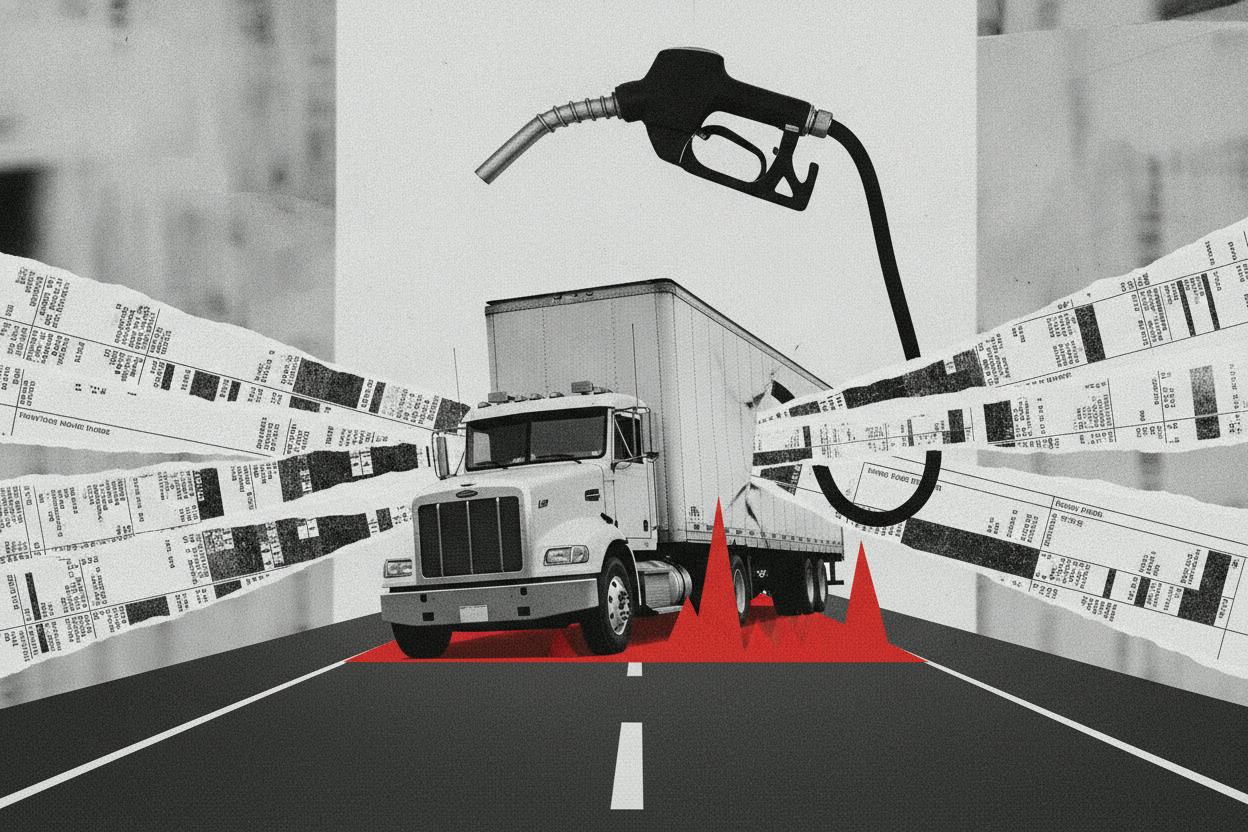
US shippers faced their steepest freight bills in years during the third quarter, even though the actual number of shipments barely budged. According to US Bank's Freight Payment Index, shipper spending jumped 32.1% year over year, while shipment volumes rose just 0.5%. That wide gap is a clear sign that the cost of moving each load—not a surge in demand—is what's driving the increase.
The index, which tracks freight payments processed by US Bank, is a widely watched gauge of trucking activity. When spending rises much faster than volumes, it typically means carriers are charging more per shipment. That's exactly what happened in the July-to-September period.
Why freight costs are climbing
Two main forces are at work. First, diesel prices. With the national average topping $6 a gallon, fuel has become one of the biggest expenses for trucking companies. Since fuel is a major input, higher diesel costs quickly translate into higher rates for shippers.
Second, capacity. When there are fewer trucks and drivers available, carriers have more leverage to raise prices, even if overall freight demand isn't booming. Bobby Holland, director of freight data solutions at US Bank, summed it up as “tighter capacity and higher operating costs” pushing spending higher.
The increase was broad-based, with spending up in every region tracked by the index. The Southwest saw the biggest jump, with spending rising 51.6% year over year.
What this means for consumers and investors
For everyday shoppers, higher freight costs often show up in the price of goods, especially bulky or low-margin items where transportation is a large part of the total cost. Groceries, furniture, and appliances are prime examples. When it costs more to move these items, retailers may pass those costs along to consumers.
Companies have two main options: raise shelf prices over time, which could keep inflation measures like the Consumer Price Index firmer than expected, or absorb the hit through thinner profit margins when shoppers aren't buying much more. Either way, investors should watch how companies in freight-dependent industries manage these pressures.
For investors, the freight index is a useful leading indicator. Rising per-load costs can signal broader inflationary pressures, which may influence central bank policy. It also affects the earnings of companies that rely heavily on shipping, from retailers to manufacturers.
The trend is not isolated to the US. Globally, freight costs have been volatile, with ocean freight rates also seeing spikes. For example, tanker freight costs have recently hit major oil companies' profits, as higher shipping rates squeezed margins. Similarly, the Baltic Dry Index, which tracks dry bulk shipping rates, has seen sharp moves, with capesize rates jumping recently.
What to watch next
Investors will be watching whether diesel prices stay elevated and whether trucking capacity remains tight. If both persist, freight costs could stay high, feeding into inflation and affecting corporate margins. On the other hand, if diesel prices ease or capacity expands, the pressure could subside.
For now, the message from the Freight Payment Index is clear: moving goods in the US is getting more expensive, and that cost is likely to ripple through the economy. As always, it's wise to keep an eye on how these trends evolve in the coming quarters.