The US Commerce Department has yet to approve export licenses for advanced chipmaking equipment that SK Hynix needs at its plant in Dalian, China, according to a Reuters report. The delay is not just a paperwork issue for the South Korean memory-chip maker—it is raising questions about the timing of its ambitious $45 billion expansion in the United States.
Why export licenses matter
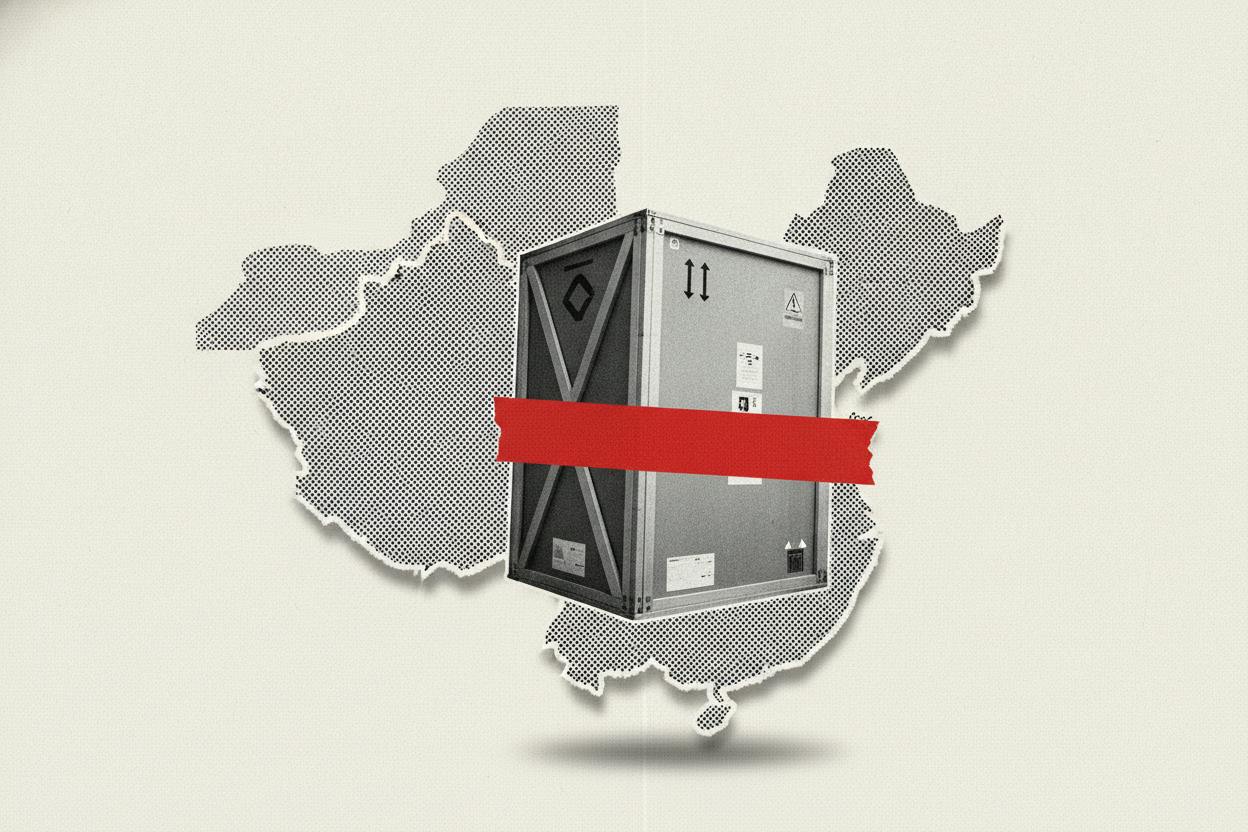
Many of the most advanced chipmaking machines are designed and built by American companies. Under US export controls, shipping these tools to certain foreign facilities—especially in China—requires approval from the Commerce Department. Without that sign-off, equipment cannot legally leave the country.
Reuters, citing people familiar with the matter, said SK Hynix's requests for equipment destined for Dalian have neither been approved nor formally rejected. That leaves the site's planned upgrades in limbo, unable to move forward but not officially blocked.
This is a familiar pattern in the semiconductor industry, where export controls have become a key tool in US policy toward China. Companies often face long waits for licenses, and the uncertainty can disrupt production schedules and investment plans.
SK Hynix's strategy: China cash funds US expansion
SK Hynix is one of the world's largest memory-chip makers, producing DRAM and NAND flash memory used in everything from smartphones to data-center servers. Its Dalian plant is a major production hub, and the company has said that increasing output there would help generate cash to fund its expansion in the United States.
That expansion is centered on its subsidiary Solidigm, which is planning a large NAND project in Marcy, New York. The plan calls for roughly $45 billion to build two plants, with the potential for investment to grow to $100 billion over time. NAND is a type of data-storage memory that is critical for cloud computing, artificial intelligence, and other data-intensive applications.
The logic of the strategy is straightforward: higher production in China would boost profits, which could then be reinvested in the US. But if the Dalian upgrades are stuck waiting for export licenses, that cash engine sputters. And if the US expansion itself depends on regulatory approvals, the whole timeline becomes harder to predict.
What it means for investors
For markets, the key takeaway is not that the New York project will be cancelled, but that the gap between the headline $45 billion vision and a realistic, phased rollout may widen. Big chip fabs are long, expensive projects that typically assume steady cash flow and predictable access to equipment. If SK Hynix cannot ramp up Dalian as planned, it may be forced to slow the pace of US construction—building fewer plants in parallel, installing tools later, and pushing back production targets.
That kind of delay risk is something investors can try to price in. The stock market tends to react to changes in expected timelines, especially for capital-intensive projects. A slower rollout could mean lower near-term capital spending, but also a longer wait before the new US supply comes online.
There is also a broader angle. The New York site would produce NAND memory for data centers, which are being built out rapidly to support AI and cloud services. Any delay in adding US-based NAND supply could tighten the market for that memory, potentially affecting prices and the companies that rely on it. This comes at a time when South Korean exports have surged on AI chip demand, highlighting how central memory chips have become to the global tech economy.
Investors should also keep an eye on how this fits into the broader US-China tech rivalry. Export controls have already hit other companies, and the situation is fluid. SK Hynix shares have been volatile in response to such news, and any further developments could move the stock.
What to watch next
The most immediate thing to watch is whether the Commerce Department issues a decision on the Dalian licenses. A formal approval would clear the way for upgrades; a rejection would force SK Hynix to rethink its China strategy. Either way, investors will be listening for updates from the company on how it plans to fund the US buildout if Dalian cash is delayed.
Also worth watching is how the company sequences its US investment. If it announces a more phased approach—starting with one plant instead of two, for example—that would signal that the license delays are having a real impact. Conversely, if it reaffirms the full $45 billion plan on its original timeline, that would suggest the company is confident the regulatory issues will be resolved.
For everyday investors, this story is a reminder that even the biggest tech companies are not immune to geopolitical and regulatory headwinds. The chips that power our devices and data centers are the product of a complex global supply chain, and that chain is increasingly subject to political decisions. Understanding those risks is part of evaluating any investment in the semiconductor space.