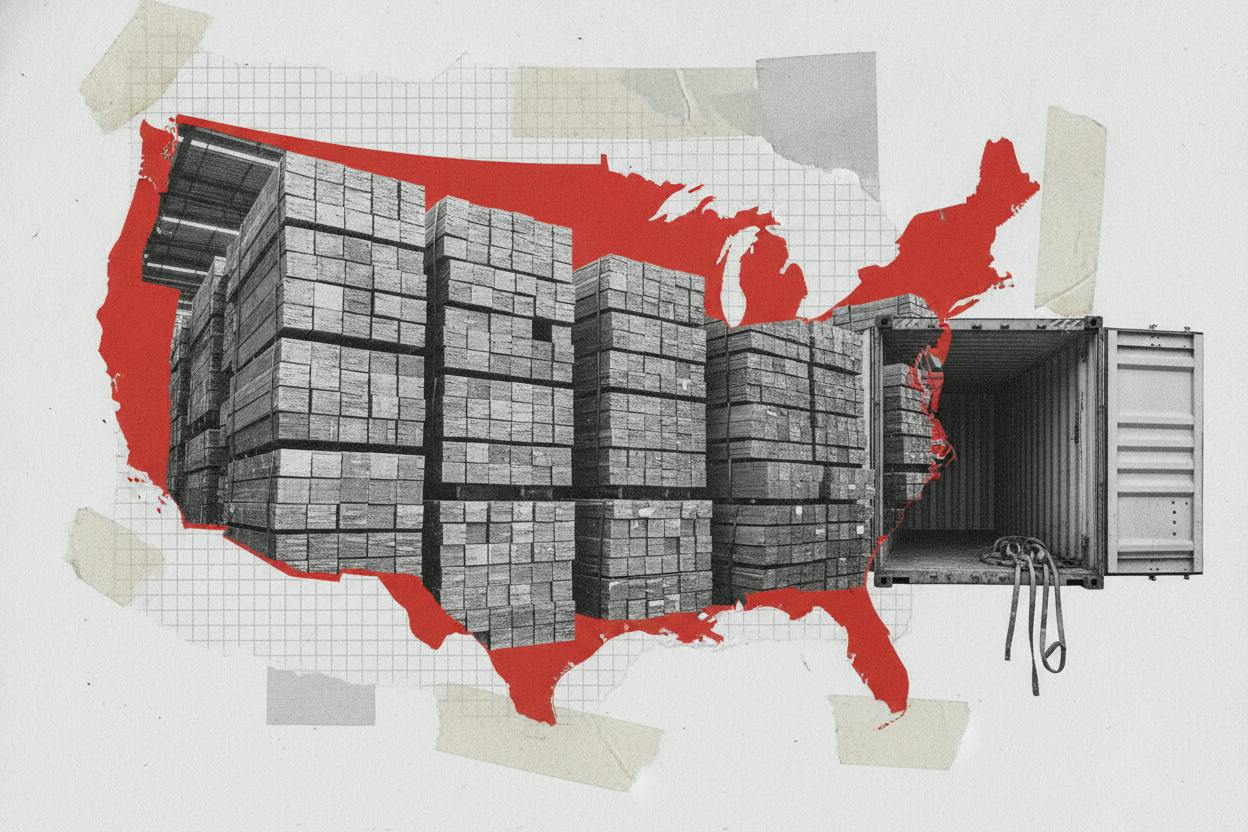
Copper is piling up in US warehouses at levels not seen in years, as traders position themselves ahead of a potential import tariff. More than 70% of London Metal Exchange (LME) copper inventories are now stored in New Orleans, Baltimore, and Mobile, according to LSEG Workspace data cited in the report.
The shift is a direct response to the possibility that the US will impose a 15% tariff on refined copper imports starting in 2027. If that levy takes effect, metal already sitting inside the country would avoid the extra cost. So traders are moving copper into US-approved storage facilities that can be delivered against futures contracts, effectively locking in today's prices and avoiding future tariffs.
Where the copper is piling up
On the LME, the three US locations now hold 223,300 metric tons out of 318,675 worldwide. That lifts the US share to 70.1% – the highest since March 2019. New Orleans accounts for the bulk of it, with 172,500 tons, its biggest inventory since April 2014.
Meanwhile, LME stocks in Asia have fallen to 23.2% of the total, their lowest share since April 2024. That means the metal that used to sit in Asian warehouses is increasingly being redirected to the US.
Inventories on COMEX, the main US metals futures exchange, have also climbed to a record 732,315 tons. But the price premium that COMEX copper had over LME copper has recently eased, making it less attractive to push every extra ton into COMEX sheds. That has helped steer some flows into LME warehouses on US soil, where copper can stay on warrant (registered for delivery) without clearing customs.
What this means for copper markets
When most exchange-registered copper is parked in one region, the market can look well supplied on paper while specific buyers feel a squeeze in practice. With only 23.2% of LME inventories in Asia, consumers and traders tied to LME-linked pricing outside the US may face higher physical premia – the extra paid for metal in a specific place – and choppier time spreads, which are the gaps between near-term and later delivery prices.
For everyday investors, this is a reminder that commodity markets are not just about global supply and demand. Location matters. A warehouse in Louisiana is not the same as a warehouse in South Korea, and the price of copper can vary significantly depending on where it is stored and who needs it.
The COMEX-LME spread can also stay jumpy. As that premium compresses or widens, the value of storing copper in one system versus the other changes quickly, pulling metal between warehouses rather than to end users. That can create temporary dislocations and volatility in copper prices, which ripple through to companies that use copper in everything from wiring to electric vehicles.
What investors should watch
For those with exposure to copper through mining stocks, ETFs, or industrial companies, the key question is whether this pre-positioning is a one-off event or a sign of deeper structural shifts. If the tariff is confirmed, the metal already in the US could become more valuable relative to metal elsewhere. If the tariff is delayed or scrapped, some of that metal could flow back out, pressuring prices.
Copper has been in focus recently, with copper prices climbing on election calm and a weaker dollar, and major miners like BHP making big copper bets. But the metal's path is also tied to global growth, China's demand, and the pace of the energy transition.
For now, the concentration of LME stocks in the US is a logistical and pricing issue that could keep copper markets on edge. Investors should keep an eye on the COMEX-LME spread and any news on the tariff timeline, as both could drive short-term price moves.
As always, this is not a recommendation to buy or sell copper or any related asset. It's simply a look at how a potential policy change is reshaping where the world's copper sits – and what that might mean for prices ahead.