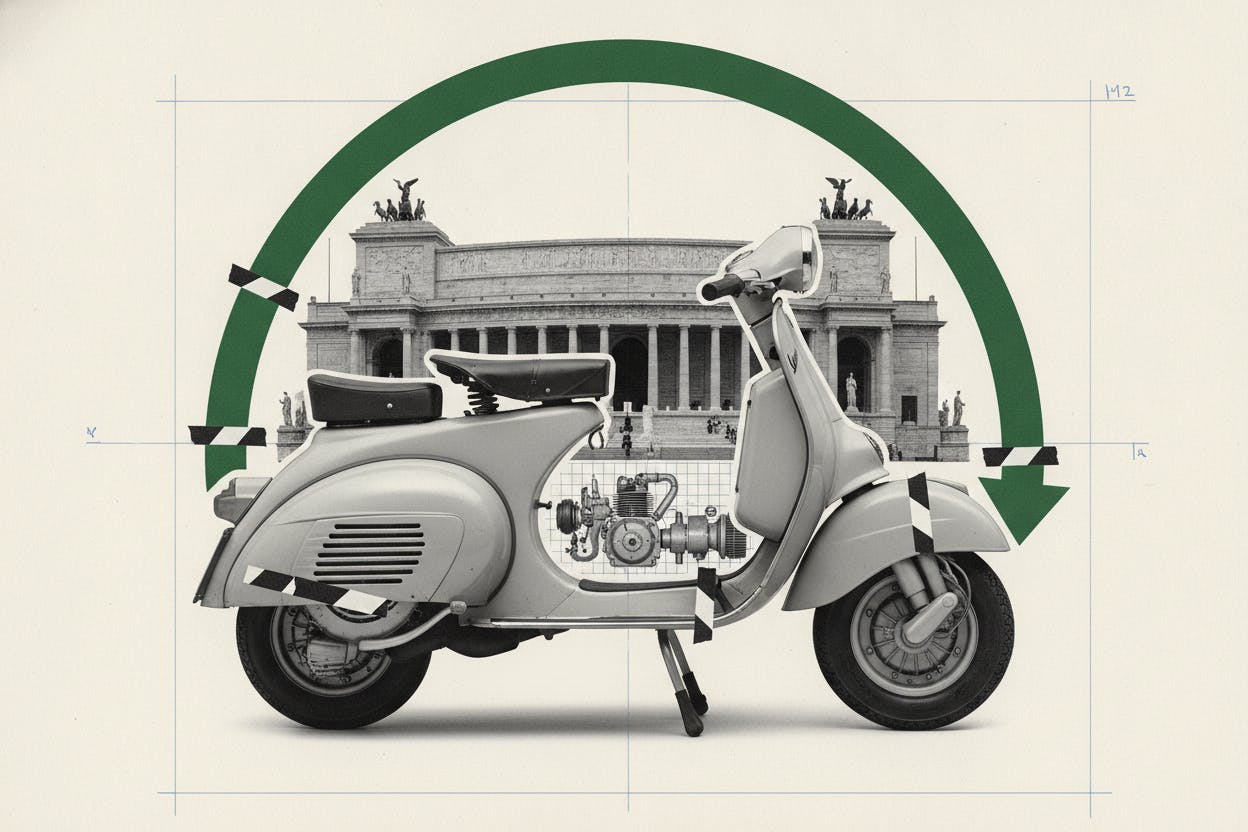
Rome is throwing a birthday bash for one of Italy's most recognizable exports this week. The four-day "Vespa Roma 2026 – 80 Years of an Icon" gathering runs from June 25th to 28th at the Foro Italico, transforming the Stadio dei Marmi into a dedicated "Vespa Village." The event celebrates eight decades of continuous production for Piaggio's iconic scooter, a vehicle that has evolved from postwar transportation to global pop-culture symbol.
What's happening at the festival
The festival, reported by Reuters, includes exhibitions of vintage and modern Vespas, races, parades, and gatherings of enthusiast clubs from around the world. The Stadio dei Marmi, a historic marble-clad stadium built for the 1932 Summer Olympics, provides a fitting backdrop for a brand that has itself become a piece of design history. Organizers expect thousands of attendees to participate in the festivities, which blend nostalgia with ongoing commercial relevance.
From postwar mobility to cultural icon
The Vespa first rolled off Piaggio's production line in 1946, at a time when Italy was rebuilding after World War II. Its simple, affordable design—with a step-through frame and enclosed engine—made it accessible to a broad audience, helping to motorize a nation. The scooter's cultural breakthrough came in 1953 with the film "Roman Holiday," in which Audrey Hepburn and Gregory Peck zipped around Rome on a Vespa, cementing its image as a symbol of freedom and style.
Since then, Piaggio has introduced roughly 160 styling refreshes, keeping the design current while maintaining its classic silhouette. The company has sold nearly 20 million Vespas worldwide, with just over two million of those coming in the past decade alone. That sustained demand highlights the brand's ability to appeal to both nostalgic buyers and new generations seeking affordable urban transport.
What it means for investors
For investors, the Vespa's 80th anniversary is more than a celebration—it's a reminder of the power of brand longevity. Piaggio & C. SpA, the publicly traded parent company (ticker: PIA.MI on the Milan Stock Exchange), generates a significant portion of its revenue from the Vespa line. The scooter's continued popularity, particularly in Europe and Asia, provides a steady revenue stream that helps offset fluctuations in other parts of the business, such as motorcycles and commercial vehicles.
However, the broader automotive and mobility sector faces headwinds. Rising raw material costs, supply chain disruptions, and the shift toward electric vehicles are reshaping the industry. Piaggio has responded by introducing electric versions of the Vespa, such as the Vespa Elettrica, though adoption remains limited compared to traditional models. Investors will be watching how the company navigates these trends while maintaining the brand's heritage appeal.
The festival also underscores the importance of brand equity in consumer discretionary stocks. Companies with iconic products that command loyalty and premium pricing—like Vespa, Harley-Davidson, or even luxury goods—can weather economic cycles better than commoditized competitors. For everyday investors, this event serves as a case study in how durable brands can create long-term value, even in mature industries.
Broader market context
The Vespa celebration comes amid a mixed landscape for European automakers. While luxury and niche brands have performed relatively well, mass-market manufacturers face pressure from Chinese competitors and regulatory demands for electrification. In a separate development, Chinese factory profits rose 21.1% in May, but the AI boom masks an auto slump, as reported in China Factory Profits Rise 21.1% in May, But AI Boom Masks Auto Slump. That dynamic highlights the competitive challenges for traditional automakers, including Piaggio.
Meanwhile, the broader market has seen significant moves, including OpenAI IPO Delay and Chinese Car Surge: Key Market Moves on June 27, which underscores the shifting landscape in both tech and automotive sectors. For Piaggio, the Vespa's milestone is a positive narrative, but investors should remain focused on the company's financial health and strategic direction.
Looking ahead
As the Vespa enters its ninth decade, the key question for Piaggio is whether it can sustain growth in an era of electrification and changing mobility habits. The company's ability to refresh the design while preserving its essence has served it well for 80 years. Whether that formula works for another 80 remains to be seen, but for now, Rome's birthday party is a testament to a scooter that has truly stood the test of time.