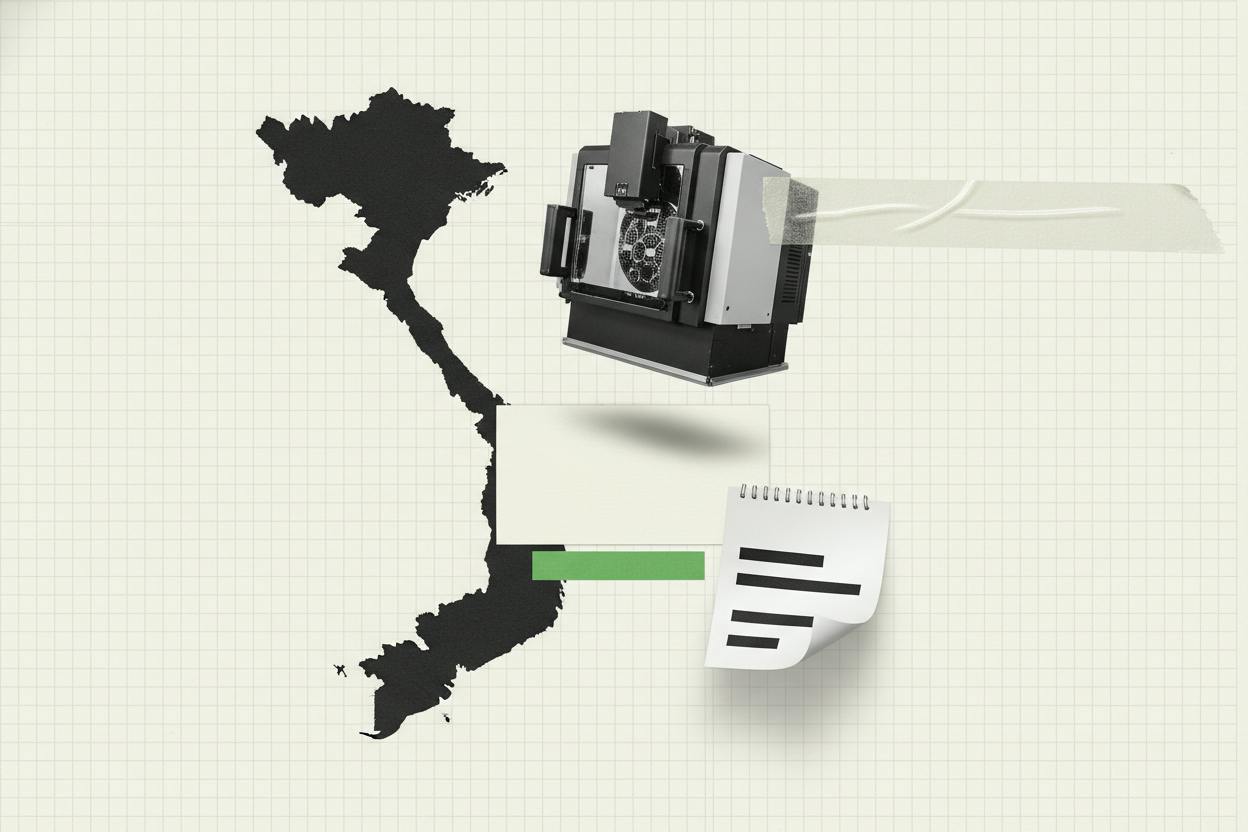
Vietnam's ambition to build its first semiconductor fabrication plant is showing signs of slipping. According to a Reuters report, Viettel—a state-owned military telecom and defense conglomerate—has not yet finalized a crucial equipment purchase with Dutch lithography giant ASML. Meanwhile, the planned site near Hanoi shows no visible signs of construction, casting doubt on the company's stated goal of a trial production run in 2027.
What's behind the delay?
Building a chip factory, or fab, is an enormously complex and capital-intensive undertaking. The heart of any modern fab is lithography equipment, which uses light to etch microscopic circuit patterns onto silicon wafers. ASML is the world's dominant supplier of these machines, and its deep ultraviolet (DUV) lithography systems are essential for producing chips at the scale and precision required by today's electronics.
Viettel's reported difficulty in closing the ASML deal is a significant red flag. These machines are not off-the-shelf items; they are custom-built, extremely expensive, and often subject to export controls and long lead times. Without a finalized order, the company cannot begin installing the core of its production line, let alone start testing it.
The lack of construction at the Hanoi site compounds the problem. Even if the equipment deal were signed tomorrow, building a fab typically takes years—from cleanroom construction to tool installation and qualification. The 2027 trial run, which was already ambitious, now looks increasingly optimistic.
Why Vietnam wants a chip plant
Vietnam has been positioning itself as a rising player in the global semiconductor supply chain. The country already hosts assembly and packaging operations for major chipmakers, but a full-scale fab would represent a major leap up the value chain. It would also reduce reliance on other countries for advanced chips and strengthen Vietnam's hand in the global tech trade.
The push comes amid a broader geopolitical shift, as companies and governments seek to diversify chip production away from traditional hubs like Taiwan and South Korea. Vietnam has been a beneficiary of this trend, attracting investment in electronics manufacturing. However, building a fab is a different ballgame—it requires not just capital, but a deep ecosystem of suppliers, skilled engineers, and reliable infrastructure.
Viettel, as a military-run group, has the backing of the state and deep pockets. But even so, the technical and logistical hurdles are immense. The company has no prior experience in chip fabrication, and entering the field from scratch is a steep learning curve.
What it means for investors
For everyday investors, the news is a reminder that big infrastructure projects—especially in high-tech sectors—often face delays. If you're invested in Vietnamese equities or funds with exposure to the country's tech ambitions, this could be a near-term headwind. The market may have priced in a successful 2027 launch, and any slippage could lead to disappointment.
On the other hand, the delay doesn't necessarily mean the project is dead. Governments and large conglomerates have a history of pushing through setbacks, and Vietnam's strategic interest in a domestic chip industry is strong. The recent free trade pact with Switzerland and EFTA partners could also open doors for technology cooperation, though it's too early to say if it will accelerate the chip plant.
Investors should also watch the broader context. Vietnam's central bank has been ordering lenders to cut rates to ease pressure on borrowers, which suggests the economy is facing some strain. That could affect the government's ability to fund large projects, though Viettel is a profitable state-owned enterprise.
What to watch next
The key milestones to track are the signing of the ASML deal and the start of construction at the Hanoi site. Any official announcement from Viettel or the Vietnamese government about revised timelines would be a major signal. Also watch for any statements from ASML or other equipment suppliers, as they often provide clues about order backlogs.
For now, the prudent takeaway is that Vietnam's chip plant is a long-term story with near-term uncertainty. As with any major industrial project, delays are common, and investors should be prepared for the timeline to stretch. The Airbus delivery target example shows that even established companies struggle to meet ambitious schedules, and a first-time fab builder faces even steeper odds.
In the meantime, the global semiconductor industry continues to evolve, with companies like Northrop and RTX benefiting from record defense orders, and others like Samsung Biologics seeing record sales. The chip sector remains a high-stakes arena, and Vietnam's entry—if it happens—will be a notable development. But for now, the timeline looks like it's slipping.