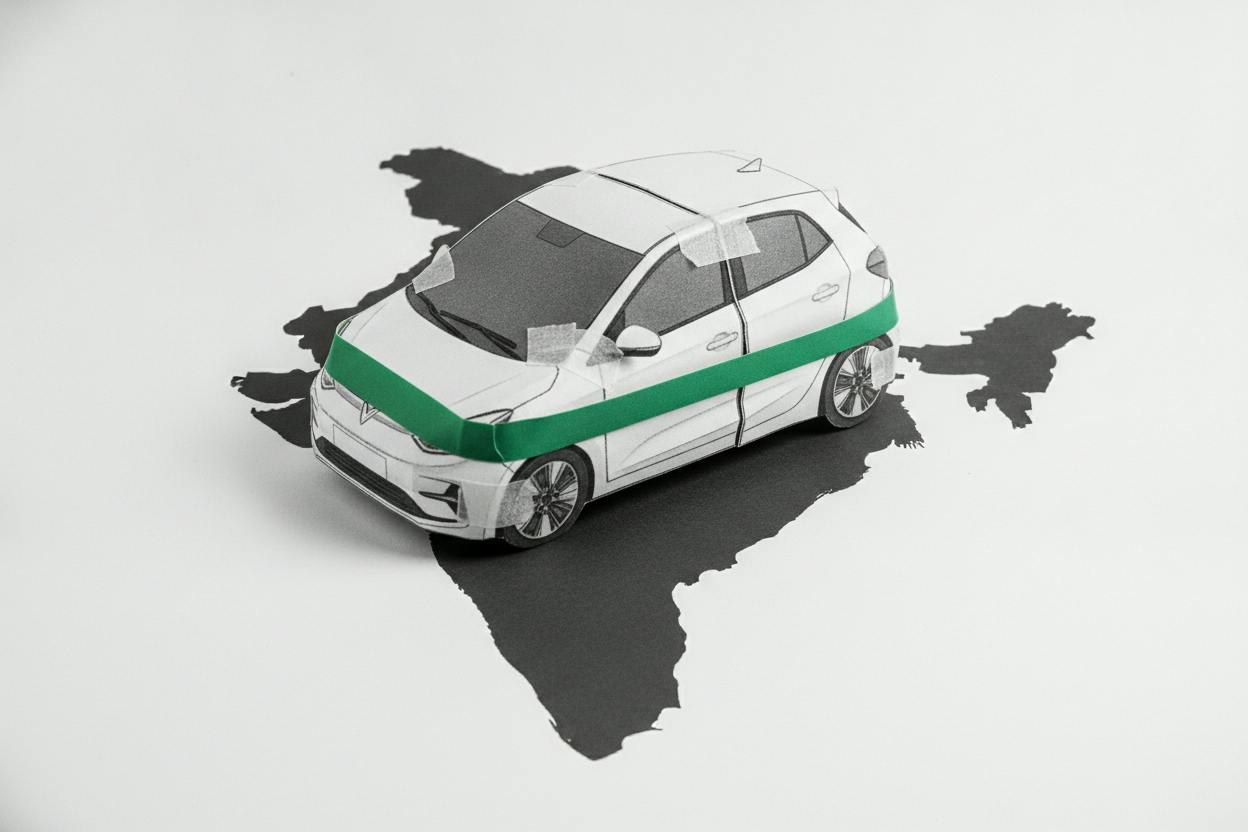
Vietnamese automaker VinFast is looking to crack the Indian market with a fresh approach: designing electric vehicles (EVs) specifically for India, rather than adapting its existing models. According to Reuters, the company is in discussions with Indian suppliers about two new models, dubbed VF X and VF Y, with one entry-level version hoped to be priced below $12,000.
The move comes after VinFast recently paused plans to build some of its current models in India. The company reportedly decided it couldn't cut costs enough to hit target prices with its existing lineup, so it's now exploring India-first designs with local suppliers involved from the start.
Why India is a tough nut to crack
India is one of the world's largest car markets, but it's also one of the most price-sensitive. The average Indian car buyer is used to small, affordable vehicles, and the EV market is still in its early stages. While the government has been pushing for cleaner mobility, the upfront cost of an EV remains a major barrier for many consumers.
VinFast's challenge is to build a car that's cheap enough to attract buyers while still making a profit. The $12,000 price point for an entry-level EV would be a significant achievement, as most EVs in India currently sell for much more. For comparison, the cheapest EVs from domestic players like Tata Motors start at around $10,000 to $12,000, but those are often small, basic models.
By involving local suppliers from the beginning, VinFast hopes to reduce costs through local sourcing and avoid the import duties that make foreign-built cars more expensive. This is a common strategy for automakers entering India, as seen with Volkswagen's talks with JSW Group to boost its tiny market share.
VinFast's global ambitions
VinFast is backed by Vingroup, one of Vietnam's largest conglomerates, and has been aggressively expanding internationally. The company has made headlines with its plans to build EVs in the US and Europe, and it has also been pushing into Southeast Asia. However, its global expansion has been bumpy, with the company facing challenges in some markets.
India is seen as a key growth market for EVs, with the government offering incentives to boost local manufacturing. But the market is also crowded, with domestic players like Tata and Mahindra, as well as global giants like Tesla, eyeing the same opportunity. VinFast's strategy of designing cars specifically for India could give it an edge, but it's a risky bet.
The company's decision to pause production of its existing models in India suggests it's being cautious about committing too much capital before it has a clear cost advantage. This is a sensible approach, as building a factory and setting up a supply chain is expensive, and getting the pricing wrong could be fatal.
What it means for investors
For everyday investors, VinFast's India plans are a sign of the company's ambition, but also its challenges. The EV market is growing, but competition is fierce, and profitability is far from guaranteed. VinFast's stock, which is listed on the Nasdaq, has been volatile since its debut, reflecting the uncertainty around its business model.
Investors should watch how VinFast's India strategy unfolds. If the company can successfully launch an affordable EV in India, it could open up a massive market and boost its revenue. But if it fails to hit the price target or faces delays, it could weigh on the company's finances.
The broader context is also important. India's auto market is facing headwinds, with oil prices near $100 pressuring stocks and the rupee, and inflation concerns. This could affect consumer spending on big-ticket items like cars. However, the government's push for EVs and the growing charging infrastructure could provide a tailwind.
For now, VinFast's talks with Indian suppliers are just that—talks. There's no guarantee that the VF X and VF Y will make it to production, or that the entry-level model will hit the sub-$12,000 price. But the fact that VinFast is willing to rethink its approach for India shows it's serious about the market.
As with any emerging market strategy, there are risks. Currency fluctuations, regulatory changes, and supply chain issues could all derail the plan. But if VinFast can pull it off, it could become a major player in India's EV revolution.
For investors, the key takeaway is to keep an eye on VinFast's progress in India, as it could be a significant driver of the company's long-term growth. But as always, it's important to diversify and not put all your eggs in one basket.