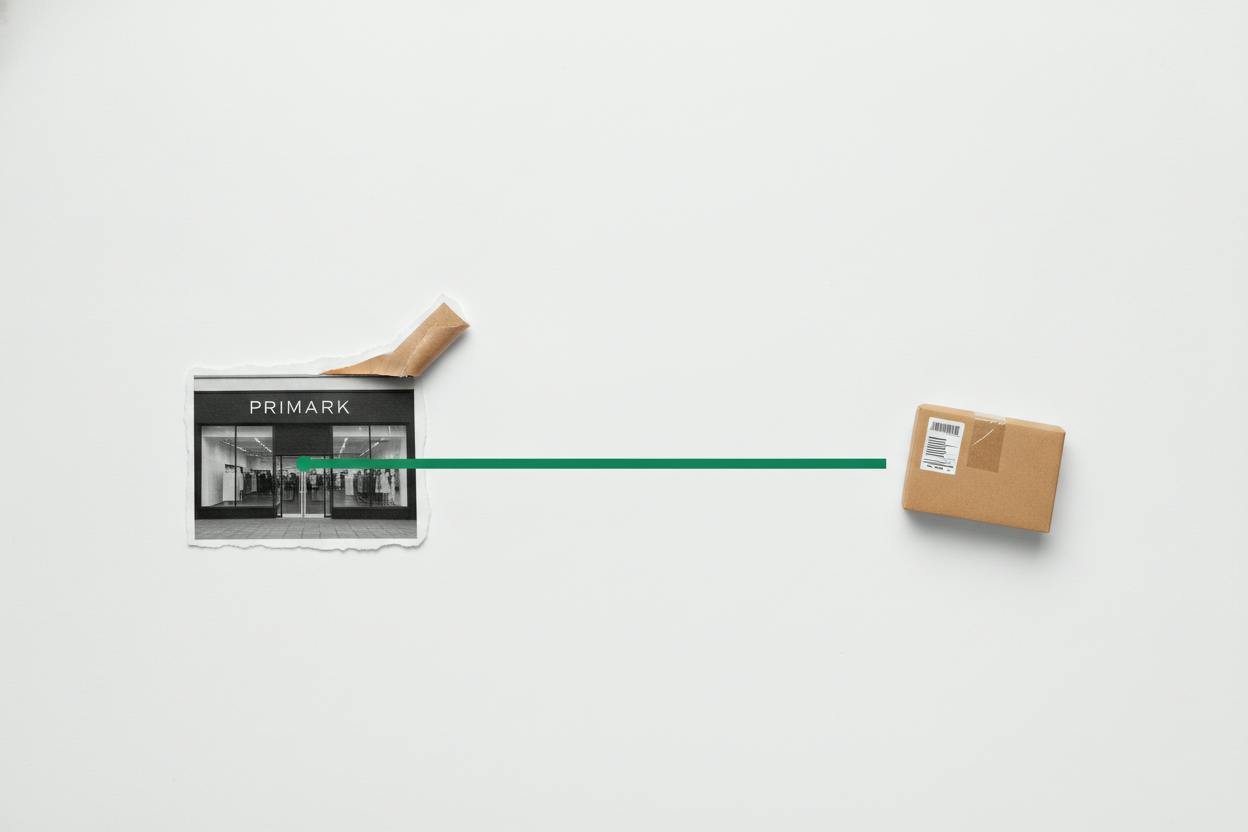
Primark, the value-fashion chain owned by Associated British Foods (AB Foods), is finally bringing home delivery to Great Britain. The move marks a significant break from the retailer's long-standing strategy of selling only in its large, busy stores. AB Foods told investors that Primark expects fourth-quarter sales to grow by about 2%, even as like-for-like sales—a key measure of growth at existing stores—are set to fall by about 3%.
The news comes as part of a broader update from AB Foods, which also said its grocery business remains on track. For everyday investors, the headline is clear: Primark is adapting to a shopping world where convenience increasingly means delivery to the door, but the transition is not without growing pains.
Why Primark avoided online for so long
Primark has built its entire model around getting customers into physical stores. Its prices are low, its stores are huge, and its margins are thin. Selling online has always been tricky for the company because shipping costs can eat into already-slim profits. That is why, for years, Primark used its website only to show products and store locations, not to take orders.
Now, with home delivery rolling out in Great Britain, the company is acknowledging that consumer habits have changed. Shoppers increasingly expect to buy clothes from their sofas, and retailers that do not offer that option risk losing sales to competitors that do. The move is a strategic shift that could help Primark reach customers who do not live near one of its stores or who prefer not to visit in person.
What the numbers tell us
AB Foods said Primark expects Q4 sales to grow about 2% compared with the same period last year. That sounds positive, but the detail matters. Like-for-like sales—which strip out the effect of new store openings and closures—are expected to fall about 3%. That suggests underlying demand at existing stores is weakening, and the overall sales growth is being driven by new space and product mix rather than by stronger customer demand.
This is a common pattern for retailers that are expanding: they open new stores, which add to total sales, but existing stores may struggle if foot traffic declines or if shoppers spend less per visit. For Primark, the like-for-like decline could reflect a tougher consumer environment, where shoppers are watching their spending more carefully, or it could be a sign that the brand is losing some momentum.
The grocery business, which includes brands like Kingsmill bread and Silver Spoon sugar, is said to be on track. That provides some balance for AB Foods, which also has interests in sugar and agriculture. Investors will be watching to see if the grocery division can help offset any softness in fashion.
What it means for investors
For investors, the key question is whether Primark's move into home delivery can revive growth or whether it is a defensive step that will squeeze margins. Delivery adds costs—packaging, shipping, and handling returns—which could pressure the company's profitability. Primark has said it will charge for delivery, but the fees may not fully cover the costs, especially for lower-priced items.
On the other hand, offering home delivery could open up new sales channels and attract customers who currently shop elsewhere. It also brings Primark in line with competitors like H&M and Zara, which have long offered online shopping. The success of the rollout will depend on how well Primark manages the logistics and whether customers are willing to pay for delivery.
AB Foods' update also comes at a time when the broader retail environment is uncertain. Consumer confidence is fragile, and inflation has squeezed household budgets. Retailers across the board are feeling the pinch, and some have cut their outlooks as demand weakens. Primark's like-for-like decline is a reminder that even value retailers are not immune to these pressures.
Investors should also consider the wider context. AB Foods is a diversified group, and its performance depends on more than just Primark. The grocery business is stable, and the company's sugar operations, while volatile, can provide upside when prices are favourable. Analysts have noted that sugar prices and Primark's margins are key factors to watch.
What to watch next
In the coming months, investors will be looking for more details on the home delivery rollout—how many areas it covers, what delivery fees are, and whether it boosts sales without hurting margins. They will also be watching Primark's like-for-like sales trend to see if the decline stabilises or worsens.
The company's full-year results will provide a clearer picture. If Primark can show that home delivery is attracting new customers and that like-for-like sales are recovering, the shares could benefit. If not, the market may worry that the company is spending money on a service that does not pay off.
For now, the message from AB Foods is one of cautious optimism. Primark is finally embracing the convenience that shoppers expect, but the numbers suggest the road ahead is not entirely smooth. As always, investors should focus on the long-term fundamentals rather than short-term noise.