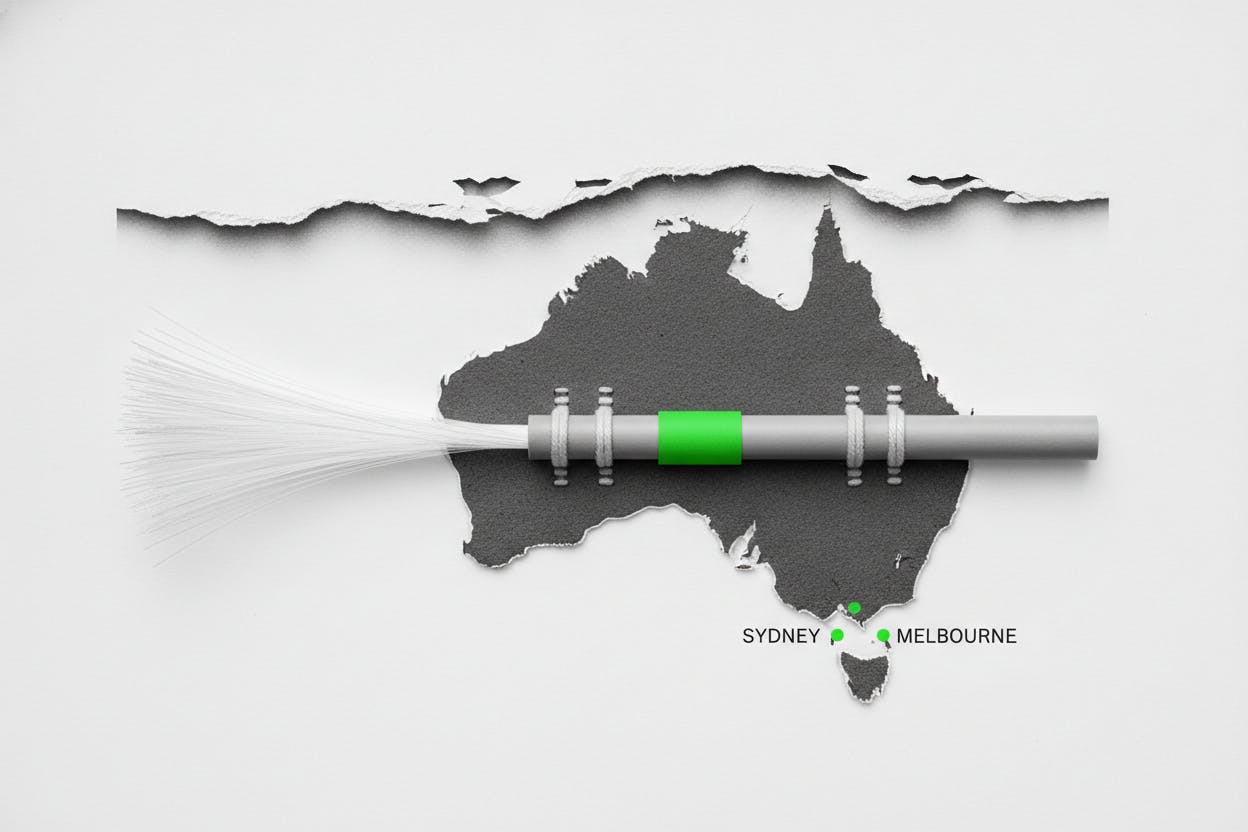
Network operator Vocus, which is backed by Macquarie, has announced plans to spend roughly A$500 million on a new long-haul fiber route connecting Sydney and Melbourne. The project, described as Australia's first ducted long-haul fiber link, is designed to handle the surging data traffic driven by artificial intelligence and is expected to be ready by 2029.
The Sydney–Melbourne corridor already carries about 40% of Australia's long-haul data traffic, and Vocus says demand is rapidly approaching the limits of existing capacity. The company's solution involves a "ducted" approach, where fiber cables run through protective underground conduits rather than being buried directly in the ground. This method can reduce faults from digging or water damage, speed up repairs, and make future upgrades easier by allowing new fiber to be pulled through existing ducts.
Why This Matters for Data Centers and AI
The explosive growth of artificial intelligence is driving a massive increase in data center construction and the need for high-capacity connections between them. AI workloads, such as training large language models, require enormous amounts of data to be moved quickly and reliably between computing facilities. The new Vocus link is specifically aimed at easing this bottleneck, ensuring that data centers in Sydney and Melbourne can communicate without congestion.
This investment comes as the broader tech sector sees a surge in AI-related infrastructure spending. For context, the AI chip rally has helped drive emerging Asian markets to their best quarter since 2009, highlighting the global appetite for AI capabilities. While that rally has focused on chipmakers, the downstream effects are now reaching network operators like Vocus, which must build the physical pipes to carry all that data.
What It Means for Investors
For everyday investors, this project signals a long-term bet on the continued growth of data demand in Australia. Vocus is essentially preparing for a future where AI and cloud computing require far more bandwidth than today's networks can provide. The A$500 million price tag is substantial, but the company is betting that the Sydney–Melbourne corridor will remain a critical artery for the nation's digital economy.
Investors should note that this is a capital-intensive project with a multi-year timeline. The link won't be operational until 2029, so any financial benefits are years away. However, the move also reflects a broader trend: as data centers proliferate, the need for dedicated, high-capacity connections between them becomes more acute. Companies that own or operate such infrastructure could see increased demand for their services over time.
It's also worth considering the competitive landscape. Other network operators may respond with their own upgrades, potentially leading to a race to build the most resilient and high-capacity routes. For now, Vocus is positioning itself as a leader in ducted long-haul fiber, a technology that could offer reliability advantages over traditional buried cables.
Broader Economic Context
The investment comes at a time when the Australian economy is navigating mixed signals. While the ASX has recently dipped amid gold retreats and a stronger US dollar, infrastructure spending like this can provide a long-term boost to productivity and digital capacity. The project also aligns with government efforts to bolster national digital infrastructure, though it is a private-sector initiative.
For investors focused on the tech and telecom sectors, Vocus's move is a reminder that the AI boom is not just about chips and software. The physical layer—fiber, data centers, and power grids—is equally critical. Companies that build and maintain this backbone may benefit from sustained demand, even if the returns take years to materialize.
As always, investors should consider their own risk tolerance and time horizon. Infrastructure projects like this one are typically long-term plays, and the payoff depends on whether AI-driven data growth continues at its current pace. But for those looking to understand where the market is heading, Vocus's A$500 million bet is a clear signal that the future of data is bigger, faster, and more demanding than ever.