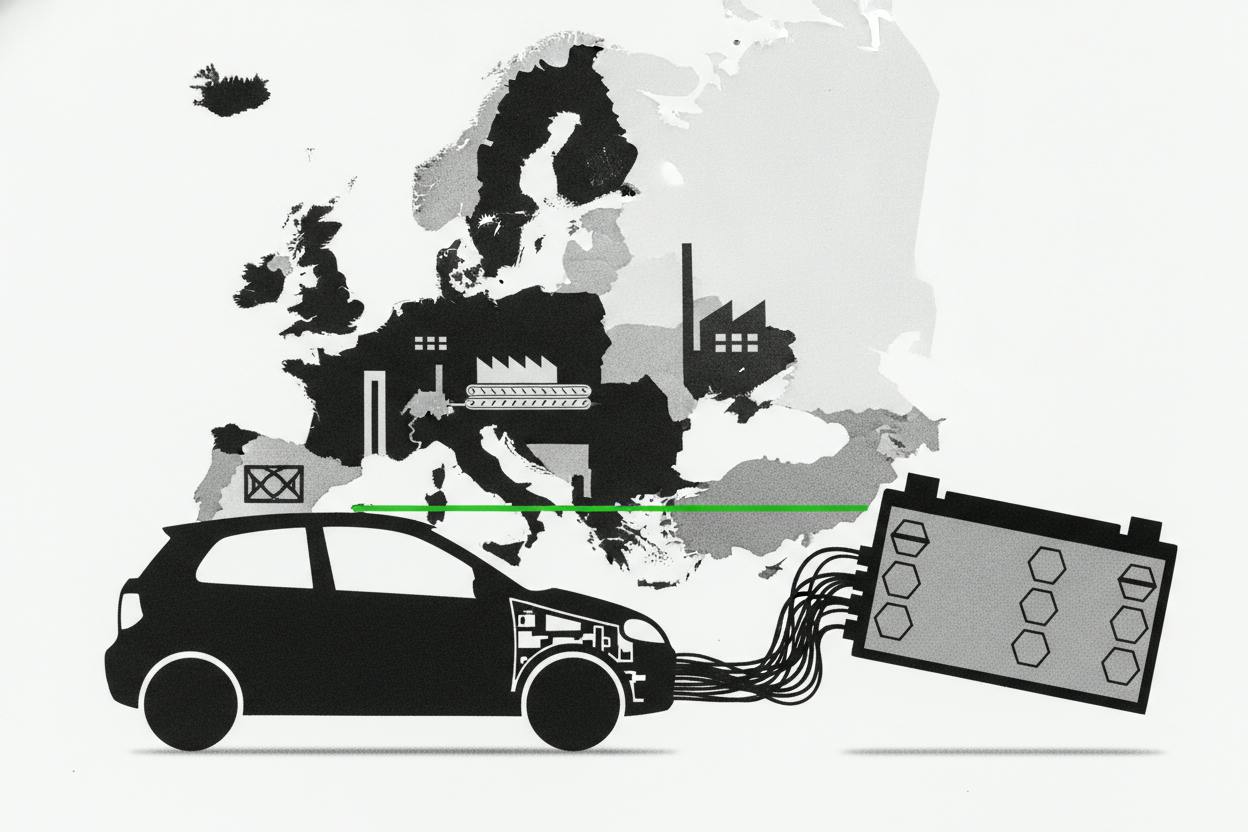
At the Paris auto show this week, two of Europe's biggest carmakers—Volkswagen and Stellantis—signaled a notable shift in strategy: they're looking to China for inspiration and partnerships to defend their turf in the electric-vehicle (EV) market at home. As competition heats up, both companies are borrowing ideas from Chinese automakers, who have become global leaders in EV technology and cost efficiency.
Why Chinese partnerships matter
Chinese EV makers have surged ahead in recent years, thanks to aggressive government support, a massive domestic market, and a head start in battery supply chains. Their vehicles are often cheaper and packed with advanced software features, making them formidable rivals not just in China but increasingly in Europe. For European giants like Volkswagen and Stellantis, partnering with Chinese firms offers a shortcut to catch up on technology and production know-how.
At the show, executives from both companies highlighted these collaborations as a key part of their strategy. The message is clear: to stay competitive at home, they need to learn from the very players that are challenging them. This marks a notable reversal from earlier years, when European automakers largely dismissed Chinese EVs as a distant threat.
Defending home turf
Europe is the home base for Volkswagen and Stellantis, and it's also a critical market for EV sales. But that market is getting crowded. Chinese brands like BYD and MG are expanding aggressively across the continent, offering well-equipped EVs at competitive prices. At the same time, European governments are tightening emissions rules, pushing automakers to accelerate their electric transitions.
For Volkswagen, Europe is its largest market, and the company has already faced challenges in rolling out its ID series of EVs. Stellantis, which owns brands like Peugeot, Fiat, and Opel, has been leaning on Europe as North America shipments slide, making the region even more crucial. Both companies are under pressure to deliver EVs that appeal to mainstream buyers—not just early adopters—while keeping costs in check.
What this means for investors
For everyday investors, this development is a reminder that the EV race is no longer just about who makes the flashiest car. It's about who can produce affordable, reliable EVs at scale. Chinese partnerships could help European automakers cut costs and speed up development, which could protect their market share and profit margins.
But there are risks too. Relying on Chinese partners may raise concerns about technology transfer and geopolitical tensions. Investors should watch how these partnerships evolve and whether they translate into actual sales gains. The broader market backdrop also matters—supply chain issues, chip shortages, and energy costs can all affect automakers' bottom lines.
The bigger picture
This isn't just about two companies. It's a sign of how the global auto industry is being reshaped. China has become the world's largest EV market and a hub for battery production, giving its automakers a unique advantage. European and American companies are now scrambling to catch up, often by forming alliances with Chinese firms.
For instance, Stellantis's CEO has noted that the US EV shift will be slower and smaller than Europe's, which means the company's focus on Europe is even more important. Meanwhile, other sectors are also feeling China's influence—luxury goods sales have been hit by a slowdown in China, showing how interconnected global markets are.
What to watch next
Investors should keep an eye on a few things: how quickly Volkswagen and Stellantis can bring new EV models to market, whether their Chinese partnerships lead to tangible cost savings, and how they respond to any new tariffs or trade barriers. Also watch for updates on their quarterly sales and earnings, as those will show whether the strategy is working.
The Paris auto show is just one moment in a long race. But the message from Europe's EV giants is clear: they're taking notes from China, and they're ready to adapt. For investors, that's a signal that the competitive landscape is shifting—and staying informed is key.



