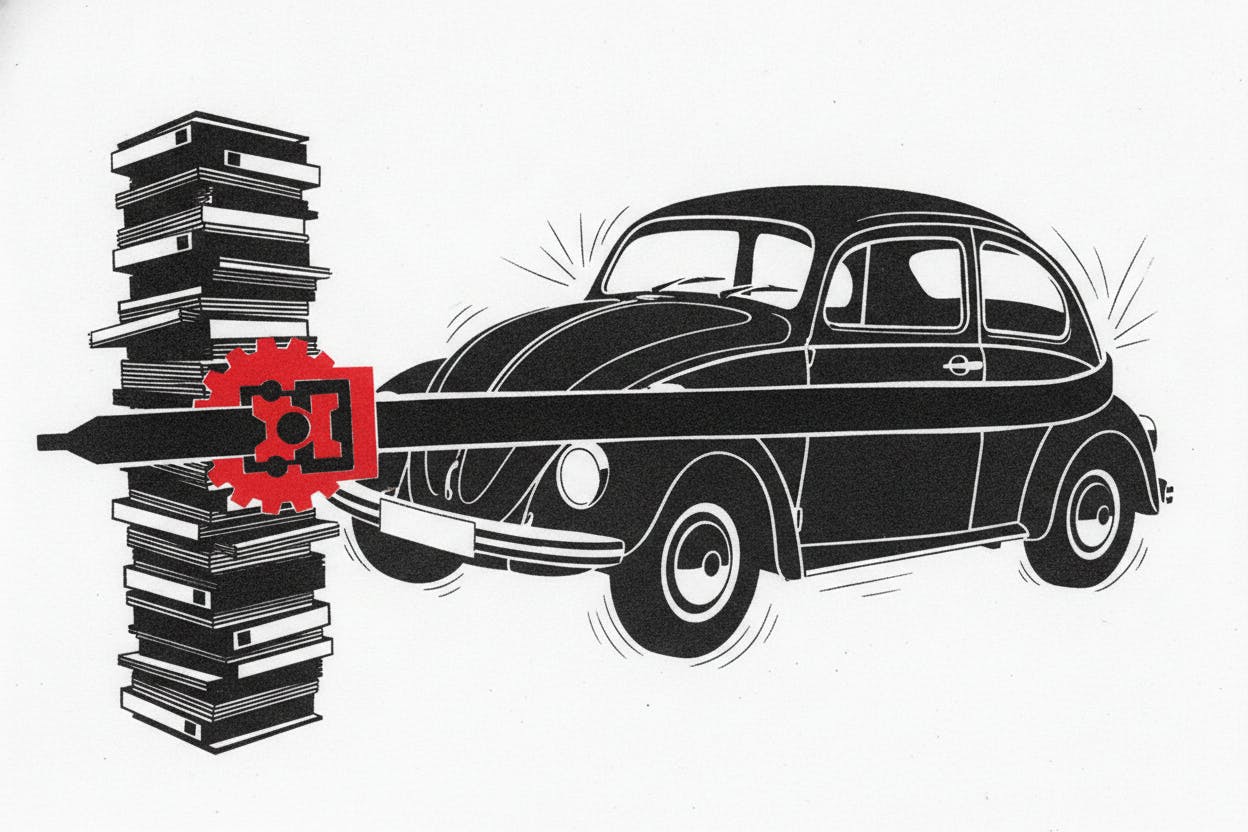
Volkswagen is signaling that its cost-cutting drive may need to go much deeper than originally planned. CEO Oliver Blume told employees in an internal interview that the automaker could need to eliminate as many as 100,000 roles worldwide to bring its overhead costs in line with competitors.
Blume said Volkswagen's overhead costs run "around 20%" higher than peers, and described the gap as structural rather than a temporary issue. Roughly half of those costs are tied to personnel, he noted, meaning that closing the full gap through labor savings alone would require cuts far larger than the 20% figure suggests.
Voluntary departures already underway
Volkswagen's existing plan targets 50,000 job reductions in Germany by 2030, mainly through voluntary exits and early retirement programs. Blume said 37,000 employees have already signed departure agreements, indicating the program is making progress. But the CEO's latest comments suggest the company is now weighing whether that target is enough.
In the interview, Blume pointed to a "no-wage-change" exercise that identified about 50,000 roles as a starting benchmark. If Volkswagen wants to fully close the overhead gap, deeper cuts may be necessary, he indicated. The message is clear: the company is trying to reset its fixed cost base so it can stay profitable even if car demand cools or pricing gets more competitive.
Volkswagen has been under pressure from rising costs, the transition to electric vehicles, and weaker demand in key markets. Earlier this year, the company reported a 8.6% drop in global deliveries, with China sales plunging 36.6%. The automaker is also investing heavily in new models, software, and EV production capacity, which adds to the urgency of reducing overhead.
What it means for investors
For shareholders and credit investors, the key takeaway is that Volkswagen's cost problem is not a short-term blip. A persistent overhead gap tends to show up in weaker profit margins compared to leaner competitors. Blume's math also hints at why the layoff number can climb: if personnel is about half of overhead, closing a 20% total-overhead gap using labor savings alone implies a much larger cut to that personnel bucket than 20%.
That shifts attention to delivery risk. Voluntary programs can take time, and savings arrive gradually, while the company still has to fund new models, software, and EV production. Until the cost base is visibly lower, Volkswagen has less cushion if volumes soften and more pressure to prove the reset is real, not just announced.
The news comes amid broader challenges for European automakers. Rival Mercedes-Benz is investing €1 billion to double EV output at its Hungary plant, signaling the industry's race to scale electric production. Meanwhile, Volkswagen workers have rallied across Germany as reports of up to 100,000 job cuts have stirred labor tensions.
For everyday investors, the story underscores how legacy automakers are navigating a costly transition. Volkswagen's ability to execute its cost-cutting plan will be a key factor in its stock performance and creditworthiness. Investors will watch for signs that the company can deliver real savings without disrupting operations or sparking prolonged labor disputes.