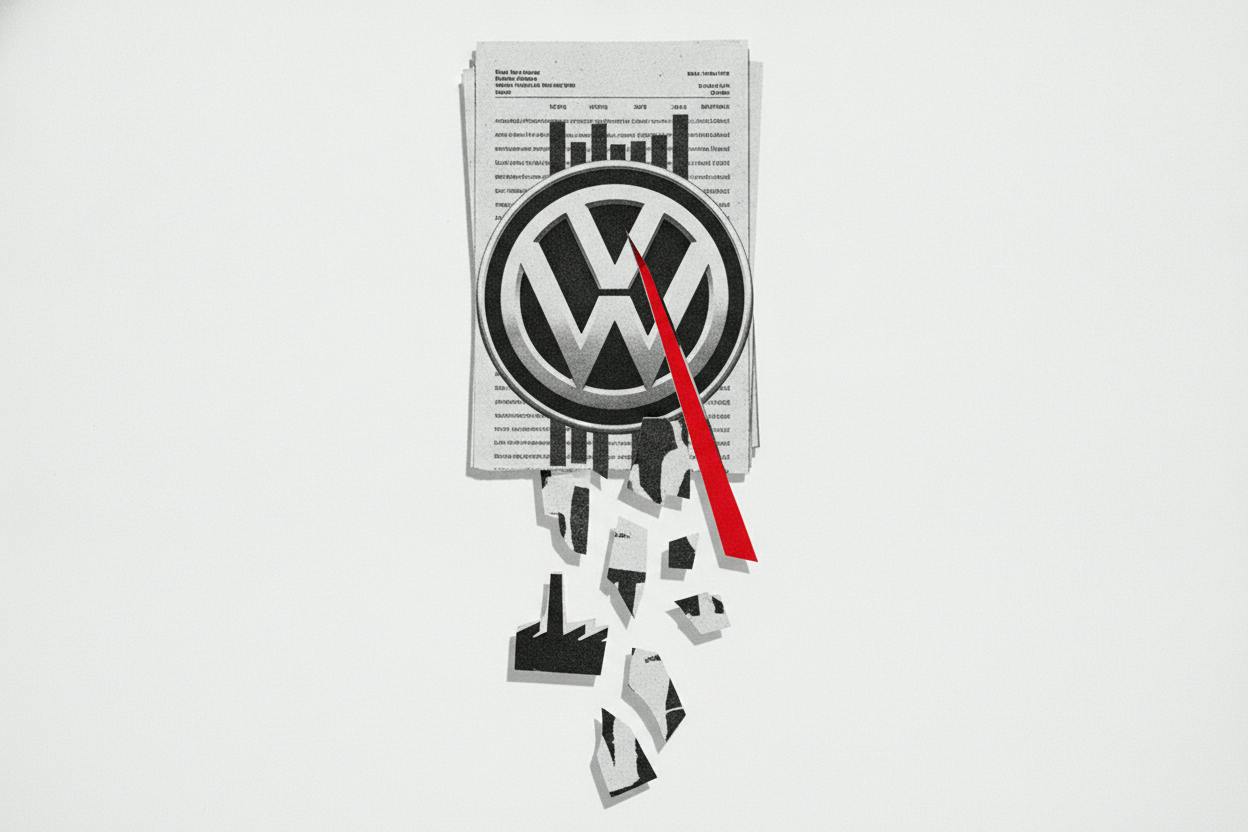
Volkswagen's supervisory board has given unanimous approval to its ambitious “Future Plan 2030” restructuring program, a sweeping overhaul aimed at cutting costs and repositioning the automaker for the next decade. But while the plan has cleared an internal hurdle, analysts at Berenberg caution that investors remain unconvinced until the company demonstrates it can follow through on the hardest parts: closing plants and selling off assets.
What the plan involves
The Future Plan 2030 is Volkswagen's long-term strategy to streamline operations, reduce excess capacity, and focus on more profitable segments. It is expected to involve significant restructuring, including plant closures and divestitures of non-core businesses. According to Berenberg, the plan includes one-off charges of 10-12 billion euros slated for the 2027-2030 period, reflecting the costs of these actions.
For context, one-off charges are costs that a company expects to incur from restructuring activities, such as severance payments, write-downs on assets, or penalties for breaking contracts. These charges are typically excluded from a company's “underlying” earnings, but they still hit the bottom line and can weigh on cash flow.
Why investors are cautious
Berenberg's note suggests that the plan's approval is a necessary step, but not sufficient to win over the market. The key issue is execution. Plant closures in Germany, where Volkswagen has a strong union presence and political sensitivity, are notoriously difficult to implement. Similarly, selling assets in a challenging economic environment can be slow and may not fetch the prices the company hopes for.
The analyst firm emphasizes that steady execution is critical. Investors want to see tangible progress, not just a blueprint. This is a common theme in large-scale restructurings: plans often look good on paper, but the market waits for proof that management can deliver on promises.
Volkswagen is not alone in facing these pressures. The broader European auto industry is grappling with high costs, slowing demand, and the transition to electric vehicles. Berenberg has also noted that Porsche's margin recovery will take years, highlighting the sector-wide challenges. Similarly, Mercedes-Benz faces headwinds from weak China demand and rising costs, according to the same analyst firm.
What it means for investors
For everyday investors, the key takeaway is that Volkswagen's restructuring is a long-term story with significant execution risk. The 10-12 billion euros in one-off charges will weigh on earnings in the late 2020s, potentially reducing dividends or requiring additional capital. However, if the plan succeeds, it could lead to a leaner, more profitable company in the 2030s.
Investors should watch for concrete milestones: announcements of specific plant closures, asset sale agreements, and quarterly updates on cost savings. Until then, the market is likely to remain skeptical, as Berenberg suggests.
It's also worth noting that Volkswagen's situation is part of a broader trend in the auto industry. The company is also considering phasing out its Seat brand in favor of Cupra, which would be another step in its portfolio rationalization. Such moves are typical of automakers trying to focus on higher-margin models and reduce complexity.
For investors, the lesson is to look beyond headline approvals and focus on execution. Restructuring plans can take years to bear fruit, and the path is rarely smooth. As with any major corporate overhaul, there are risks of delays, cost overruns, and unexpected setbacks.
Looking ahead
The next few years will be critical for Volkswagen. The company must navigate union negotiations, political pressures, and market conditions while executing its plan. Berenberg's cautious stance reflects the uncertainty. Investors will likely keep a close eye on any news about plant closures or asset sales, as these will be the first tangible signs of progress.
In the meantime, the broader market environment also matters. Interest rates, inflation, and consumer demand all play a role in how quickly Volkswagen can turn things around. Central bank decisions, such as the Bank of England's upcoming rate call, can influence financing costs and consumer spending, indirectly affecting automakers.
Ultimately, Volkswagen's Future Plan 2030 is a bold bet on the future. Whether it pays off for shareholders depends on the company's ability to execute. For now, investors are right to be cautious.