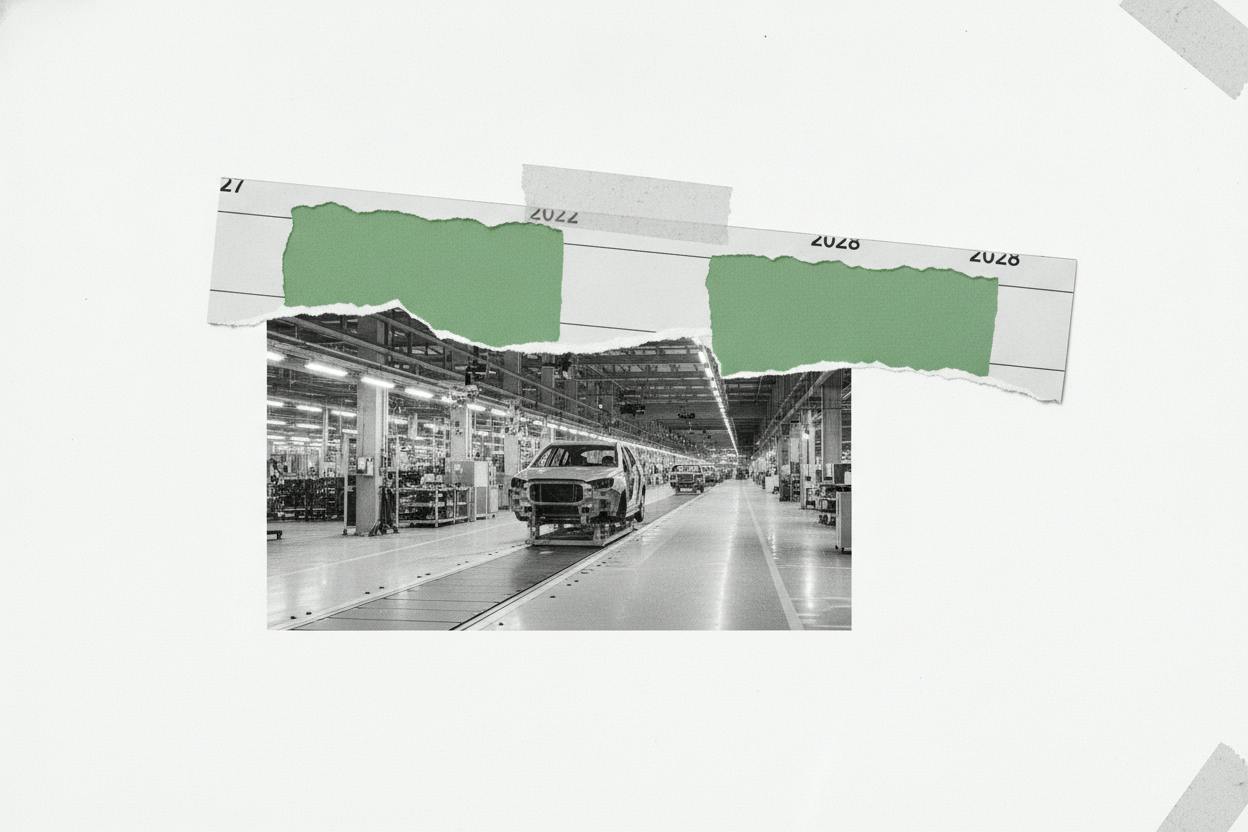
Volkswagen's electric-vehicle joint venture in China, Volkswagen Anhui, has no new models planned for 2027 or 2028, according to a Reuters report. The decision comes after the launch of its ID. UNYX lineup failed to meet sales expectations, and the factory is operating far below its annual capacity of 350,000 vehicles.
Volkswagen Anhui is a joint venture between Volkswagen, which owns 75%, and China's JAC Motors. The venture has yet to turn a profit, and its current lineup consists of four ID. UNYX models that were introduced in July 2024. Reuters reported that the company even shelved a crossover that had been considered for 2028.
Why is this happening?
China's electric-vehicle market is one of the most competitive in the world. Local brands like BYD, NIO, and Xpeng refresh their models frequently, often adding new features and cutting prices to stay ahead. Foreign automakers, including Volkswagen, have struggled to keep up with this pace.
The ID. UNYX lineup was meant to be Volkswagen's answer to this challenge, targeting younger, tech-savvy buyers. But sales have been disappointing, and the plant's low utilization rate suggests demand is not matching expectations. In the auto industry, running a factory well below capacity is costly because fixed costs—like labor and equipment—are spread over fewer vehicles, squeezing margins.
This is not an isolated issue for Volkswagen. The company has faced broader challenges in China, where its overall sales have declined as local EV makers gain ground. Other foreign brands are also feeling the pressure. For example, Nissan's operating profit plunged 96% recently, partly due to weak sales in China. Even luxury brands are adjusting their strategies; Ferrari has deprioritized China to protect its margins, according to RBC analysts.
What does this mean for investors?
For investors, this news is a reminder of the risks facing foreign automakers in China. The market is huge, but it is also brutally competitive, and success is not guaranteed. Volkswagen's decision to pause new models suggests it is being cautious about investing further in a venture that has not yet delivered returns.
It also highlights a broader trend: Chinese consumers are increasingly favoring domestic EV brands, which often offer more advanced technology and lower prices. This shift is putting pressure on global automakers that once dominated the Chinese market. The record Chinese trade surplus and the rise of local tech giants are part of the same story of China's growing industrial strength.
For everyday investors, this means that companies with heavy exposure to China's auto market may face headwinds. It's worth watching how Volkswagen and other foreign automakers adapt—whether they double down on partnerships, shift to software and services, or pull back further. The situation also underscores the importance of diversification, as no single market or product line is immune to disruption.
In the near term, investors will likely watch for updates on Volkswagen Anhui's utilization rates, any new strategic moves, and how the company plans to compete in China's rapidly evolving EV landscape. The broader Chinese stock market has been volatile, and auto stocks are particularly sensitive to shifts in consumer sentiment and government policy.
Ultimately, this is a cautionary tale about the challenges of competing in China's EV market. While the long-term potential remains, the road is full of obstacles, and even giants like Volkswagen are not immune to missteps.