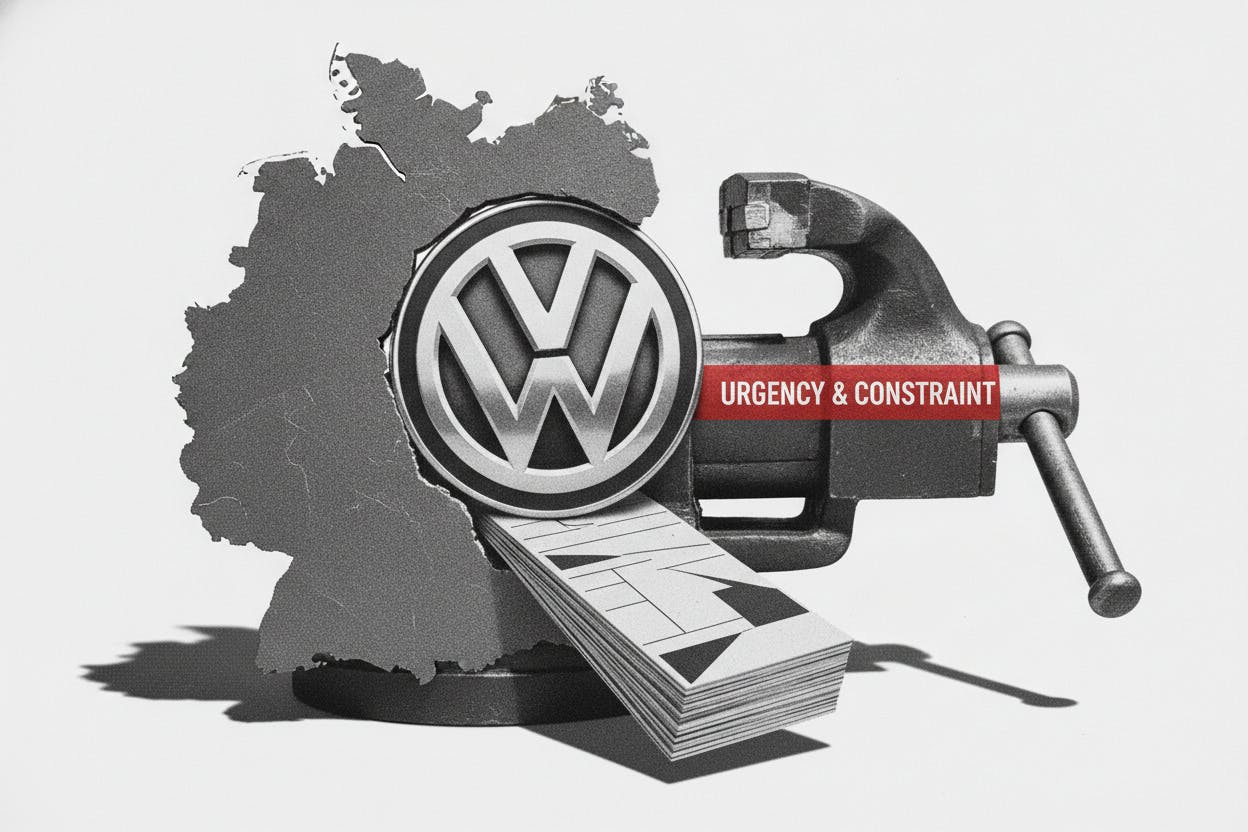
Volkswagen, Europe's largest automaker, is preparing for a deeper cost-cutting drive. The company's supervisory board has signed off on a 'Future Plan' that could put up to 50,000 more jobs at risk globally, on top of the 50,000 reductions already underway. The move is part of an effort to lower costs as the company faces mounting pressure from tariffs and increasingly competitive Asian rivals.
What's in the plan?
The board-backed overhaul goes beyond job cuts. It also involves rethinking the future of four German plants, which could mean production shifts, closures, or significant downsizing. Additionally, the plan aims to reduce the influence of the supervisory board, a body that traditionally includes labor representatives and state officials, making it easier for management to push through restructuring measures.
This is not the first round of cuts for Volkswagen. The company already has a separate program in place targeting 50,000 job reductions. The new plan would effectively double that number, signaling that the automaker sees the need for a much more aggressive cost structure.
Why is Volkswagen cutting so deeply?
The automotive industry is undergoing a massive transformation, and Volkswagen is feeling the squeeze from several directions. On one side, tariffs—particularly those imposed by the United States and other markets—are raising the cost of imported vehicles and components, eating into margins. On the other side, Asian competitors, especially Chinese electric vehicle makers, are gaining ground with lower-priced models and advanced technology.
Volkswagen has also been grappling with the high cost of transitioning to electric vehicles, a shift that requires heavy investment in new platforms, batteries, and software. At the same time, its traditional internal-combustion engine business is facing slowing demand in some regions.
The company's challenges are part of a broader trend affecting European automakers, who are struggling to maintain profitability while meeting stricter emissions regulations and competing globally. The restructuring plan has faced opposition from unions and the state of Lower Saxony, which holds a significant stake in the company.
What does this mean for investors?
For investors, the news is a double-edged sword. On the one hand, deeper cost cuts could improve Volkswagen's profitability over the long term, making the company more resilient. On the other hand, the scale of the job losses and plant rethinks suggests the company is in a more difficult position than previously thought, and execution risks are high.
Job cuts of this magnitude often lead to short-term costs, such as severance packages and restructuring charges, which can weigh on earnings. They can also create uncertainty among employees and customers, potentially affecting productivity and brand perception.
Investors will be watching closely to see how the plan is implemented and whether it delivers the promised savings. They will also look for signs that Volkswagen can stabilize its market share, especially in China, where it has historically been a leader but is now facing intense competition from local brands.
Broader economic backdrop
The news comes as Germany's economy shows mixed signals. Recent data suggests a slight brightening in the outlook, with some forecasters lifting growth expectations on the back of increased government spending. However, the services sector remains in contraction, and longer-term growth projections are modest. Germany's growth is expected to fade by 2028, according to one think tank, which could further pressure automakers like Volkswagen.
Volkswagen is a bellwether for the German economy, and its struggles are often seen as a proxy for the broader manufacturing sector. If the company can successfully restructure, it could provide a boost to the country's industrial base. If not, the fallout could ripple through suppliers and regional economies.
What to watch next
In the coming months, investors should monitor several key developments:
- Union negotiations: Labor representatives have historically been powerful at Volkswagen, and any attempt to cut jobs will likely face resistance. The outcome of these talks will be crucial.
- Plant decisions: The fate of the four German plants will be a major indicator of how deep the cuts will go.
- Financial results: Quarterly earnings will show whether the cost-saving measures are starting to show up in the bottom line.
- Competitive position: Watch how Volkswagen's electric vehicle sales fare against Asian rivals, particularly in China.
For everyday investors, this story underscores the challenges facing traditional automakers in a rapidly changing industry. While cost cuts can be positive for shareholders, they also signal that the company is fighting for its future. As always, it's important to consider the long-term outlook rather than reacting to short-term headlines.
Volkswagen's plan is a bold move, but it's not without risks. The company must balance the need to cut costs with the need to invest in new technologies and maintain the morale of its workforce. How it navigates this balance will determine whether the 'Future Plan' is a success or a stumble.