After a rough week that pushed the Nasdaq lower and left every Magnificent-7 stock in the red, Wall Street is turning its attention to a trio of market-moving events: the monthly jobs report, a speech from Federal Reserve Chair Kevin Warsh, and oil prices hovering near $70 a barrel as geopolitical tensions ease.
The selloff in big tech has been a stark reminder that even the market's biggest names aren't immune to volatility. The Magnificent-7—Apple, Microsoft, Alphabet, Amazon, Nvidia, Meta, and Tesla—have been the engine of the bull market for much of the past year, but last week's decline shows that sentiment can shift quickly when investors reassess valuations or worry about the broader economy.
Jobs Data in Focus
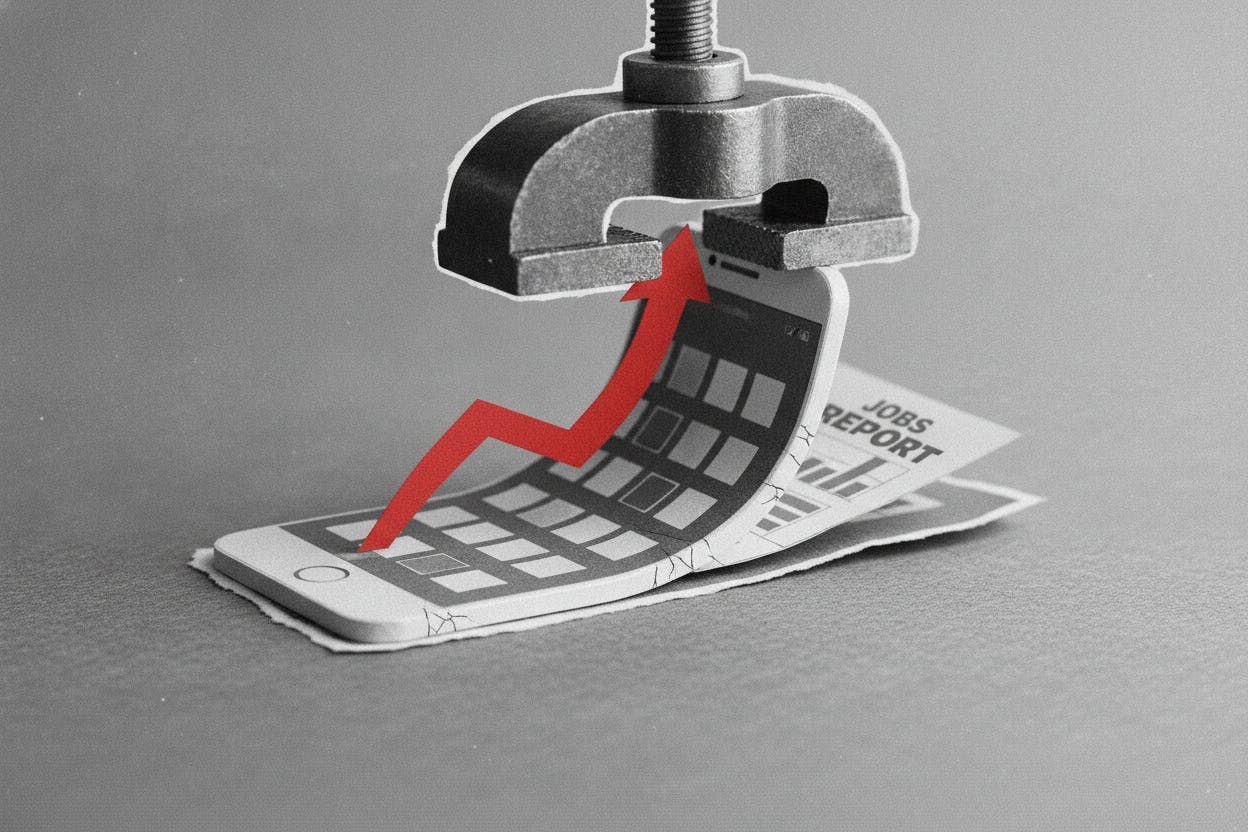
The key data point this week is Friday's nonfarm payrolls report. Economists will be watching closely for signs of whether the labor market is cooling enough to give the Fed room to cut rates, or staying too hot for comfort. A strong jobs number could reinforce the view that the economy is resilient, but it might also keep the Fed cautious about easing policy. A weak number, on the other hand, could reignite recession fears.
For everyday investors, the payrolls report is a window into consumer spending power—the backbone of corporate earnings. If hiring slows, it could signal that companies are pulling back, which might hit profits down the line.
Fed Chair Warsh Takes the Stage
Fed Chair Kevin Warsh is scheduled to speak on Wednesday, and markets will parse every word for clues about the central bank's next move. Warsh, who took the helm earlier this year, has been navigating a tricky environment: inflation has eased from its peaks but remains above the Fed's 2% target, while growth shows signs of softening.
Investors will be listening for any shift in tone—whether Warsh signals patience or hints at a willingness to cut rates if the economy weakens. The Fed's stance directly affects borrowing costs for mortgages, car loans, and business expansion, so any hint of a pivot can move markets.
Oil Steadies Near $70
Meanwhile, oil prices are hovering around $70 a barrel for West Texas Intermediate (WTI) crude, as US-Iran tensions appear to be cooling for now. Recent diplomatic efforts have reduced fears of a supply disruption in the Middle East, which had pushed prices higher earlier this month. Hong Kong stocks surged 1.6% as US-Iran talks eased oil disruption fears, reflecting the broader market relief.
Lower oil prices are generally good news for consumers and businesses, as they reduce costs for everything from gasoline to shipping. But for energy sector investors, the easing of tensions means less upward pressure on crude, which could weigh on oil company profits. Gulf stocks dipped as US-Iran ceasefire strains overshadowed Aramco's Ras Tanura restart, highlighting the complex dynamics at play.
What It Means for Investors
For everyday investors, the current environment calls for patience and a focus on the big picture. The tech selloff may feel alarming, but it's part of the normal ebb and flow of markets. The Magnificent-7 stocks have had an extraordinary run, and some pullback was likely as investors locked in profits or rotated into other sectors.
The key question now is whether the broader economy can hold up. Jobs data and Fed policy are the two biggest drivers of market sentiment in the near term. If payrolls come in strong and Warsh sounds dovish, that could reignite the rally. If the data disappoints or the Fed stays hawkish, the selloff could deepen.
Oil prices near $70 are a wild card. While lower crude is a tailwind for most of the economy, it also reflects geopolitical uncertainty that could flare up again. Indian stocks remained steady as US-Iran talks and Middle East tensions kept oil in focus, showing how global markets are watching the same dynamics.
Ultimately, this week will give investors a clearer picture of where the economy and markets are heading. The payrolls report and Warsh's speech are the main events, but oil and geopolitical developments will also play a role. As always, diversification and a long-term perspective remain the best tools for navigating uncertainty.