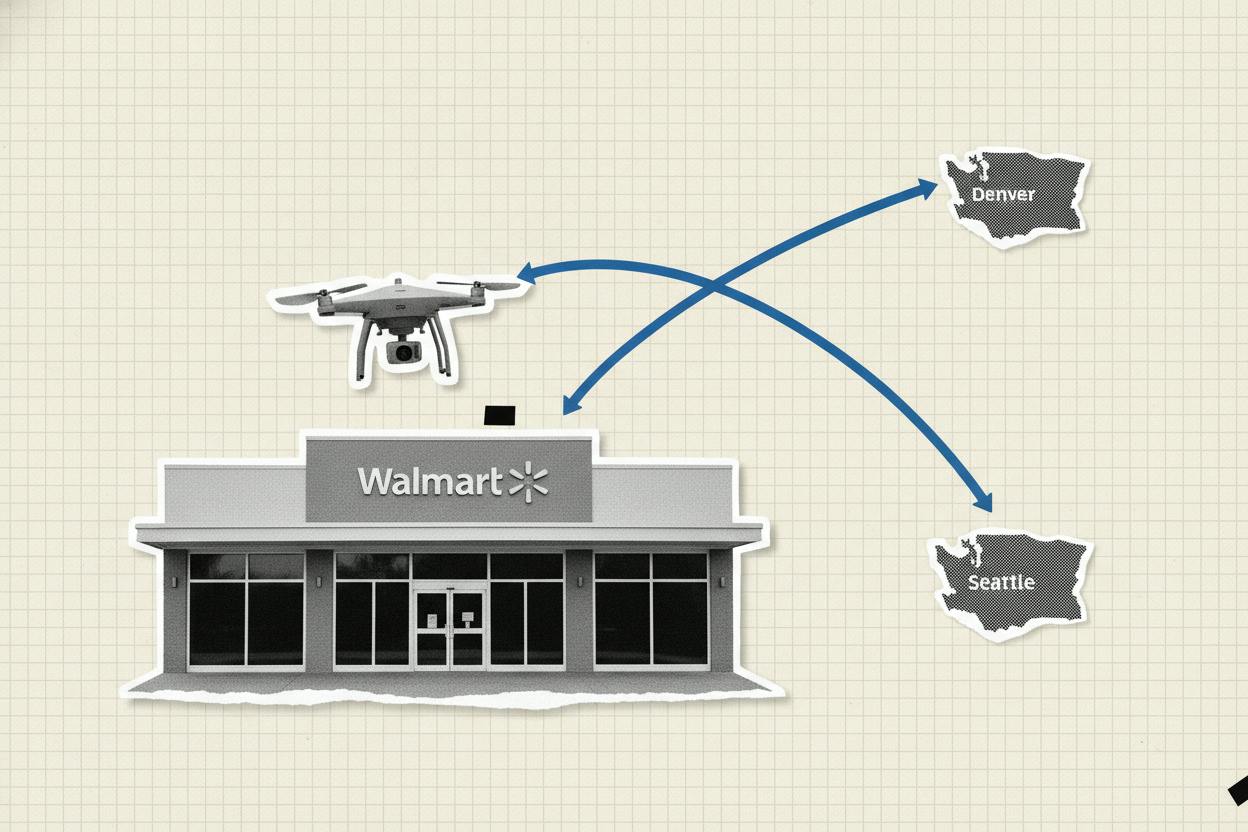
Walmart and Alphabet's drone delivery unit Wing are set to expand their aerial delivery service to the Denver and Seattle metropolitan areas in 2027. The companies say the move keeps them on track to serve nearly 20 US metro areas and more than 270 Walmart stores nationwide.
The announcement is the latest sign that drone delivery is moving from novelty to a more serious piece of retail logistics. For everyday shoppers, the promise is simple: order a small item, and have it dropped at your door in minutes, without a delivery driver ever getting behind the wheel.
Why drones? The last-mile problem
Retailers have been racing to make delivery faster while keeping costs under control. The so-called “last mile” — the final leg of a package's journey from a store or warehouse to the customer's doorstep — is often the most expensive part of the entire delivery process. It involves fuel, vehicle maintenance, and a human driver's time, all for a single package.
Drones aim to change that math on short, lightweight orders. Instead of dispatching a car and a driver, an automated drone can fly the item directly from a nearby store to the customer. That could cut delivery costs significantly, especially for small, urgent purchases like a forgotten ingredient or a phone charger.
But the real test is scale. A few drone flights are a novelty, while hundreds of daily drops across many stores can spread fixed costs — like the drones themselves, the software to run them, and the regulatory approvals — over a much larger volume. That's why Wing's expansion to nearly 20 metro areas and over 270 stores matters: it's an attempt to prove that drone delivery can be a real business, not just a publicity stunt.
What this means for investors
For investors, the Walmart-Wing expansion is a signal about the future of retail logistics. Companies that can master cheap, fast delivery may gain a competitive edge in winning online orders, especially for everyday essentials where speed matters.
Walmart has been investing heavily in its e-commerce and delivery infrastructure to compete with Amazon and other online retailers. Partnering with Wing, a subsidiary of Alphabet, gives Walmart access to drone technology without having to build it from scratch. For Alphabet, the deal is a way to turn Wing into a meaningful commercial business, rather than just an experimental project.
The move also fits a broader trend of automation in delivery. Other companies are testing autonomous vehicles, sidewalk robots, and even satellite-based connectivity to support remote operations. The key question for investors is whether these technologies can scale profitably.
Challenges ahead
Drone delivery still faces hurdles. Regulations from the Federal Aviation Administration (FAA) limit where and when drones can fly, and companies need approval to operate beyond the visual line of sight of a pilot. Weather can also ground flights, and noise concerns have been raised in some communities.
Wing has been operating drone delivery in select US markets, including parts of Texas and Virginia, as well as in Australia and Finland. The company says it has completed tens of thousands of deliveries, but scaling to hundreds of stores will require significant investment in infrastructure and regulatory compliance.
For Walmart, the expansion is part of a broader push to use technology to improve its supply chain. The retailer has also been testing other automation, such as robotic warehouses and self-driving trucks. Investors will be watching to see if these investments translate into lower costs and faster delivery times that can drive customer loyalty.
What to watch next
Over the next couple of years, the key metrics to watch will be the number of daily drone deliveries per store, the average cost per delivery, and how quickly Wing can get regulatory approvals for new markets. If drone delivery can achieve high volume at low cost, it could become a standard option for online shoppers. If not, it may remain a niche service for select urban areas.
For now, the Denver and Seattle expansions are a sign that both Walmart and Alphabet believe the economics are improving. As the technology matures and regulations evolve, drone delivery could become as routine as ordering a package online — and that would be a big deal for the retail industry and its investors.