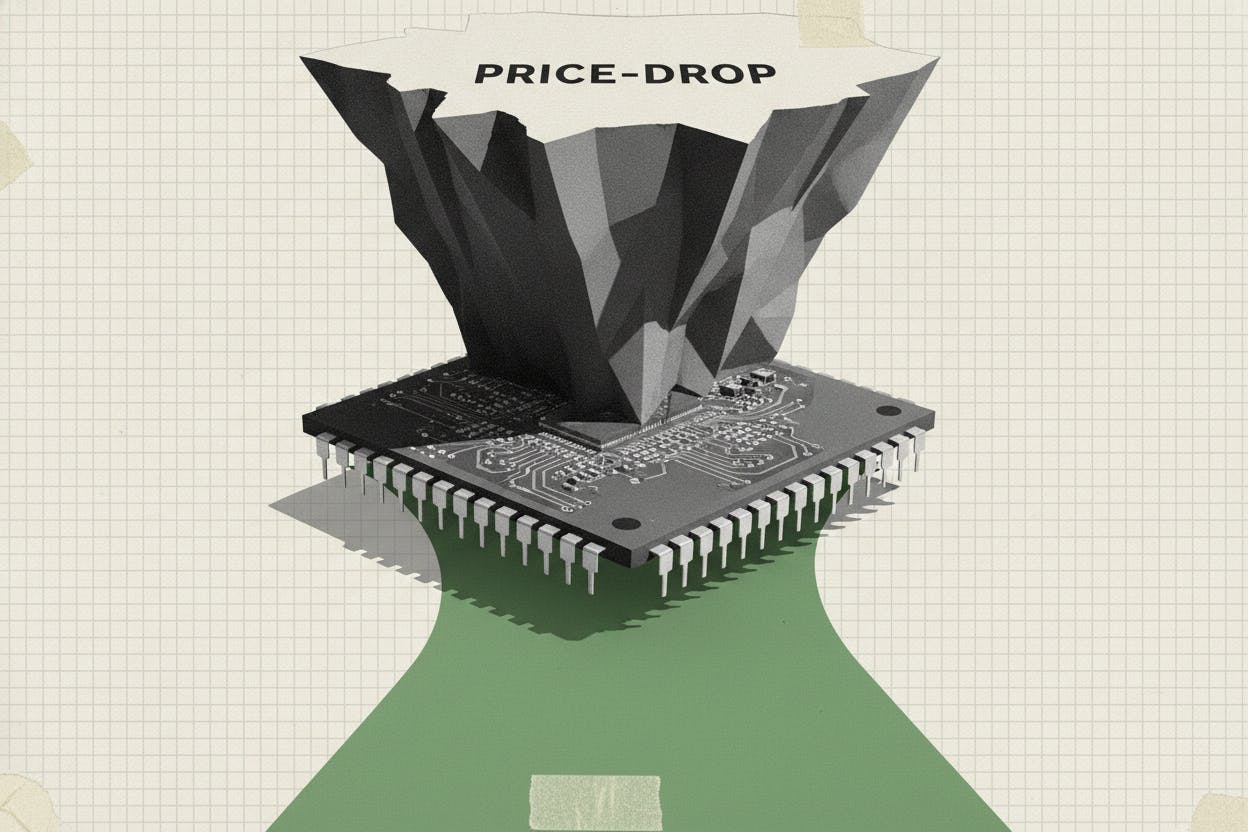
Wedbush, a U.S. brokerage, has raised its price target on AI chipmaker Cerebras Systems to $280 from $270, even as the stock fell 16% on Wednesday to $189.63. The move signals that the firm sees the recent selloff as an overreaction, with underlying business trends still pointing higher.
What Wedbush Sees
Wedbush says the drop doesn't change its bigger picture. The brokerage noted that Cerebras' revenue and profitability came in slightly ahead of its own expectations, helped by stronger hardware sales and higher pricing for the company's cloud service. The firm expects a similar pattern to show up in second-quarter guidance, with revenue again coming in above its forecast.
The catch is margins. Wedbush thinks gross margin — the share of sales left after direct costs — will likely shrink as OpenAI-related revenue grows and changes the mix of what Cerebras sells. Still, the broker now expects that drag to be smaller than it previously modeled, which is why it's comfortable lifting its target while keeping its “outperform” rating.
Why the Stock Dropped
The 16% decline on Wednesday suggests some investors were spooked by the margin outlook or perhaps took profits after a strong run. Cerebras, which makes specialized chips for artificial intelligence workloads, has been a high-profile name in the AI hardware space, competing with giants like Nvidia. But the market is increasingly focused on profitability, not just revenue growth.
From here, Wedbush's upside case leans on execution: new products that improve performance, the ability to raise prices without denting demand, more data center capacity to support the cloud business, and continued appetite for AI computing. If those factors align, the brokerage sees room for the stock to climb well above its current level.
What It Means for Investors
Wedbush's $280 target versus $189.63 keeps the focus on gross margin. A higher target right after a sharp selloff is Wedbush saying its model now sits further above the market price — implying a big valuation gap if its assumptions hold. But the debate isn't just “AI demand.” It's whether upcoming guidance and results show enough revenue upside to offset mix-driven margin pressure as OpenAI revenue ramps up, and whether profitability finds a floor that supports the broker's 2026 view. If margins slide faster than expected, that model-to-market gap can close quickly even with solid sales growth.
For everyday investors, this story highlights a key tension in the AI chip sector: rapid revenue growth often comes with shifting cost structures. Cerebras is riding a wave of demand, but the mix of what it sells — more cloud services versus hardware — can change how much profit it keeps per dollar of sales. Watching gross margin trends in future earnings reports will be crucial.
Broader market context also matters. The AI hardware space has seen intense competition and occasional volatility, as seen in other tech names. Meanwhile, global markets are digesting a range of signals, from oil price moves to shifts in consumer sentiment. But for Cerebras, the near-term focus remains on execution and margin discipline.
Looking Ahead
Wedbush's updated price target suggests confidence that Cerebras can navigate the margin challenge. The brokerage's “outperform” rating implies it expects the stock to beat the broader market over the next 12 to 18 months. However, the gap between the target and the current price — about 48% upside — also reflects the risk that the market may not fully buy the margin story until it sees concrete results.
Investors should keep an eye on Cerebras' next earnings report, particularly the gross margin figure and any guidance on the OpenAI revenue mix. If the company can show that margin pressure is easing, the stock could recover. If not, the selloff may have further to run.