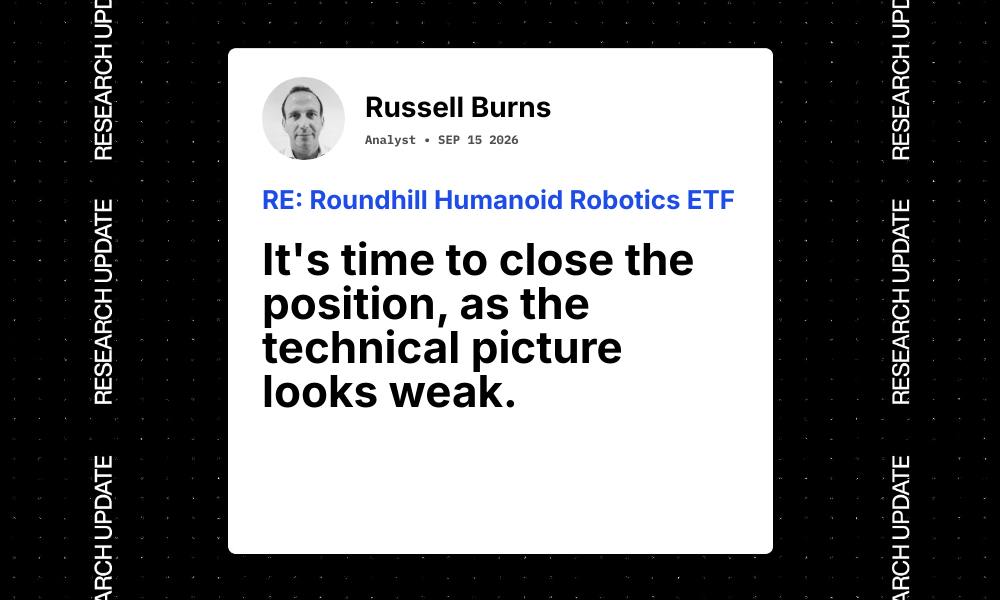
For investors, knowing when to sell can be as important as knowing when to buy. Sometimes, the signals align in a way that makes the decision clear. That's the situation one market observer describes: between an underlying analysis that's not inspiring confidence and a macro backdrop that's challenging, it's time to call it.
This isn't about panic or a hasty decision. It's about a disciplined approach to risk management. Technical analysis—the study of price charts and indicators—can help investors identify when a position has lost its momentum or when the risk-reward balance has shifted.
The Tools of Technical Analysis
Technical analysts use a variety of tools to gauge the health of a stock or market. Among the most common are moving averages, which smooth out price data over a specific period to reveal the underlying trend. A short-term moving average (like the 50-day) crossing below a long-term one (like the 200-day) is often seen as a bearish signal, suggesting that recent price action is weakening relative to the longer-term trend.
Another key indicator is the Moving Average Convergence Divergence, or MACD. This tool tracks the relationship between two moving averages and is used to identify momentum. When the MACD line crosses below its signal line, it can indicate that downward momentum is building. For many traders, a combination of these signals—falling moving averages, bearish MACD crosses, and price action that fails to hold key support levels—can be a strong hint that it's time to exit.
The Macro Backdrop Matters
Technical signals don't exist in a vacuum. The broader economic environment plays a huge role in whether a position is likely to succeed. Right now, the equity market and economy are facing headwinds. Higher energy prices are squeezing margins and consumer budgets. Inflation remains a persistent concern, eroding purchasing power and prompting central banks to keep interest rates higher for longer. Bond yields have been climbing, which makes fixed-income investments more attractive relative to stocks and increases the cost of borrowing for companies.
This combination is a tough one for equities. When bond yields rise, the present value of future earnings falls, which can pressure stock valuations. Higher energy costs can hurt corporate profits, especially in sectors like transportation and manufacturing. And persistent inflation can lead to more aggressive monetary policy, which can slow economic growth.
These macro factors can reinforce technical signals. If a stock is already showing technical weakness, a challenging macro environment can accelerate the decline. Conversely, a strong macro backdrop can sometimes override technical warnings, but that's not the case here.
What It Means for Everyday Investors
For the average investor, this kind of analysis might seem complex, but the takeaway is simple: sometimes it's wise to step back and reassess. If you're holding a position that has been declining, and the technical indicators are turning negative, it might be time to consider cutting your losses or taking profits before things get worse.
It's also a reminder that investing isn't just about picking winners—it's about managing risk. Having a plan for when to sell is just as important as having a plan for when to buy. This could involve setting stop-loss orders, rebalancing your portfolio, or simply being willing to admit when a thesis isn't working out.
The current environment, with its mix of inflation, high energy prices, and rising bond yields, is particularly challenging. As we've seen in recent data, consumer confidence has slipped in some regions, reflecting the strain on household budgets. And rising oil prices are creating a tug-of-war in bond markets, adding to the uncertainty.
For those who use technical analysis, the message is clear: when the indicators and the macro picture both point in the same direction, it's often wise to listen. That doesn't mean selling everything and heading for the hills, but it does mean being more cautious and selective about where you put your money.
In the end, the decision to exit a position is never easy. But having a systematic approach—one that combines technical signals with an awareness of the broader economy—can make it less emotional and more rational. As the saying goes, sometimes the best trade is the one you don't make, but sometimes it's the one you do—when the signals say it's time to say goodbye.