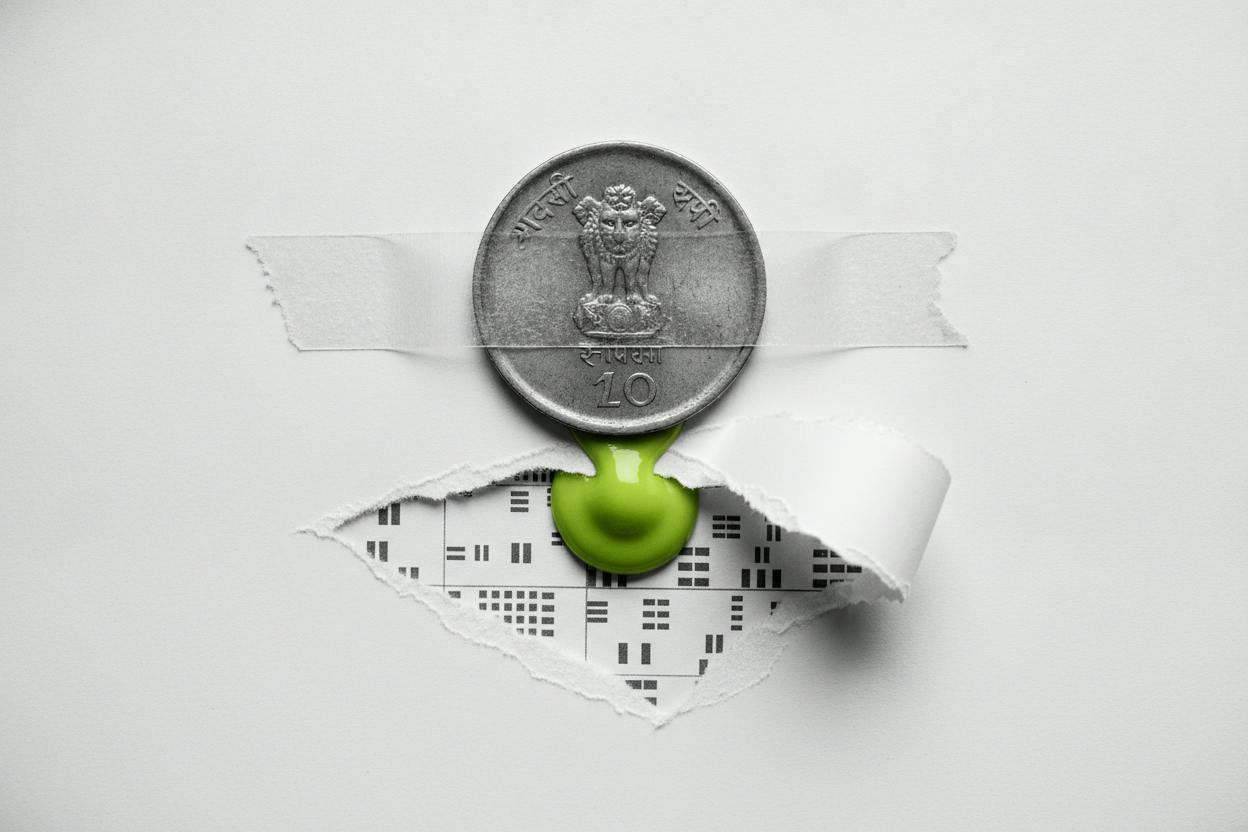
India's rupee has found its footing in recent sessions, helped by a series of moves from the Reserve Bank of India (RBI). But beneath the calmer spot market, a different story is playing out in the derivatives market, where investors are still paying a premium to protect themselves against further weakness in the currency.
That gap between the relatively steady spot rate and the cautious tone in forwards and options is a signal worth understanding, especially for anyone with money tied to Indian assets or the rupee itself.
What the RBI has been doing
The rupee has been under pressure for months, squeezed by a costly oil import bill and steady outflows of foreign money from Indian markets. Even after a recent bounce, the currency remains vulnerable to global shifts in risk appetite and energy prices.
To smooth the ride, the RBI has stepped in. According to Reuters, the central bank has been selling dollars directly to state-run oil companies, shifting an estimated $10-12 billion of monthly dollar demand away from the open market. That removes a chunk of buying pressure that would otherwise hit the rupee in the spot market.
The RBI has also added reserve requirements for large hedges, making it more expensive for banks to offer those products. The idea is to discourage speculative bets against the rupee and reduce the kind of one-way positioning that can amplify declines.
These steps have helped keep the spot rate steadier than it might otherwise be. But they don't change the underlying forces that pushed the rupee down in the first place.
Why hedgers are still cautious
Forward and options prices reflect what investors expect to happen to a currency down the road, not just where it trades today. When those prices show people paying up for protection, it means the market is not convinced the calm will last.
In this case, the pricing suggests investors are still bracing for more rupee weakness, even as the spot rate holds its ground. That's a classic sign that the RBI's intervention has bought time, but not necessarily changed the broader outlook.
For everyday investors, the takeaway is straightforward: the rupee's stability is partly a product of central bank action, not just market confidence. That kind of support can fade, especially if global conditions turn rougher.
What it means for investors
If you hold Indian stocks or bonds, a weaker rupee can eat into returns when you convert them back to dollars or other foreign currencies. Even if the local market rises, a falling rupee can offset those gains for international investors.
For those with exposure to Indian assets, watching the forward and options market can give a clearer read on sentiment than the spot rate alone. The fact that hedgers are still paying up suggests they see more downside risk ahead, even if the spot market looks calm.
The RBI's tactics also have a cost. By selling dollars directly to oil companies, the central bank is using its reserves to manage the currency. And by making hedging more expensive, it may be pushing some of that cost onto businesses that genuinely need protection, like importers.
That's a trade-off worth noting. The RBI is trying to avoid a sharp, disorderly fall in the rupee, but the measures can also distort market signals and shift costs around.
What to watch next
Investors will be keeping an eye on oil prices, which have been a major driver of the rupee's moves. A sustained drop in crude would ease pressure on India's import bill and could help the currency on its own, without needing as much central bank support.
Foreign flows are another key factor. If overseas investors return to Indian markets, that would provide a natural source of dollar inflows and take some weight off the RBI.
For now, the rupee's steadiness is welcome, but the hedging market is a reminder that calm can be fragile. As always, it pays to look beyond the headline number and understand what's really driving the move.