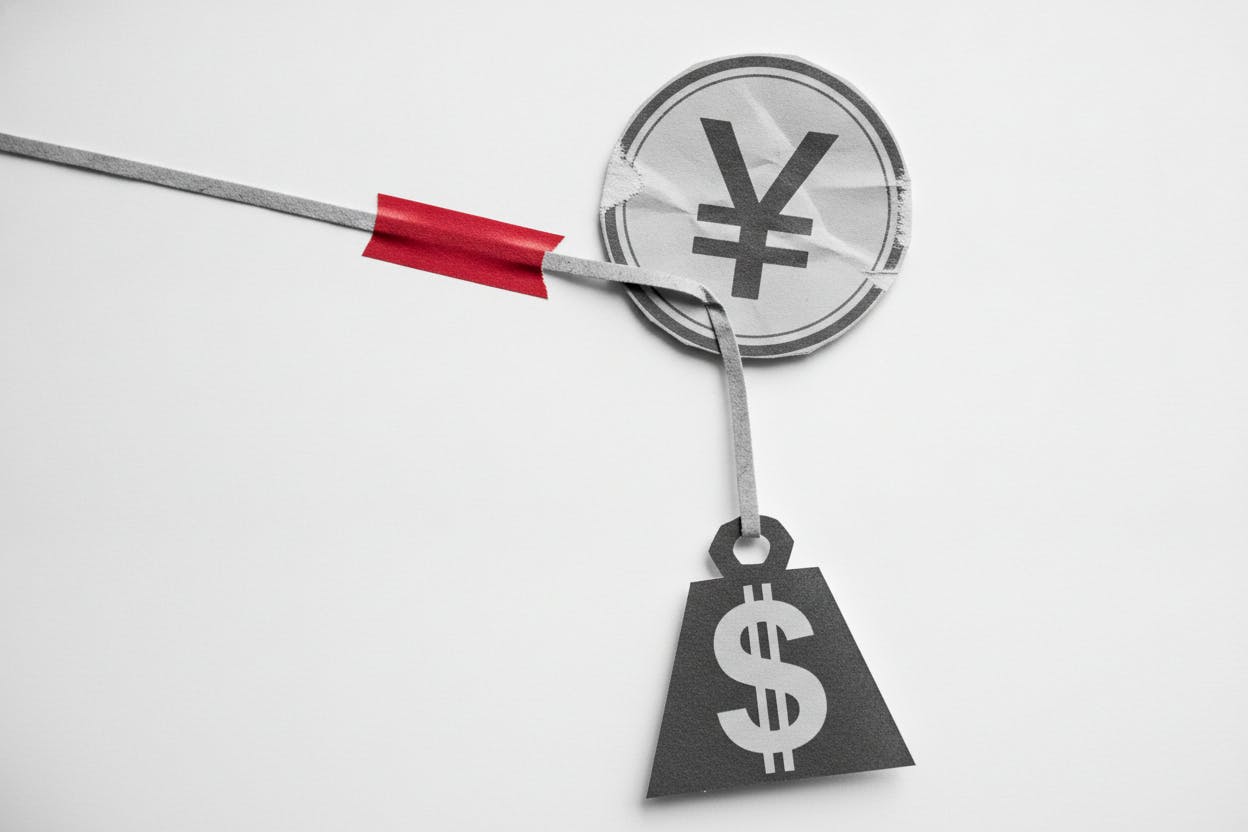
The Japanese yen may weaken to 170 against the US dollar before policymakers can put a lasting floor under the currency, according to Joe Brusuelas, chief economist at RSM US. The warning comes after Japan's earlier efforts to prop up the yen—direct intervention in April and May—failed to produce lasting relief.
Why the Yen Is Under Pressure
The core problem is a wide gap between interest rates in the US and Japan. The Federal Reserve has held its benchmark rate above 5% to fight inflation, while the Bank of Japan (BOJ) has only gradually raised its rate from near zero to around 0.25%. That difference makes it more profitable for investors to hold dollars than yen, encouraging so-called carry trades.
In a carry trade, investors borrow in a low-interest currency like the yen and invest in a higher-yielding one, pocketing the difference. This constant selling of yen to buy dollars keeps downward pressure on the Japanese currency. As Brusuelas noted, the underlying incentives haven't changed, so the yen's slide continues.
Intervention: A Temporary Fix
Japan's Ministry of Finance stepped into currency markets in April and May after the dollar-yen exchange rate broke above 160. That intervention—selling dollars and buying yen—briefly pushed the yen stronger. But the effect faded quickly as traders returned to the same carry trades. Brusuelas suggests that intervention may return, but it's unlikely to be a permanent solution unless the rate gap narrows.
The BOJ has raised rates twice this year, but those moves have been small. Investors are watching for signals of further hikes, but the central bank has been cautious, wary of disrupting Japan's fragile economic recovery. The recent government backing down on BOJ policy language after market turmoil highlights the delicate balance policymakers face.
What a Weaker Yen Means for Investors
A yen at 170 per dollar would be a historic low, surpassing the 160 level that triggered intervention earlier this year. For everyday investors, a weaker yen has mixed implications.
For those holding Japanese stocks, a weaker yen can boost the value of exporters' earnings when converted back to yen. Companies like Toyota and Sony benefit because they sell products globally but report profits in yen. However, the broader market impact depends on whether the slide is orderly or chaotic. A rapid, uncontrolled fall could spook global markets and hurt investor confidence.
For investors outside Japan, a weaker yen means Japanese assets become cheaper in dollar terms. That could create buying opportunities, but it also raises the risk of currency losses if the yen later strengthens. Currency-hedged exchange-traded funds (ETFs) can help manage that risk.
Japanese bond yields have been diverging, with the 10-year yield edging up while the 20-year yield fell on strong auction demand, as reported in Japan's bond market dynamics. That suggests investors are still seeking safety in longer-dated Japanese government bonds, even as the yen weakens.
What to Watch Next
Investors should watch for three key signals. First, any further BOJ rate hikes—even small ones—could slow the yen's decline. Second, direct intervention by Japan's Ministry of Finance could provide temporary support. Third, a shift in US interest rate expectations, such as signs the Fed might cut rates, would narrow the rate gap and reduce pressure on the yen.
Brusuelas' forecast of 170 is not a certainty, but it reflects the reality that current policy tools may not be enough. As he put it, the BOJ's rate hikes alone may not stop the slide. Until the fundamental rate gap closes, the yen is likely to remain under pressure.
For investors with exposure to Japan—whether through stocks, bonds, or currency—the key is to stay informed and consider hedging strategies. The yen's path will depend on a complex interplay of central bank actions, government intervention, and global economic trends.



