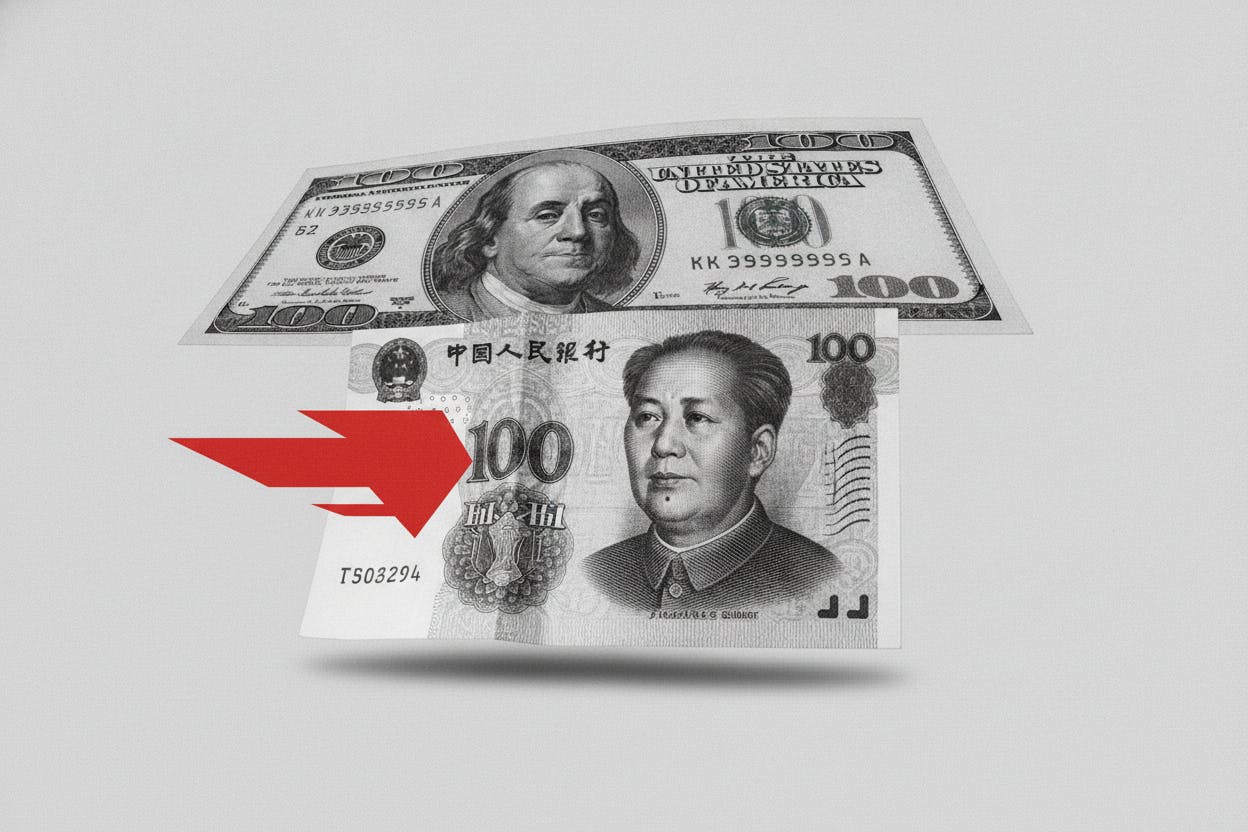
China's yuan edged lower on Friday, easing to around 6.775 per US dollar, as escalating tensions in the Middle East prompted a shift toward safer assets. The move interrupted a recent rally that had brought the currency close to a one-month high earlier in the week.
What Happened
The yuan dipped in both onshore and offshore trading, according to Reuters data, even as it remained on track for a third consecutive weekly gain. The immediate trigger was a renewed bout of geopolitical uncertainty: Iran announced new attacks on US facilities in the Gulf region following additional American strikes, stoking fears of a broader conflict.
In such risk-off moments, the US dollar often benefits as investors seek a safe place to park cash. That dynamic weighed on the yuan and other emerging-market currencies Friday. The dollar index, which measures the greenback against a basket of major currencies, edged higher on the day.
Broader Context
Despite Friday's slip, the yuan's recent performance has been relatively strong. The currency has gained ground over the past three weeks, supported by signs of cooling US inflation and expectations that the Federal Reserve may slow its pace of interest rate hikes. Softer US inflation data earlier this week had pushed the dollar lower, giving the yuan room to appreciate.
But the Middle East risk has complicated that picture. Oil prices have surged on supply concerns, and a spike in crude costs can pressure import-dependent economies like China's. Higher energy prices also feed into inflation globally, which could keep central banks—including the People's Bank of China—cautious.
For context, the yuan's movements are closely watched by global investors because China is the world's second-largest economy and a major trading partner for many countries. A weaker yuan makes Chinese exports cheaper but can also raise the cost of imported goods and raw materials, including oil.
What It Means for Investors
For everyday investors, currency fluctuations like this matter in several ways. A softer yuan can affect the returns on international investments, especially for those holding Chinese stocks or bonds. It can also influence the performance of multinational companies that do business in China, as their earnings in yuan are worth less when converted back to dollars.
The broader takeaway is that geopolitical events remain a wild card for markets. The Middle East situation has injected uncertainty into what was otherwise a relatively calm week for currencies. Investors should watch for further developments in the region, as well as upcoming economic data from China—such as trade figures and industrial production numbers—that could provide more clues on the yuan's direction.
Meanwhile, the dollar's strength is not guaranteed. As noted, softer US inflation has reduced the case for aggressive Fed rate hikes, which could limit the greenback's upside. Some analysts believe the yuan could resume its upward trend if geopolitical tensions ease and China's economic recovery gains traction.
In related currency news, India's rupee neared a record low this week, pressured by rising oil costs and dollar demand. And in commodities, palm oil slipped Friday but remained on track for a second weekly gain, reflecting broader market crosscurrents.
Looking Ahead
Investors will be watching next week for any escalation in the Gulf region, as well as key economic releases from China, including its monthly trade balance and consumer price index. The People's Bank of China is also expected to set its daily yuan fixing rate, which guides market trading, and any shift in that rate could signal policy intentions.
For now, the yuan's path remains tied to both geopolitics and the dollar's broader trajectory. Friday's dip is a reminder that even in a week of gains, currency markets can turn quickly on unexpected news.



