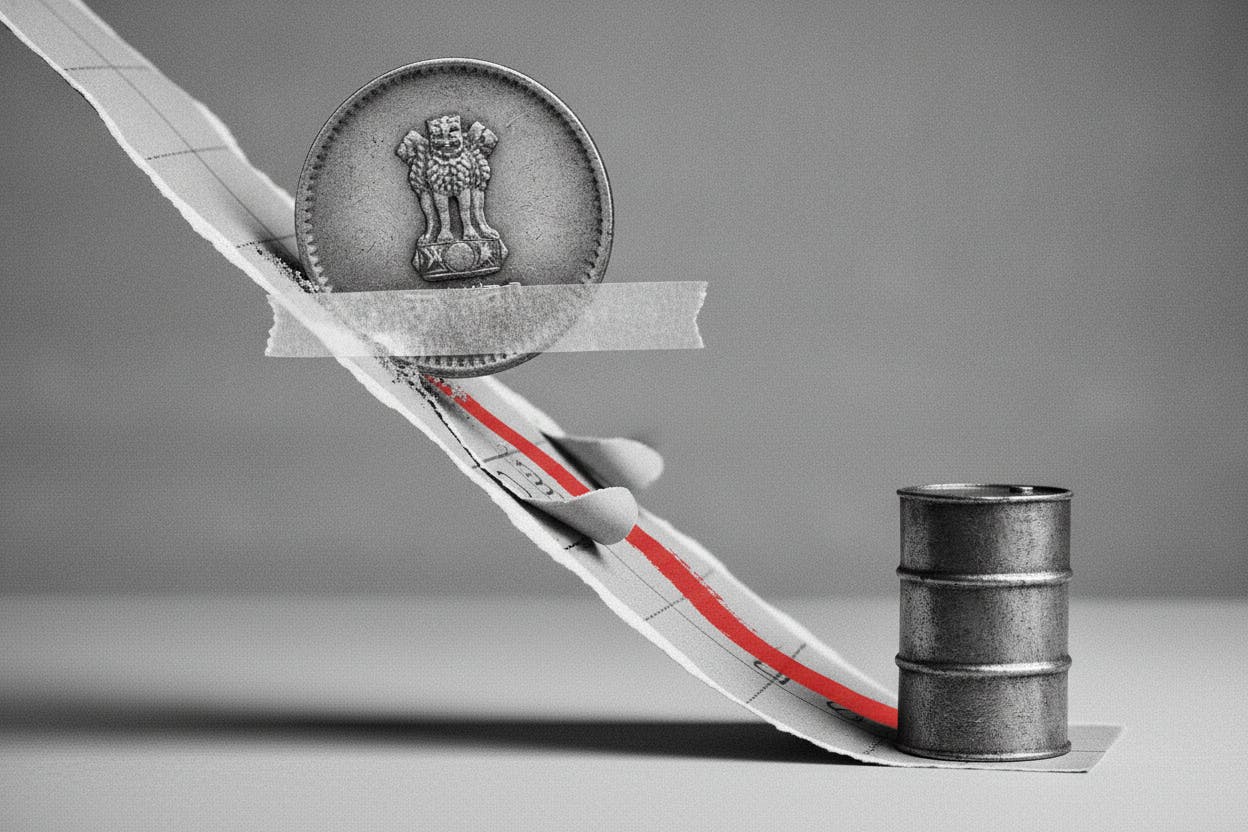
The Indian rupee is sliding toward its record low, with traders bracing for a weaker open as expensive oil and fading global risk appetite keep pressure on the currency. The rupee is expected to open around 96.40-96.44 per US dollar, not far from May's all-time low near 96.96.
This comes despite a recent return of overseas investors to Indian stocks and bonds this month. The problem is that near-term demand for dollars from importers—who need greenbacks to pay invoices and hedge currency exposure—can easily outweigh portfolio inflows on any given day.
RBI's Role: Smoothing, Not Defending
The Reserve Bank of India (RBI), the country's central bank, has been actively intervening in both the spot market and the non-deliverable forward market—a popular offshore way to bet on currencies. But traders say the RBI's approach has been more about smoothing volatility than defending a specific exchange rate level.
This is a shift from past episodes when the central bank would aggressively defend a particular line in the sand. Instead, the RBI now appears willing to let the rupee find its own level, stepping in only to prevent disorderly moves.
Oil: The Big Pressure Point
Oil remains the key driver of rupee weakness. Brent crude is holding near $85 a barrel after a sharp weekly jump, and because India imports most of its crude oil, higher dollar-priced energy tends to widen the country's import bill and keep dollar demand elevated.
For everyday investors, the connection between oil prices and the rupee matters because it affects fuel costs. Oil is priced in dollars, so when the rupee weakens, the same barrel of oil costs more in local currency even if the dollar price doesn't change. That higher rupee cost often passes through into everyday categories like transport, logistics, and air travel, and it can also lift the price of other imported goods that are invoiced in dollars.
What It Means for Investors
For Indian investors, a weaker rupee has several implications. First, it can make imported goods more expensive, potentially feeding into inflation. If inflation becomes stickier, it could complicate the RBI's path to easier interest rates, which matters for everything from loan costs to savings returns.
Second, companies that rely heavily on imported raw materials or have dollar-denominated debt may see their costs rise and profits squeezed. On the other hand, export-oriented companies—like IT services firms and pharmaceutical makers—tend to benefit from a weaker rupee because their revenues are in dollars while costs are in rupees.
The broader market context is also worth watching. The rupee's slide comes as global risk appetite fades, with investors turning cautious on emerging markets. This dynamic was reflected in recent market moves, as the Sensex held steady even as the rupee slipped, with IT stocks rebounding to offset bank losses.
Meanwhile, the RBI's next moves will be closely watched. The central bank has a key bond auction looming, where it will test market demand for 320 billion rupees of government securities. How that auction goes could signal whether foreign investors remain interested in Indian debt, which in turn affects rupee demand.
For now, the rupee's path depends heavily on oil prices and global risk sentiment. If Brent stays near $85 or rises further, the rupee could test its record low. If risk appetite improves and oil eases, the currency might find some relief—but traders say the bias remains toward weakness in the near term.