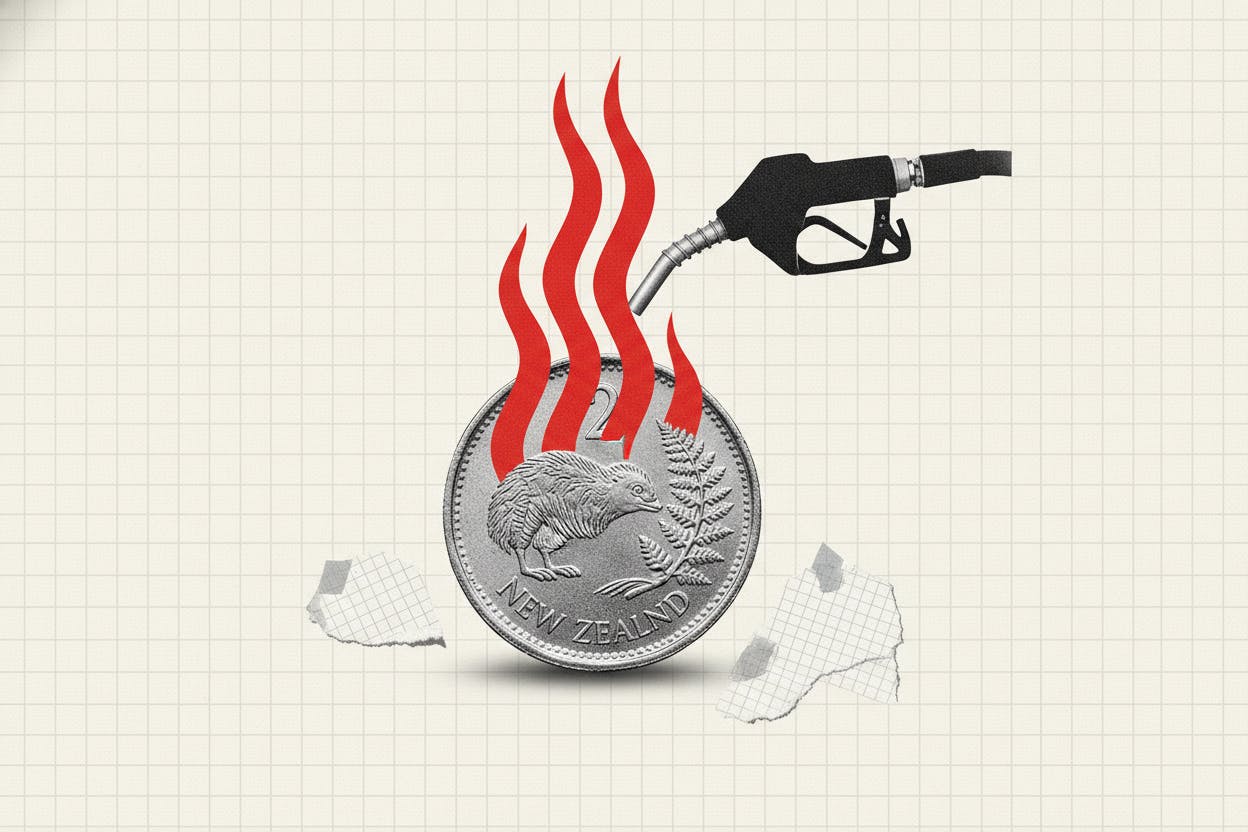
One of New Zealand's largest banks is sounding the alarm that inflation may be heating up again, just as the Reserve Bank of New Zealand (RBNZ) tries to cool the economy. ANZ now expects headline consumer prices to rise 4% in the second quarter, a figure that sits above the central bank's own 3.9% forecast. The main culprit: higher fuel costs that could spill into the broader cost of living.
What ANZ's Forecast Shows
In a research note, ANZ economists highlighted that the composition of inflation matters as much as the headline number. They project tradable inflation—prices heavily influenced by global markets, such as fuel and imported goods—to jump to 4.8%. Meanwhile, non-tradable inflation, which includes domestically set prices like rents and services, is expected to cool only modestly to 3.4%.
The bank also sees inflation rising 1.4% quarter-on-quarter, driven mostly by gasoline, even after accounting for some faster-than-expected easing in fuel costs and lower drug prices. This suggests that the recent drop in New Zealand fuel prices, while welcome, may not be enough to offset broader pressures. For context, annual fuel costs remain high despite recent declines.
The Risk of Second-Round Effects
The key worry for policymakers is what economists call "second-round effects." If businesses pass on higher fuel costs quickly—through higher transport charges, food delivery fees, or other services—but are slow to cut prices when those costs fall, a temporary fuel shock can become embedded in the wider consumer price index. This can make domestic inflation "sticky" and harder to squeeze out.
Central banks often try to look past fuel-driven price jumps because they are tied to global commodity prices, not local demand. But if those costs seep into everyday items like transport, food services, and other essentials, investors tend to treat it less like a one-off and more like inflation that is difficult to tame. That is when short-term interest rate expectations and short-dated government bond yields usually move first.
What It Means for Investors
ANZ's 4% call could shift bets on the official cash rate path. If the RBNZ concludes that fuel costs are feeding into broader inflation, it may feel the need for a bigger or longer run of rate hikes than markets were expecting. This would be a reversal from the recent narrative that the central bank might be nearing the end of its tightening cycle.
For investors, the New Zealand dollar often becomes a quick barometer of these expectations. When the expected policy-rate track changes, the kiwi dollar tends to react. A more hawkish RBNZ would typically support the currency, but it could also weigh on equities and interest-rate-sensitive sectors like housing and consumer discretionary.
Globally, central banks are grappling with similar dynamics. The U.S. Federal Reserve has also signaled that rate hikes remain on the table if inflation stalls, and Kansas City Fed President Schmid recently warned against reading too much into one-off data. The risk of sticky inflation is not unique to New Zealand.
Broader Economic Context
New Zealand's economy has been under pressure from high interest rates, which have cooled housing and consumer spending. But if inflation reaccelerates, the RBNZ may have to keep rates higher for longer, delaying any relief for borrowers. This could also affect corporate earnings, as companies face higher input costs and weaker demand.
For everyday investors, the key takeaway is that inflation is not yet vanquished. Even as headline numbers moderate, the composition matters. Fuel-driven inflation can be deceptive, and if it spreads, it may force central banks to act more aggressively. Keeping an eye on fuel prices and the RBNZ's next moves will be crucial for anyone with exposure to New Zealand assets or currencies.