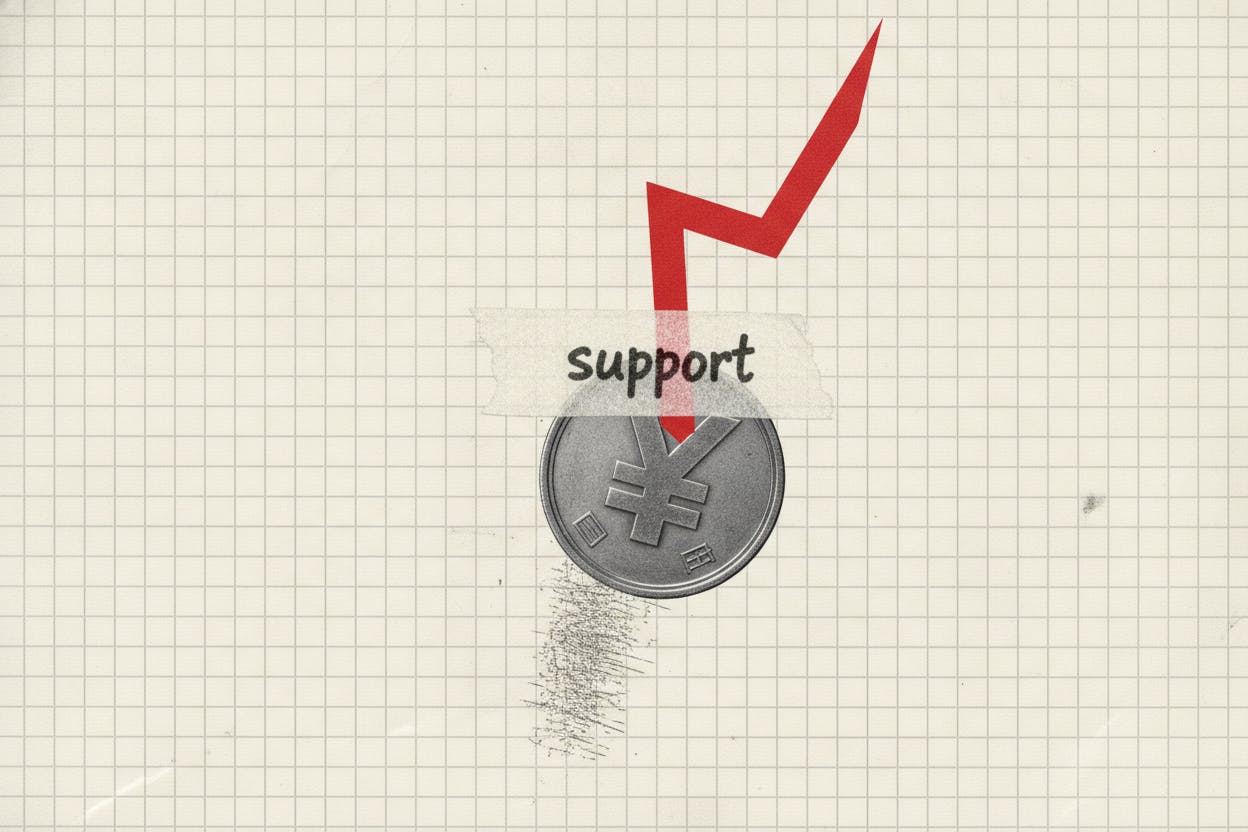
The Japanese yen is sliding again, with the dollar climbing back to around 160.760 yen after the Bank of Japan (BOJ) left its key interest rate unchanged at 1%. The move unwinds much of the relief rally that followed a rare, coordinated currency defense by Japanese and South Korean authorities earlier this week.
The BOJ's decision was widely expected, but it has reignited pressure on the yen, which had briefly strengthened after Tokyo and Seoul intervened in the foreign exchange market. That intervention—reportedly involving dollar-selling by Japan during New York trading and a similar move by South Korea—helped pull the yen off four-decade lows. But the effect has proven short-lived.
Why the yen keeps falling
The core problem hasn't changed: Japan's interest rates remain far below those in the United States. With the Federal Reserve holding its benchmark rate in a range that still offers significantly higher yields than Japan's, investors are drawn to dollar-denominated assets. That dynamic keeps the dollar bid and the yen under pressure.
Speculators have taken notice. Data show that bearish bets against the yen have climbed to their highest level in nearly two years, as traders test how far Tokyo and its neighbors will go to slow the currency's decline. The build-up in short positions suggests many market participants believe the yen's weakness is far from over.
Japan's authorities have repeatedly said they are watching currency moves closely and stand ready to act if volatility becomes excessive. But intervention is often seen as a stopgap measure rather than a lasting fix, especially when interest rate differentials remain so wide.
What the coordinated defense looked like
This week's intervention was notable for its coordination. Japan reportedly stepped in during New York trading hours, a time when liquidity is thin and moves can have outsized impact. South Korea also sold dollars to support its own currency, the won, which has been under similar pressure.
Such joint action is relatively rare, signaling that policymakers in the region are concerned about the economic fallout from persistently weak currencies. A weaker yen raises import costs for Japan, which relies heavily on energy and food imports, squeezing households and small businesses.
For investors, the episode underscores how currency markets can move sharply on official action, but also how quickly those moves can fade when underlying economic forces remain unchanged.
What it means for investors
For everyday investors, the yen's slide has several ripple effects. A weaker yen tends to boost the profits of Japanese exporters, like automakers and electronics firms, because their goods become cheaper abroad and overseas earnings translate into more yen. That can support Japanese stocks, which have been a standout performer in recent years.
On the flip side, Japanese consumers and domestic-focused companies feel the pain of higher import prices. The BOJ's decision to hold rates suggests it is willing to tolerate some yen weakness for now, but further declines could force its hand.
For those holding yen or Japanese assets, currency swings add a layer of volatility. A stronger dollar means U.S. investors converting yen back into dollars get more for their money, but it also means Japanese assets are worth less in dollar terms unless local gains offset the currency drag.
The situation also has broader implications for global markets. Japan is the world's fourth-largest economy and a major holder of U.S. Treasuries. If the yen keeps sliding, some analysts worry that Japanese investors could repatriate funds, potentially affecting global bond markets. However, such moves are hard to predict and often gradual.
What to watch next
Investors will be watching whether Japanese authorities step in again, and whether the BOJ signals any shift in its policy stance. The central bank has hinted that further rate hikes are possible, but it has moved cautiously, wary of derailing a fragile economic recovery.
Also on the radar: the Federal Reserve's next moves. If U.S. inflation continues to cool and the Fed cuts rates, the interest rate gap would narrow, taking some pressure off the yen. Until then, the yen's path likely remains tied to the dollar's strength.
For now, the yen's slide is a reminder that currency markets can be volatile and that official intervention, while powerful in the short term, is not a cure-all. Investors should keep an eye on the yen's level and the policy responses it triggers, as they can influence everything from Japanese stocks to global bond yields.