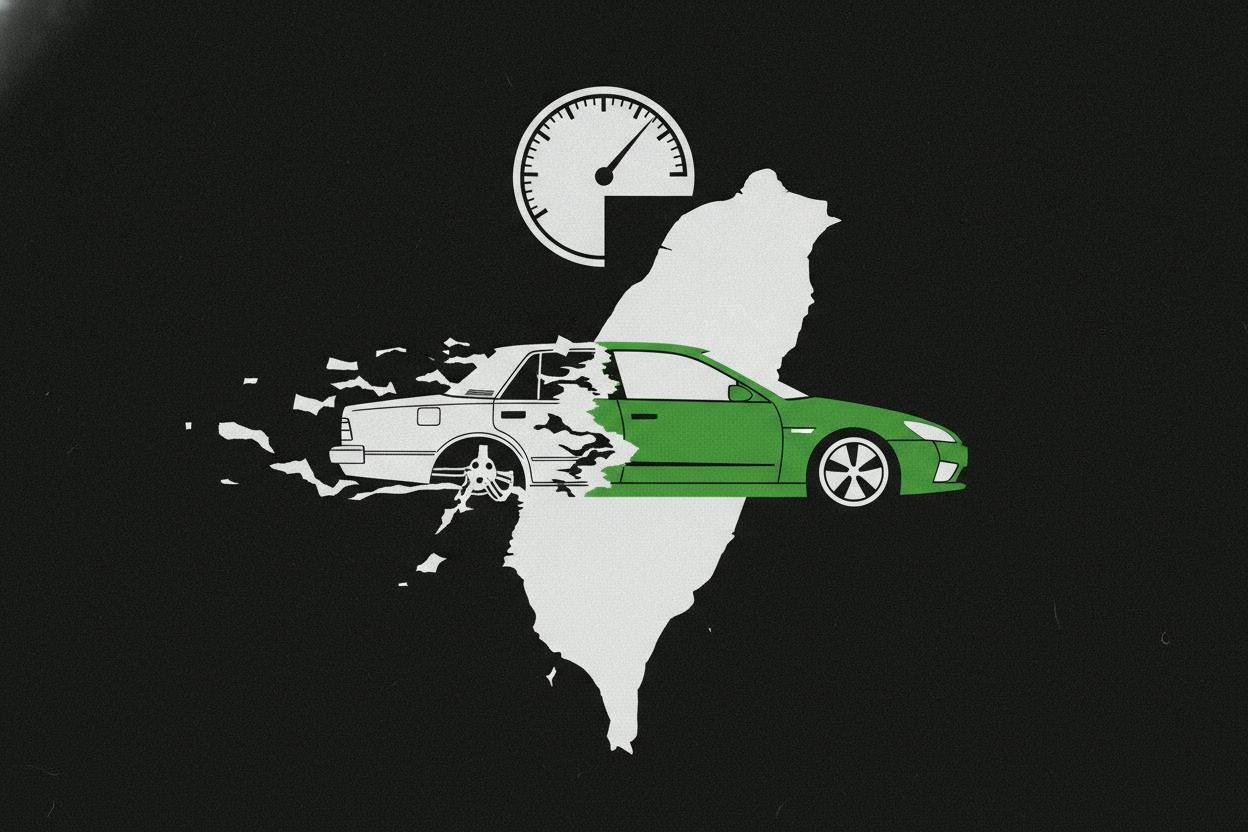
Taiwan's new-car market is expected to stay roughly flat at about 420,000 registrations in 2027, according to Yulon Nissan, one of the island's major automakers. The company's general manager, Yao Chen-hsiang, told Central News Agency (CNA) that the market is on track to hit that level this year and should hold steady into 2027.
That forecast points to a "flat market" for carmakers: when total unit sales aren't growing, winning often comes down to product mix and market share rather than a rising tide of demand. For everyday investors, the key takeaway is that a stable number of cars sold doesn't mean stable prices or stable profit margins for the companies involved.
Where the growth is happening
Yao's main point is that the composition of sales is shifting. Hybrids and electric vehicles (EVs) are gaining share, while lower-priced gasoline cars are gradually losing it. That pushes brands to compete with more electrified options and higher-end trims, even as the overall number of vehicles sold stays the same.
This trend is not unique to Taiwan. Across many mature auto markets, consumers are increasingly choosing electrified powertrains for fuel savings and environmental reasons, while automakers are happy to steer them toward pricier models that carry better margins. The result is often a slow squeeze on the cheapest end of the lineup, as entry-level trims get less attention and marketing dollars shift to hybrid and EV models.
Yao also noted that expected US auto tariff decisions next year should have limited spillover to Taiwan's market, according to CNA. That suggests the island's auto industry may be relatively insulated from the trade policy turbulence affecting other regions.
What it means for investors
For investors, a flat 420,000-car market can still mean higher showroom prices. When overall volumes are stuck, automakers usually try to keep revenue growing by selling a pricier mix: more hybrids and EVs, and more higher-spec versions of the same models. Over time, that can translate into "sticker shock" even without a bigger market, plus fewer truly low-cost new gasoline options as brands let entry-level trims fade.
For companies like Yulon Nissan, the strategy is likely to focus on profitability per vehicle rather than chasing volume. That could be good news for margins if the mix shift works, but it also means the company is more exposed to the success of its electrified lineup and to any hiccups in battery supply or consumer adoption.
For individual car buyers, the practical implication is that the cheapest new cars may become harder to find, and the average transaction price could keep climbing even if the total number of cars sold doesn't budge. That's a trend worth watching for anyone planning a purchase in the next couple of years.
In the broader context, Taiwan's auto market is relatively small compared to major economies like China or the US, but it's a useful indicator of how mature markets are evolving. The shift toward electrification is happening everywhere, and Taiwan's experience offers a glimpse of what a "flat but richer" market looks like.
Investors with exposure to auto manufacturers, parts suppliers, or even battery makers may want to keep an eye on how well these companies manage the transition. The winners are likely to be those that can sell more expensive, electrified vehicles without losing their customer base.
As always, it's important to remember that market forecasts are just that—forecasts. Actual sales can be affected by economic conditions, government policies, and consumer sentiment. But the direction Yao describes is consistent with what many analysts expect for the global auto industry: a slow but steady shift toward electrification, with the overall number of cars sold remaining relatively stable.