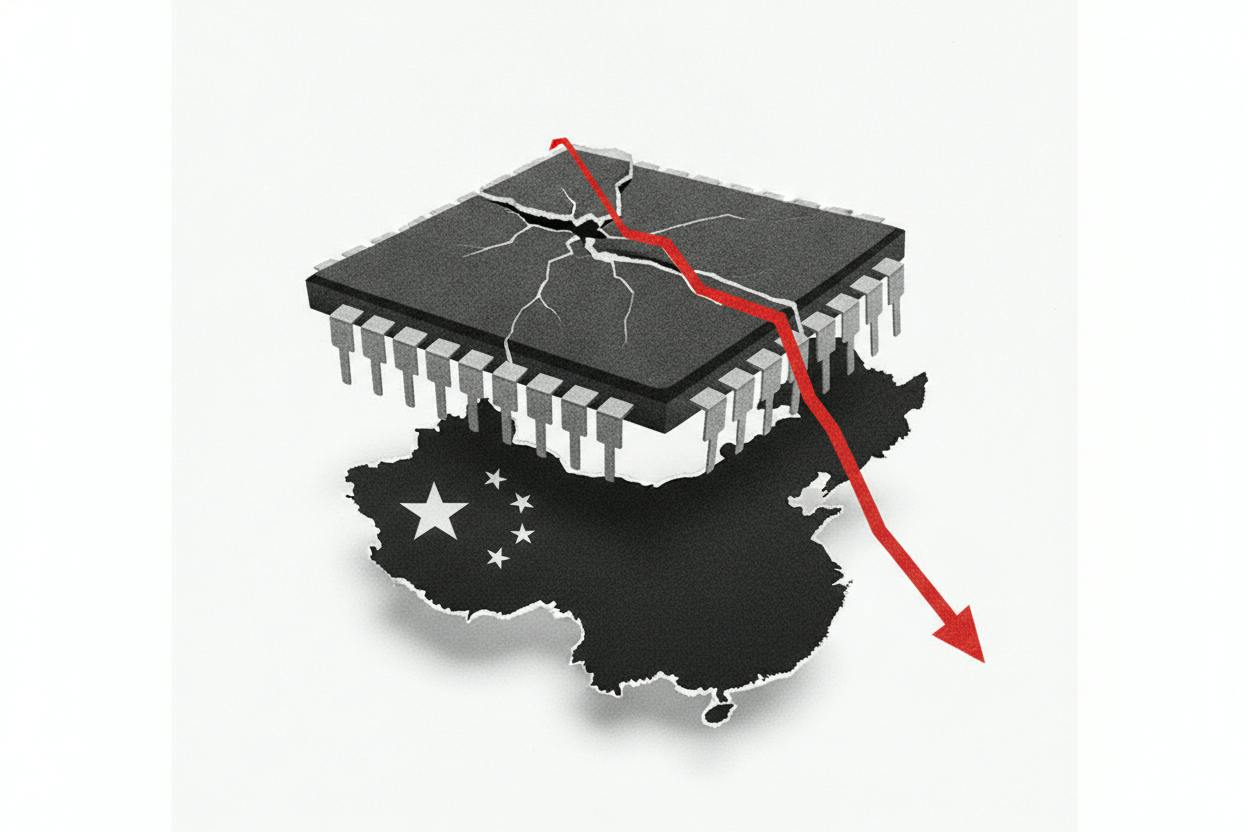
China and Hong Kong stocks fell on Tuesday as a broad selloff in artificial intelligence and semiconductor shares extended its slide from July peaks, dragging China's benchmark CSI 300 to its weakest level since August 2025.
The decline reflects growing investor caution about whether the AI boom can sustain its rapid pace, a question that has rattled markets from Asia to Wall Street in recent weeks.
What's driving the selloff?
The selling has been most intense in the growth-oriented corners of the market that led earlier rallies. According to Reuters, the CSI AI Index and the CSI Semiconductor Index are both more than 30% below their July highs, a sharp reversal from the exuberance that had driven those sectors to record levels.
Other tech-heavy benchmarks also felt the pressure. The STAR 50, a Shanghai index that tracks the city's science and technology innovation board, sank as much as 3.6% during intraday trading, while Hong Kong's Hang Seng Tech index fell 1.5%.
Notably, even some company-specific positive news has failed to lift sentiment. That suggests investors are less focused on individual earnings or product announcements and more concerned about the broader trajectory of the AI trade.
Why does this matter for investors?
For everyday investors, the slide is a reminder that even the most exciting sectors can experience sharp pullbacks. AI and semiconductor stocks had been among the biggest winners of the past year, fueled by optimism about everything from chatbots to data centers. But when expectations run high, any hint of a slowdown can trigger outsized losses.
The fact that the selloff is spreading across Asia—and hitting both mainland China and Hong Kong—indicates this is not just a company-specific issue. It reflects a global reassessment of AI valuations, a theme that has also weighed on U.S. tech stocks in recent sessions.
For those with exposure to Chinese equities, the key takeaway is that volatility is likely to remain elevated until there is clearer evidence that AI-related earnings can justify the lofty prices. Meanwhile, investors with diversified portfolios may find some comfort in the fact that not all sectors are falling—defensive areas like utilities and consumer staples often hold up better during tech-led selloffs.
What to watch next
Investors will be watching several factors in the coming days. First, any major earnings reports from AI and semiconductor companies will be scrutinized for signs of weakening demand. Second, policy signals from Beijing—such as stimulus measures or regulatory changes—could provide a floor for the market. Third, global cues, especially from U.S. tech earnings and Federal Reserve policy, will continue to influence sentiment.
Relatedly, the recent slide in Asian stocks has been compounded by concerns about chip competition and oil prices. In particular, Nvidia's China AI chip share slipping as Huawei gains ground highlights the intensifying competitive landscape in the region.
For Hong Kong, the Hang Seng Tech index's decline mirrors the broader regional trend, and investors will be looking for signs of stabilization. The yuan's stability has been a positive factor, but it may not be enough to offset the tech-led weakness.
In the longer term, the AI story remains intact, but the market is clearly in a phase of recalibration. As history shows, such corrections can be healthy, shaking out speculative excess and setting the stage for more sustainable gains. For now, patience and a focus on fundamentals are likely to serve investors better than chasing momentum.