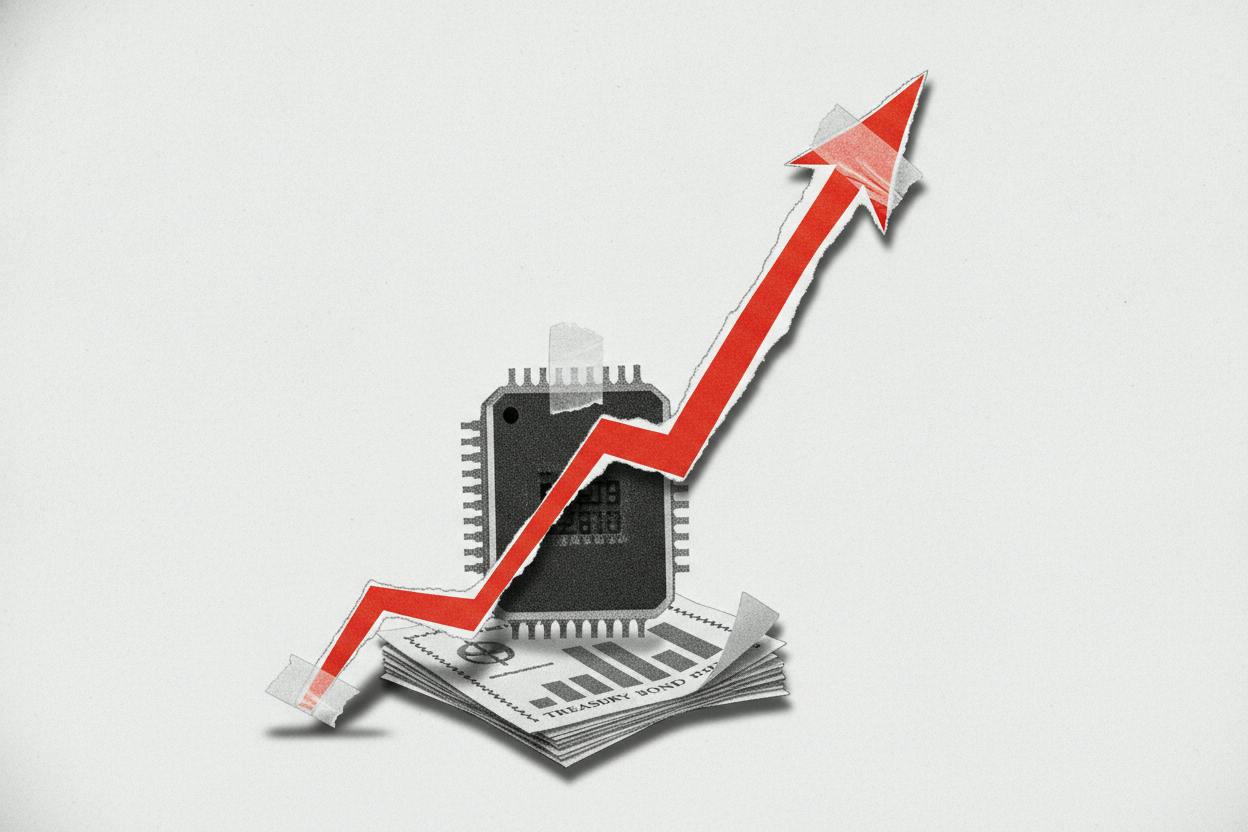
US stock futures ticked higher Thursday, with AI-linked chip and consulting names leading premarket gains, even as the 10-year Treasury yield touched 5.3423% — its highest level since 2002 — and the Cboe Volatility Index (VIX) rose to 16.31. The moves highlight a market caught between two powerful forces: optimism about artificial intelligence spending and the pressure of rising borrowing costs.
At 07:38 a.m. ET, Nasdaq 100 E-minis were up 0.54%, helped by gains in Nvidia, AMD, and Lam Research. The catalyst came from Micron, which gave a stronger-than-expected revenue outlook and pointed to $32 billion of customer commitments under supply agreements — a vote of confidence in the AI spending cycle. Consulting firms added fuel: Accenture jumped after forecasting faster revenue growth, lifting peers like Cognizant and IBM, while Alphabet gained after launching a new Gemini AI model.
Why yields matter for stocks
The 10-year Treasury yield is often called the “risk-free” rate because it’s the baseline return investors can earn without taking on stock-market risk. When that yield rises, it raises the discount rate used to value future profits. That makes stocks — especially those whose earnings are expected far in the future — less attractive relative to bonds.
High-multiple growth stocks, like many AI-related names, are particularly sensitive to this math. A small change in the discount rate can have a large effect on the present value of their expected earnings. That’s why even as futures rose, the VIX — a measure of expected near-term volatility — crept higher. Investors are paying up for protection even on green screens, a sign that the market’s mood is fragile.
The tension is not new. Micron's strong outlook lifted tech stocks earlier, but yields have stayed elevated, and global bond yields have hit multi-decade highs in several markets. The 10-year at 5.34% is a level not seen in over two decades, and it raises the bar for what investors demand from stocks.
What it means for investors
For everyday investors, the key takeaway is that higher yields don’t just compete with stocks for capital — they change the way the market prices risk. When the risk-free rate rises, the expected return on stocks must rise too, or prices have to fall. That can make the market feel more volatile, especially in sectors where valuations are stretched.
Strong AI demand signals, like Micron’s guidance, can temporarily offset that pressure by making near-term earnings look better. But the sector can also become unusually jumpy around rate-sensitive catalysts, such as jobless claims, ISM surveys, and comments from Federal Reserve officials. With inflation still above the Fed’s 2% target, those releases matter more than usual because they can quickly shift expectations for where rates settle.
Investors should also watch the broader bond market. UK stocks slid as gilt yields hit multi-decade highs, and rising US yields have pressured central Europe's currencies. These moves show that the yield spike is a global phenomenon, not just a US one.
For those with diversified portfolios, the message is to expect more two-way swings. The AI trade can still deliver gains, but the tailwind from falling yields has turned into a headwind. As quarter-end rebalancing could push money from stocks to bonds, the pressure on equities may persist.
Ultimately, the market is pricing in a delicate balance: AI optimism versus higher-for-longer rates. Until inflation convincingly moves toward target, or the Fed signals a pivot, that balance is likely to keep volatility elevated.