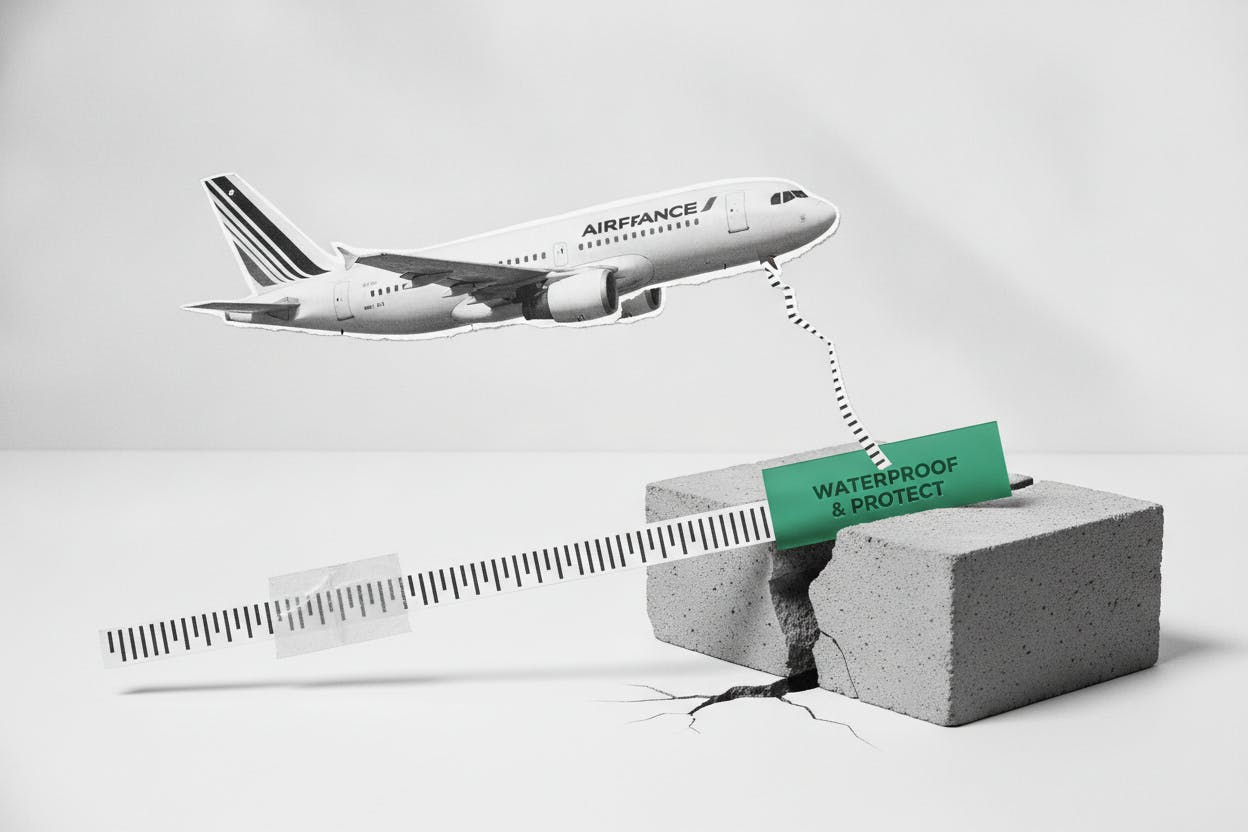
France's corporate landscape delivered two distinct stories on Tuesday: Air France, the country's flagship carrier, extended disruptions on key Middle East routes, while building-materials giant Saint-Gobain announced a long-term acquisition of waterproofing specialist Xypex.
Air France Adjusts Middle East Network
Air France extended its suspension of flights to Beirut, Lebanon, until July 20. The airline also paused departures from Dubai until July 6, though it restarted service to and from Riyadh, Saudi Arabia, and Tel Aviv, Israel. These moves come amid ongoing regional tensions that have forced airlines to frequently reassess their route networks.
For investors, the financial impact of such disruptions is rarely dramatic for a large carrier like Air France-KLM, but it adds up. Fewer seats to sell on affected routes, last-minute rerouting costs, and higher operational expenses for security checks and crew scheduling all chip away at margins. The airline's ability to quickly pivot—restarting some routes while pausing others—shows operational flexibility, but it also highlights the unpredictability of flying through volatile regions.
Air France's parent company, Air France-KLM, has faced similar challenges before, particularly during the pandemic and geopolitical conflicts. The broader European aviation sector has been navigating a patchwork of restrictions and security concerns, which can weigh on investor sentiment even if the direct financial hit is manageable.
Saint-Gobain's Long-Term Bet on Waterproofing
On the other side of the corporate update, Saint-Gobain, a French multinational known for construction materials like glass, insulation, and plasterboard, agreed to acquire Xypex, a specialist in waterproofing products. The deal is expected to close in the fourth quarter of 2026, indicating a lengthy regulatory and integration process.
Xypex focuses on crystalline waterproofing technology, which is used in concrete structures to prevent water damage. This is a niche but growing segment in the construction industry, as infrastructure projects and building codes increasingly emphasize durability and sustainability. For Saint-Gobain, the acquisition fits into its strategy of expanding into higher-margin, specialized materials that complement its existing portfolio.
The long timeline to close—over two years—suggests the deal may face antitrust reviews or complex negotiations. Investors should note that such extended timelines are not unusual for cross-border acquisitions or those in regulated industries. Saint-Gobain's track record with acquisitions has been mixed, but the company has consistently focused on bolt-on deals that strengthen its core businesses.
What It Means for Investors
For everyday investors, these two stories highlight different aspects of corporate risk and opportunity. Air France's route adjustments are a reminder that geopolitical events can disrupt even well-established businesses, but the effects are often temporary and manageable for large companies. Investors holding airline stocks should watch for updates on passenger demand and fuel costs, which are more significant drivers of profitability than short-term route suspensions.
Saint-Gobain's acquisition of Xypex is a longer-term play. The deal won't close until late 2026, so any financial benefits are years away. However, it signals the company's confidence in the waterproofing market and its willingness to invest in specialized technology. Investors in Saint-Gobain should monitor how the company finances the deal—whether through cash, debt, or stock—and whether it can integrate Xypex smoothly.
Both stories also reflect broader trends in France's economy. The country's services sector has been contracting, as seen in recent PMI data, and manufacturing has only recently returned to growth. Corporate moves like these show that companies are still making strategic decisions despite a mixed economic backdrop. For a deeper look at France's economic health, see our coverage of France's Services Sector Stays in Contraction and France's Factory PMI Returns to Growth.
Additionally, the geopolitical tensions affecting Air France's routes are part of a wider pattern. For context on how supply chain disruptions are impacting other industries, check out Congo Copper and Cobalt Mines Weather Acid Supply Disruptions.
Ultimately, these updates are small pieces of a larger puzzle. Air France's disruptions are a short-term operational challenge, while Saint-Gobain's deal is a strategic bet on future growth. Neither is likely to move the needle significantly for the broader market, but they offer insights into how French companies are navigating a complex environment.