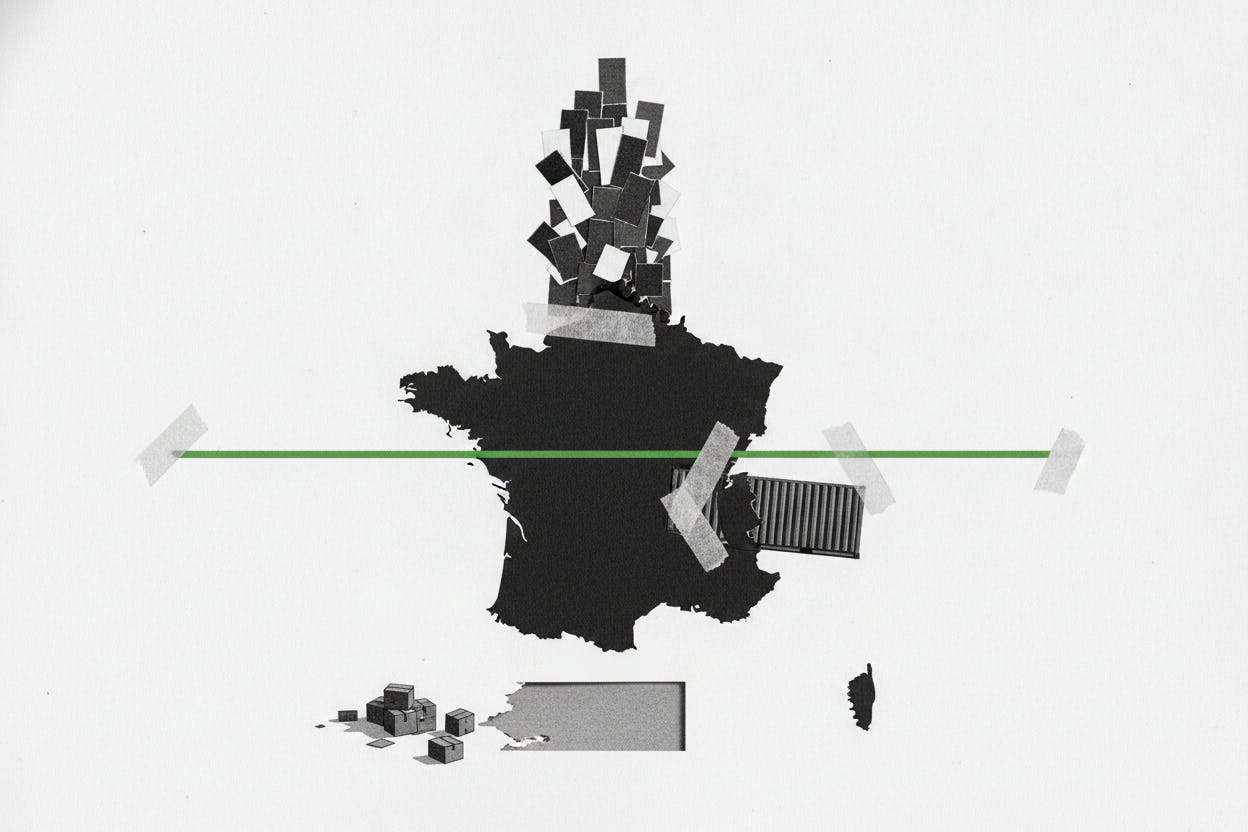
France's manufacturing sector shifted back into expansion territory in June, according to the latest S&P Global purchasing managers' index (PMI). The headline reading of 51.2, up from 49.7 in May, marks a return to growth and exceeded the earlier flash estimate of 50.7. A PMI reading above 50 indicates expansion, while below 50 signals contraction.
The improvement comes despite ongoing transport disruptions tied to the Iran war, which have kept supply chains under strain. S&P Global noted that outstanding work and backlogs rose during the month, meaning companies had more orders waiting to be completed than they could immediately fulfill.
Supply Constraints, Not Weak Demand, Driving the Story
Joe Hayes at S&P Global Market Intelligence pointed out that firms are buying fewer inputs and running down inventories because securing transport has become more difficult. This suggests that supply constraints—rather than collapsing demand—are doing much of the damage to the sector. Price measures cooled from May, which could hint at easing inflation pressure in goods, though the path from here depends on how long logistics disruptions last.
The dynamic of rising backlogs and falling inventories is an awkward mix, but it can set up a familiar "catch-up" phase. When shipments are delayed, demand gets parked in order books. When companies also let stockrooms run low, they leave themselves needing to produce more later to both clear those queues and rebuild day-to-day inventory.
What It Means for Investors
If transport availability improves, France's near-term factory output could move more sharply than the PMI headline suggests. That could show up in upcoming industrial production data and in the earnings sensitivity of France-exposed cyclical companies. Investors should watch for signs of easing logistics bottlenecks, which could trigger a production rebound.
France's factory data also fits into a broader global picture. Australia's factory PMI rose to 51.5 in a similar pattern, while South Korea's factory growth slowed in June as export orders dipped. Meanwhile, China's factory activity hit its best quarter since 2020 despite a June dip, and Taiwan's factory confidence rose in May as AI chip demand offset higher oil costs.
For everyday investors, the key takeaway is that France's manufacturing sector is showing resilience, but the recovery remains fragile. Supply chain disruptions from geopolitical tensions can create volatility in industrial production and company earnings. Diversification across regions and sectors can help manage such risks.
The cooling of price measures is a positive sign for inflation watchers, but it's too early to declare victory. The European Central Bank will be monitoring these data points closely as it considers future interest rate decisions. Lower input costs for manufacturers could eventually feed through to consumer prices, but that process takes time.
Investors with exposure to French industrial stocks or European cyclical sectors should pay attention to upcoming industrial production reports and company earnings calls for signs of how companies are managing the supply chain challenges. The PMI data suggests that demand remains intact, which is a bullish signal for the broader economy if logistics issues can be resolved.