China's manufacturing sector has just wrapped up its strongest quarter since late 2020, according to a closely watched private survey, offering a glimmer of hope for the world's second-largest economy even as export demand remains tepid.
The Caixin/S&P Global manufacturing purchasing managers' index (PMI) slipped to 51.7 in June from 51.8 in May, but remained comfortably above the 50-point mark that separates expansion from contraction. The second-quarter average of 51.9 was the highest since the final three months of 2020, a period when China's economy was rebounding sharply from the initial COVID-19 shock.
What the PMI Numbers Tell Us
A PMI is a monthly survey of purchasing managers at factories. A reading above 50 signals that activity is expanding, while below 50 indicates contraction. The index tracks factors like output, new orders, employment, and supplier delivery times.
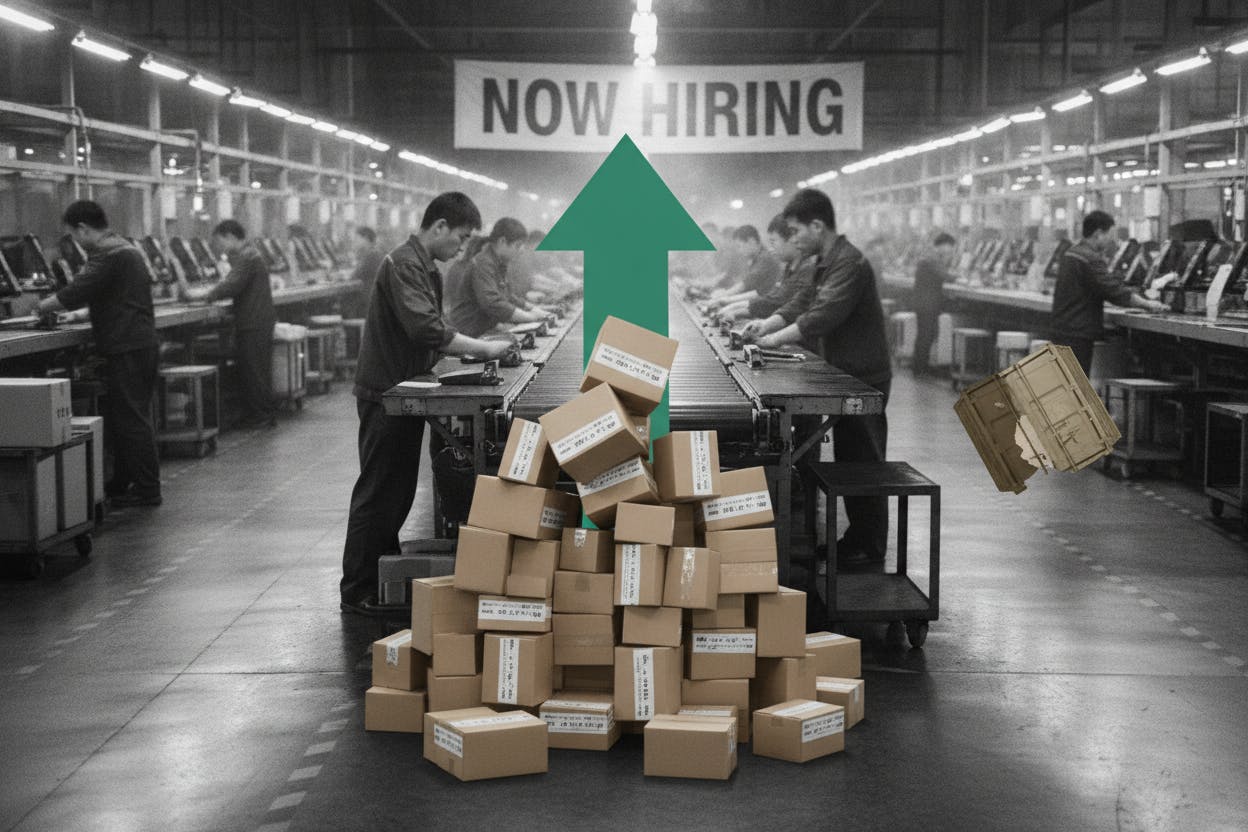
June's reading of 51.7, while slightly lower than May's, still points to steady growth. The details beneath the headline were even more encouraging: output rose for the seventh consecutive month, and new orders grew for the 13th straight month. Perhaps most notably, factories added workers for the first time in three months, suggesting that managers are confident enough in demand to expand their payrolls.
This hiring uptick is significant because it indicates that the expansion is broadening beyond just production. When companies hire, it typically means they expect demand to persist, not just be a temporary blip.
The Export Cloud
The one weak spot in the report was export demand, which remained sluggish. New export orders contracted for the second month in a row, reflecting ongoing challenges in global trade. This is a familiar story for China's manufacturers, who have been grappling with weak demand from key markets like Europe and the United States.
The export weakness is a reminder that China's recovery remains uneven. While domestic demand has shown signs of improvement, the external environment continues to weigh on the economy. This dynamic is similar to what other export-dependent economies are experiencing, as seen in Japan's factories posting their best quarter in over a decade, though Japan's PMI hit a much higher 54.8, suggesting a stronger rebound there.
What It Means for Investors
For everyday investors, the China factory data is a useful barometer of global economic health. China is the world's largest manufacturing hub and a major consumer of commodities, so its factory activity influences everything from oil prices to the earnings of multinational companies.
The steady expansion in China's manufacturing sector is broadly positive for global markets. It suggests that the Chinese economy is stabilizing after a period of post-pandemic weakness, which could support demand for raw materials and components. This is particularly relevant given that oil prices recently plunged toward their worst quarter since 2020, partly due to concerns about global demand.
However, the weak export orders are a cautionary signal. Companies that rely heavily on Chinese exports, such as those in the technology and consumer goods sectors, may continue to face headwinds. For example, Nike recently reported a 17% drop in China sales, highlighting the challenges in the Chinese consumer market.
The PMI data also has implications for China's stock market. A sustained manufacturing recovery could boost investor confidence in Chinese equities, particularly in industrial and materials sectors. However, the broader market has been volatile, with major IPOs like China Resources New Energy's potential 24.5 billion yuan listing indicating that capital markets remain active despite economic uncertainties.
Looking Ahead
Investors will be watching upcoming data releases for signs that the manufacturing momentum can be sustained. Key indicators include China's official PMI, which focuses more on large state-owned enterprises, and trade data that will show whether export weakness is improving.
The fact that factories are hiring is a positive sign, but the sustainability of the recovery will depend on whether domestic demand can compensate for weak exports. If the Chinese government introduces additional stimulus measures, that could provide further support to the manufacturing sector and, by extension, to global markets.
For now, the message from China's factories is cautiously optimistic: the recovery is real, but it's not yet broad-based enough to declare a full-blown boom. Investors should watch for confirmation in the months ahead that this expansion has legs.