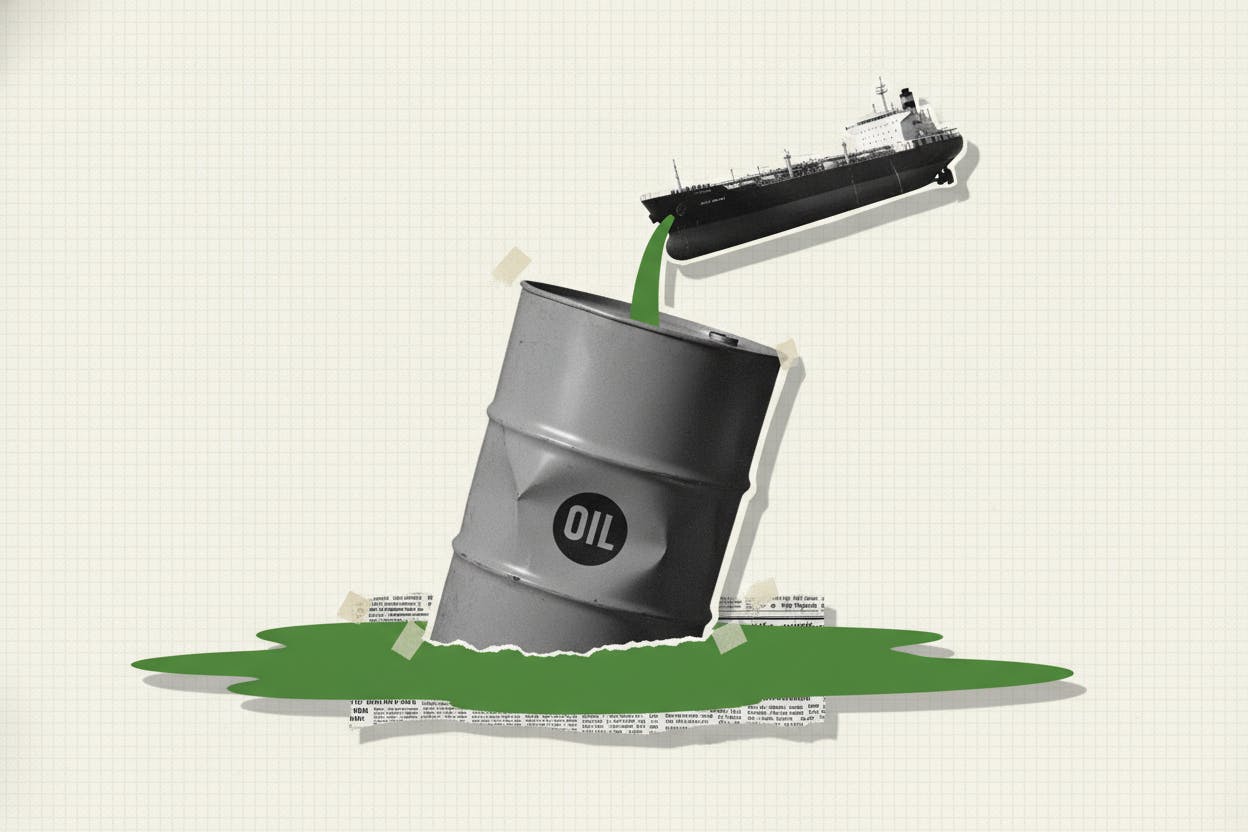
Oil prices are heading for their steepest quarterly decline since the pandemic-era crash of early 2020, as traders shift their focus to potential US-Iran talks in Doha and signs that global supply may be loosening. The move comes even as a fragile ceasefire in the Middle East continues to inject uncertainty into the market.
Brent crude for August delivery was trading at $73.30 a barrel on Friday, while the US benchmark West Texas Intermediate (WTI) stood at $71.11. Both benchmarks are down roughly a fifth in June alone, putting them on track for a quarterly loss of similar magnitude — the worst since the first three months of 2020, when the COVID-19 pandemic crushed demand and sent oil prices briefly negative.
Why Are Oil Prices Falling?
The main driver behind the sell-off appears to be a reassessment of supply risks. For weeks, traders had been pricing in a significant disruption to oil flows through the Strait of Hormuz, a narrow waterway that handles about a fifth of the world's petroleum. That risk was tied to the broader conflict in the Middle East and the possibility of Iran-linked disruptions.
But recent developments have shifted the narrative. Reports of possible US-Iran talks in Doha have raised hopes of a diplomatic resolution that could ease tensions in the region. At the same time, there are growing signs that supply is actually increasing, not shrinking.
Giovanni Staunovo, an analyst at UBS, noted that previously stranded oil tankers have become available as more ships move out of the Gulf. That suggests that the market is no longer bracing for a major supply disruption, and that any risk premium built into prices is being unwound.
The Ceasefire Factor
Adding to the complexity is the fragile ceasefire that has been in place in parts of the region. While the truce has helped reduce the immediate risk of a full-blown conflict, it remains uncertain and could break down at any time. That leaves traders in a tricky position: they are pricing in less risk now, but the situation could reverse quickly if diplomacy fails.
The ceasefire has also boosted sentiment in other markets. For example, the FTSE 100 is on track for its sixth straight quarterly gain, partly due to ceasefire hopes. But for oil, the ceasefire alone has not been enough to keep prices elevated — the focus has shifted squarely to supply dynamics.
What This Means for Investors
For everyday investors, the sharp drop in oil prices is a double-edged sword. On the one hand, cheaper oil is a boon for consumers and businesses that rely on energy, from airlines to trucking companies. It can also help lower inflation, which is good news for central banks trying to bring price pressures under control.
On the other hand, the sell-off is a reminder that commodity markets can be volatile and driven by shifting perceptions of risk. Investors who hold energy stocks or oil-focused exchange-traded funds (ETFs) have likely seen significant losses this quarter. The energy sector has been one of the worst performers in major stock indexes during this period.
Cheaper oil also has implications for currencies. For instance, India's rupee posted its first quarterly gain since March 2025, helped in part by lower oil prices, which reduce India's import bill. That is a positive for emerging markets that are net importers of crude.
What to Watch Next
The key event in the coming days will be the outcome of any US-Iran talks in Doha. If the talks lead to a de-escalation of tensions, oil prices could fall further as the risk premium evaporates. But if talks stall or break down, the market could quickly reverse course, especially if there is any renewed threat to shipping through the Strait of Hormuz.
Traders will also be watching for signs of actual supply changes. OPEC+ has been managing output through production cuts, but if more tankers become available and non-OPEC producers ramp up, the market could see a surplus. That would keep prices under pressure.
For now, the oil market is in a wait-and-see mode. The worst quarter since 2020 is a stark reminder that even in a world of geopolitical uncertainty, supply and demand fundamentals still matter. Investors should keep an eye on both the headlines and the data, as the next move could come from either direction.