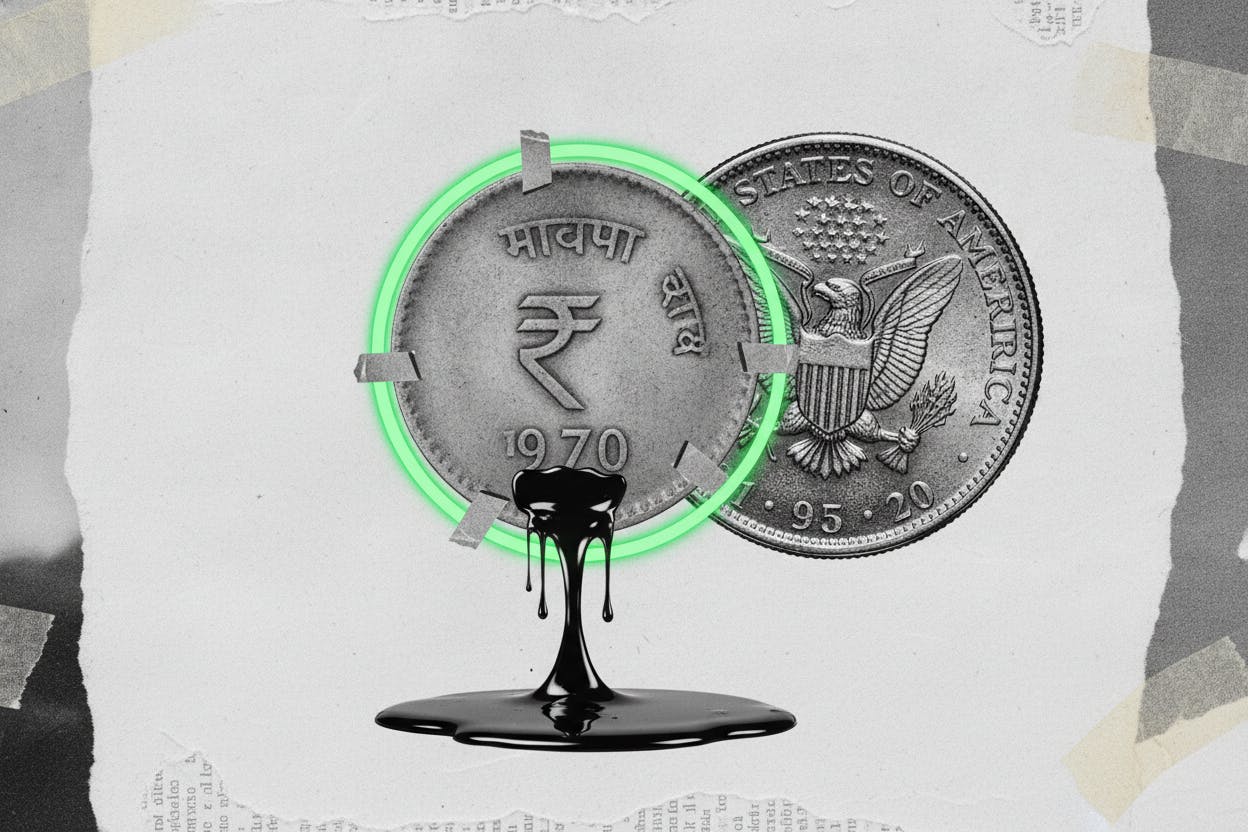
India's rupee has recorded its first quarterly gain since March 2025, rising about 0.2% in the three months ended June 30. The modest advance marks a turnaround from earlier this year, when the currency hit record lows near 97 per US dollar in May.
What Drove the Rupee's Recovery?
The rupee's rebound was fueled by two main factors: a sharp drop in global oil prices and government efforts to attract dollar inflows. Oil, a major import for India, fell to around $73 per barrel this week from above $120 earlier in the quarter. That reduction significantly lowered India's import bill and reduced the steady demand for dollars that comes with purchasing crude.
Lower oil prices improve India's trade balance and ease pressure on the rupee. When oil is cheaper, the country needs fewer dollars to pay for its energy needs, which supports the currency. This dynamic ripples through the balance of payments—the net flow of money into and out of the country—and has prompted analysts to revise their outlook. Goldman Sachs now expects India to see improved external finances, though the bank's specific forecasts were not disclosed in the brief.
On the policy front, the Indian government and central bank have taken steps to attract more dollars, including measures to encourage foreign investment and stabilize the currency. These actions helped offset the drag from a firmer US dollar globally, which typically weighs on emerging market currencies like the rupee.
Broader Market Context
The rupee's gain comes amid a mixed picture for Indian financial markets. While the currency strengthened, other assets have shown varied performance. India's benchmark stock index, the Sensex, has been flat recently, with losses in IT stocks offsetting gains in auto shares. Meanwhile, bond yields have moved lower, with the 10-year yield nearing 6.75% on foreign buying and cheaper oil.
The rupee's recovery also follows a period of volatility. In May, the currency slid to record lows near 97 per dollar, driven by global uncertainty and a strong US dollar. But it steadied in June, helped by the factors mentioned above. The quarter's gain, while small, signals a potential stabilization after months of weakness.
What It Means for Investors
For everyday investors, the rupee's performance matters in several ways. A stronger rupee can benefit those who invest in foreign assets or travel abroad, as their money goes further. However, it can also impact Indian companies that rely on exports, as a stronger currency makes their goods more expensive overseas.
Investors with exposure to Indian stocks or bonds should watch the rupee closely. A stable or strengthening currency can attract foreign portfolio inflows, which support local markets. Conversely, a weak rupee often leads to capital outflows and higher inflation, as imported goods become more expensive.
The Reserve Bank of India (RBI) has been active in managing the rupee, intervening in currency markets to prevent excessive volatility. The central bank's overnight rate recently breached its ceiling amid a cash crunch, highlighting ongoing liquidity challenges. These factors, combined with global developments like US interest rate policy, will continue to influence the rupee's trajectory.
Looking Ahead
While the rupee's quarterly gain is a positive sign, analysts caution that the currency remains vulnerable to external shocks. A stronger US dollar, driven by expectations of higher US interest rates, could cap further gains. Additionally, any resurgence in oil prices would renew pressure on India's import bill.
Investors should also monitor India's trade deficit and foreign exchange reserves. A narrower trade deficit, supported by cheaper oil, would be a tailwind for the rupee. Meanwhile, the RBI's ability to manage the currency through policy tools and interventions will be key.
In the near term, the rupee's direction will depend on global risk sentiment, oil prices, and the pace of dollar inflows. For now, the currency's first quarterly gain in over a year offers a measure of relief for Indian markets and investors alike.