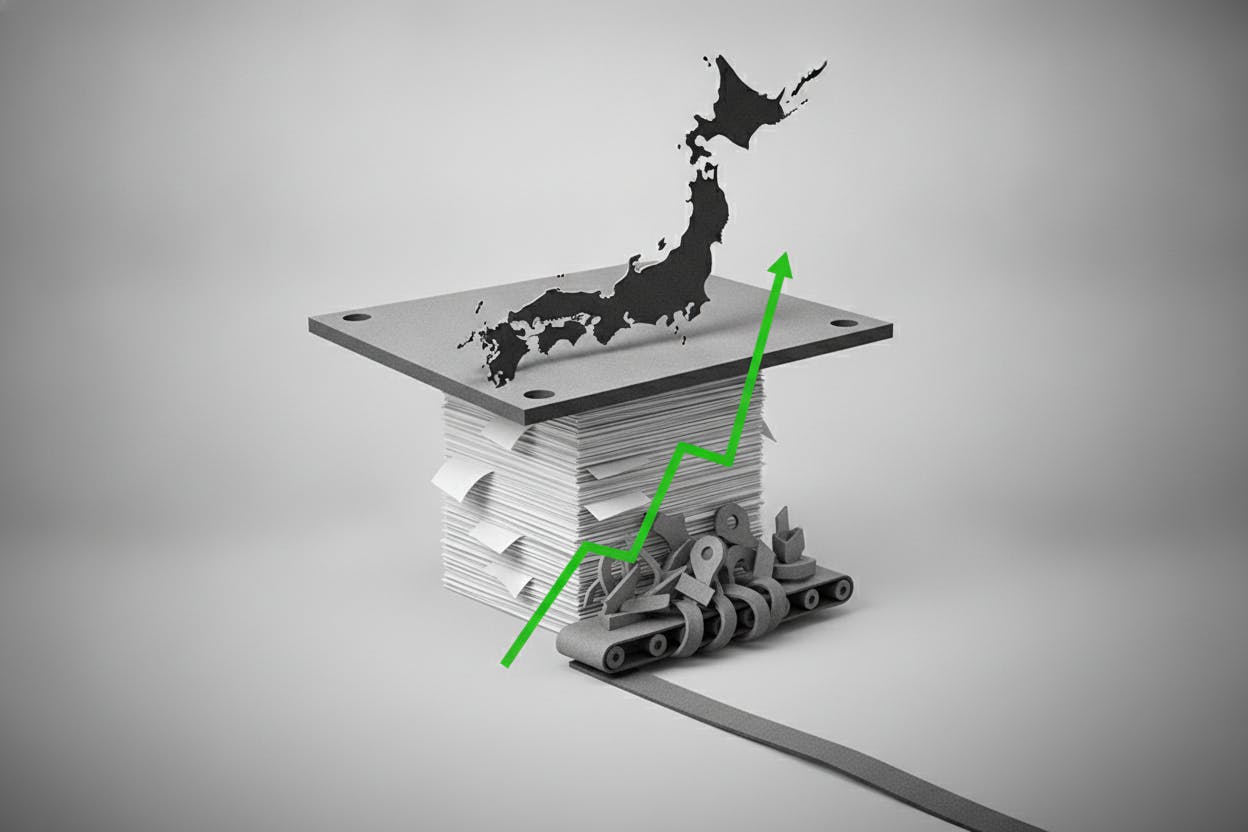
Japan's manufacturing sector ended the second quarter on a strong note, with a key business survey showing the fastest growth in new orders in nearly two and a half years. The data caps the best three-month stretch for the country's factories since early 2014, a sign that the world's fourth-largest economy is gaining momentum.
S&P Global reported that its Japan Manufacturing Purchasing Managers' Index (PMI) rose to 54.8 in June, up from 54.5 in May. Any reading above 50 signals expansion, and the index has now stayed above that threshold for six consecutive months. The PMI is a closely watched gauge of factory activity, compiled from surveys of purchasing managers at hundreds of manufacturers. It tracks metrics like output, new orders, employment, and supplier delivery times.
What Drove the Surge?
The standout figure in the June survey was new orders, which grew at their fastest pace since January 2022. That suggests demand is broadening, both at home and abroad. Producers of intermediate goods—materials used to make other products—and investment goods, such as machinery and equipment, both reported higher output.
Export orders also rose, helped by a weaker yen, which makes Japanese goods cheaper for foreign buyers. The Japanese yen recently plunged to a 38-year low against the U.S. dollar, a trend that has boosted the competitiveness of Japanese exporters but also raised import costs.
Some customers are also stockpiling inventory, according to the survey, as a precaution against potential supply disruptions and higher prices linked to tensions in the Middle East. This precautionary buying has added an extra layer of demand for Japanese manufacturers.
Context: A Broader Global Manufacturing Picture
Japan's factory strength stands out at a time when global manufacturing has been uneven. In Europe, the STOXX 600 surged 10% in the second quarter, driven largely by AI and tech stocks rather than broad industrial output. Meanwhile, the S&P 500 and Nasdaq headed for their best quarter in six years, but that rally has been led by a handful of mega-cap tech names, not necessarily by manufacturing strength.
Japan's factory data suggests the country's export-oriented economy is benefiting from a combination of a weak currency, resilient global demand, and a post-pandemic recovery in supply chains. However, the yen's weakness is a double-edged sword: it makes imports—especially energy and raw materials—more expensive, squeezing domestic consumers and smaller businesses.
What It Means for Investors
For everyday investors, the Japan manufacturing PMI is a useful leading indicator. When factories are busy, it often translates into stronger corporate profits, higher employment, and potentially rising stock prices for Japanese companies. The data supports the case for Japanese equities, which have already seen a strong run this year, partly driven by corporate governance reforms and a weaker yen.
However, investors should keep an eye on the yen. The currency's slide to 1986 lows has been a major story, and while it helps exporters, it also raises the cost of living in Japan and could eventually prompt the Bank of Japan to raise interest rates. That would be a significant shift for a country that has kept rates near zero for years.
The manufacturing data also has implications for global supply chains. If Japanese factories are running at a high capacity, it could ease some of the bottlenecks that have plagued industries from autos to electronics. But the stockpiling behavior noted in the survey suggests some companies are still nervous about disruptions, particularly from the Middle East.
For those invested in international funds or ETFs that include Japanese stocks, this is a positive sign. Japan's factory sector is a bellwether for the broader economy, and the best quarter in over a decade suggests the recovery has legs. Still, the sustainability of this growth will depend on global demand holding up, especially from key trading partners like China and the United States.
In the near term, markets will be watching for the next Bank of Japan meeting and any hints about rate policy. The yen's weakness remains a wild card, but for now, Japan's factories are humming.