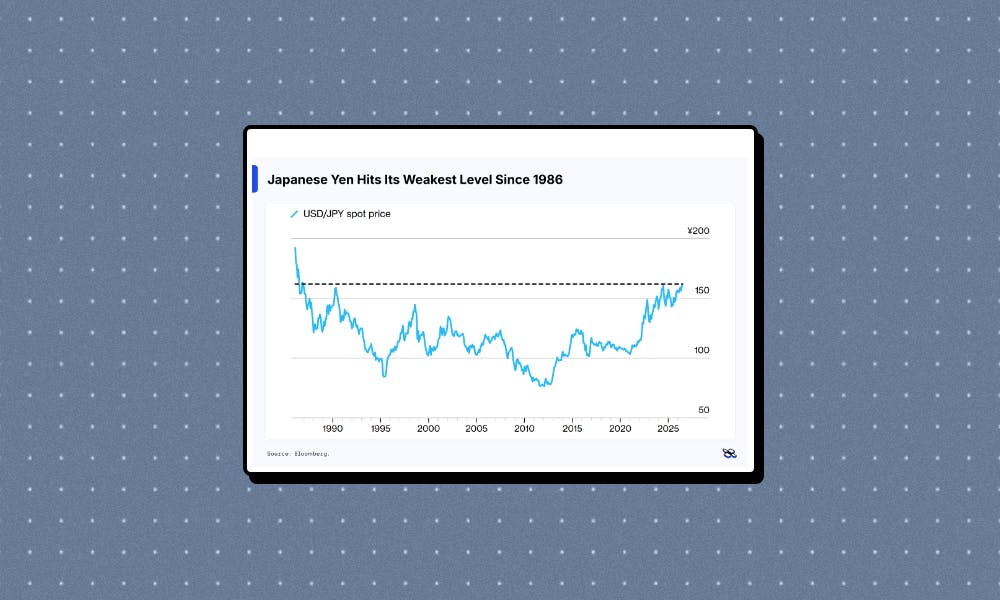
The Japanese yen has tumbled to its weakest level against the US dollar since 1986, a dramatic slide that underscores the persistent pressures on the currency. Several forces are combining to push the yen lower, creating a challenging environment for Japanese policymakers and global investors alike.
What's Driving the Yen Down?
The biggest factor is the wide interest-rate gap between Japan and the United States. While the US Federal Reserve has raised rates aggressively to combat inflation, the Bank of Japan (BOJ) has kept its benchmark rate extremely low. Even after the BOJ raised its rate in June to the highest level in 31 years, it remains far below rates in most other major economies.
This gap encourages a strategy known as the "carry trade": investors borrow money cheaply in yen, then convert it into dollars or other currencies to invest in higher-yielding assets abroad. This steady outflow of capital from Japan keeps the yen under constant selling pressure.
Japan's fiscal situation adds another layer of concern. The country has the highest debt-to-GDP ratio among developed nations, which makes investors wary of holding yen-denominated assets. Any hint of fiscal instability can accelerate selling.
Higher oil prices are also a headwind. Japan imports nearly all of its oil, so when crude prices rise, the country's import bill swells. That forces Japanese companies and traders to sell yen to buy dollars for oil purchases, further weakening the currency.
Broader Economic Context
The yen's weakness comes at a delicate time for Japan's economy. While a weaker yen can boost exports by making Japanese goods cheaper abroad, it also raises the cost of imported food, energy, and raw materials, squeezing households and small businesses. Recent data showed Japan's factory output dropped 1.7% as the yen neared 162 per dollar, complicating the BOJ's path for further rate hikes.
The BOJ faces a tough balancing act. Raising rates could help support the yen but might also choke off a fragile economic recovery. Keeping rates low risks further yen depreciation and imported inflation. The central bank has signaled it will monitor the yen's impact on the economy, but has not committed to aggressive tightening.
Meanwhile, the US dollar remains strong as the Federal Reserve maintains relatively high interest rates. This dynamic is unlikely to shift quickly, meaning the yen could stay under pressure for some time.
What It Means for Investors
For everyday investors, the yen's slide has several implications. If you hold Japanese stocks or exchange-traded funds (ETFs), a weaker yen can boost the value of your holdings when converted back to dollars, but it also raises the risk of currency losses if the yen eventually rebounds.
Investors with exposure to Japanese government bonds should be aware that rising yields—a consequence of the BOJ's rate hike—can cause bond prices to fall. The country's high debt load also means any fiscal misstep could trigger a selloff.
For those invested in global portfolios, the yen's weakness is a reminder of how currency moves can affect returns. Diversifying across currencies and regions can help mitigate this risk.
The yen's decline also has indirect effects on other markets. A weaker yen makes Japanese exports more competitive, which can pressure rivals in industries like autos and electronics. Conversely, it benefits companies that import from Japan by lowering their costs.
Looking ahead, investors will watch for any intervention by Japanese authorities to support the yen. The Ministry of Finance has a history of stepping in during periods of extreme volatility, but such moves often provide only temporary relief. The fundamental drivers—interest rate differentials, debt concerns, and oil prices—will need to shift for a sustained yen recovery.
As always, it's important to understand how currency exposure fits into your overall investment strategy. The yen's journey back to 1980s levels is a powerful reminder that even major currencies can experience prolonged weakness, and that diversification remains a key principle for long-term investors.