Alpha Exploration, a TSX Venture-listed junior miner, has released results from shallow Rotary Air Blast (RAB) drilling at its Anagulu copper-gold project in Eritrea. The company says the work has identified a new zone called Nightjar, stretching roughly one kilometer, and has extended the previously known Camel zone beyond a kilometer in length. Top-of-bedrock copper grades at both zones reached up to 0.33% (3,390 parts per million at Nightjar and 3,274 parts per million at Camel).
RAB drilling is an early-stage, relatively low-cost exploration technique that chips into bedrock to sample what lies beneath thin surface soils. At Anagulu, this method is particularly useful because the area's 'immature' soil cover can mask or distort metal signals from conventional soil sampling. By directly sampling the top of bedrock, the company gets a cleaner picture of the underlying geology.
What the results show
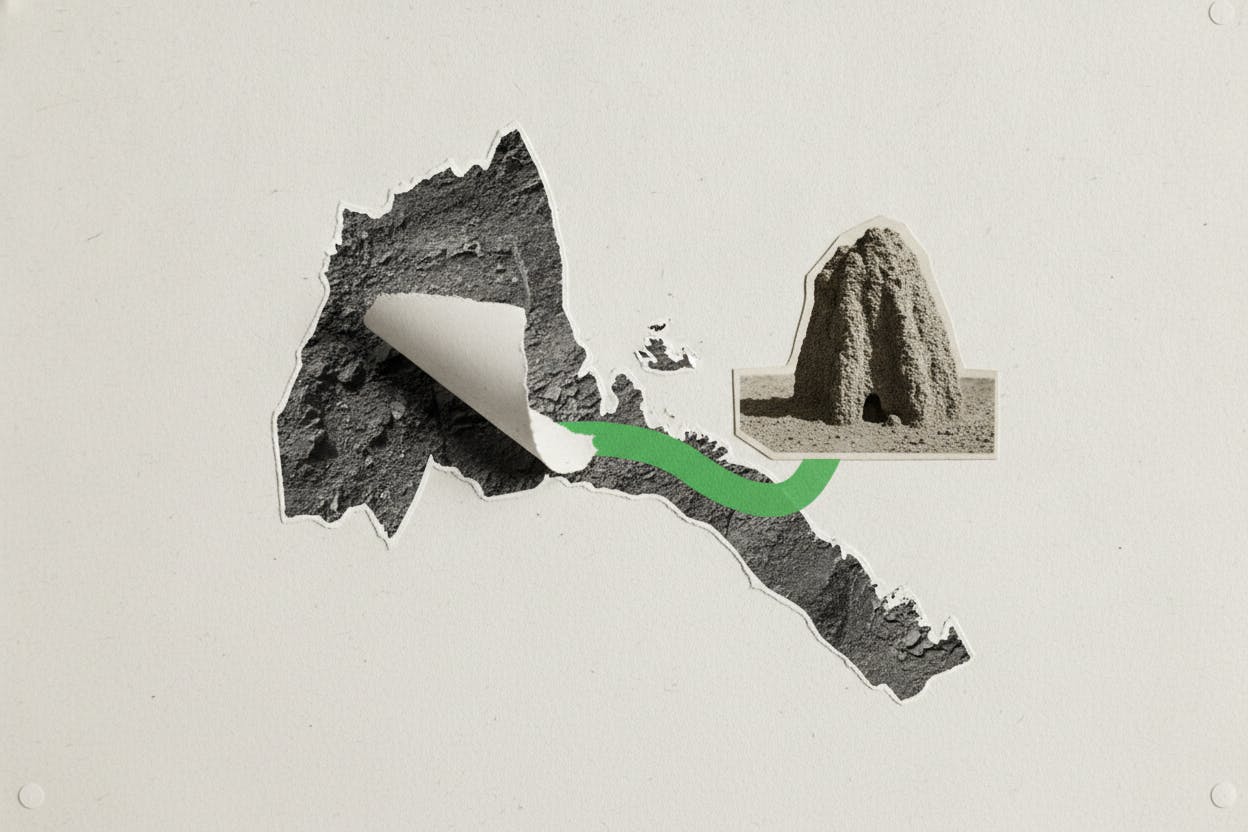
The Nightjar zone returned copper grades ranging from 3,390 parts per million (0.33%) down to 310 parts per million. The Camel zone, now more than a kilometer long and 125 to 250 meters wide, showed copper from 3,274 parts per million (0.33%) to 300 parts per million. Management noted that Camel appears to widen and increase in grade toward the southwest, and the trend remains open in that direction. RAB drilling is continuing there, following up on anomalies flagged by termite-mound sampling.
These results are not about proving a mine—they are about refining the exploration map. The data suggests that earlier geochemical surveys may have understated what is actually present in bedrock. The next step will be deeper drilling designed to test whether the copper mineralization holds together along strike and at depth.
What it means for investors
For a junior explorer like Alpha Exploration, top-of-bedrock grades from RAB drilling are primarily a targeting signal. They help confirm that the geology is real beneath tricky soil cover and that follow-up work is not chasing surface noise. A 0.33% copper grade is a clue, not a verdict—it indicates potential but does not yet define a resource.
If the southwest part of Camel continues to strengthen as drilling steps out, the story can shift from 'targets mapped' toward a more durable question that markets care about: continuity and scale. That could strengthen the company's financing narrative for deeper, more expensive drill programs. Conversely, if the trend breaks up, the company may need to return to mapping and sampling, which can slow progress and delay the next phase of exploration.
Copper demand is underpinned by global electrification trends, including electric vehicles, renewable energy infrastructure, and grid upgrades. Major producers like Codelco are under pressure to boost output, while juniors like Alpha are exploring frontier regions. Eritrea, though geopolitically complex, is part of the Arabian-Nubian Shield, a geological belt known for gold and copper deposits.
For everyday investors, this news is a reminder that early-stage exploration is high-risk, high-reward. The results are encouraging but far from definitive. The next catalysts to watch are deeper drilling results and any updates on the southwest extension of Camel. As always, diversification and patience are key when investing in junior miners.