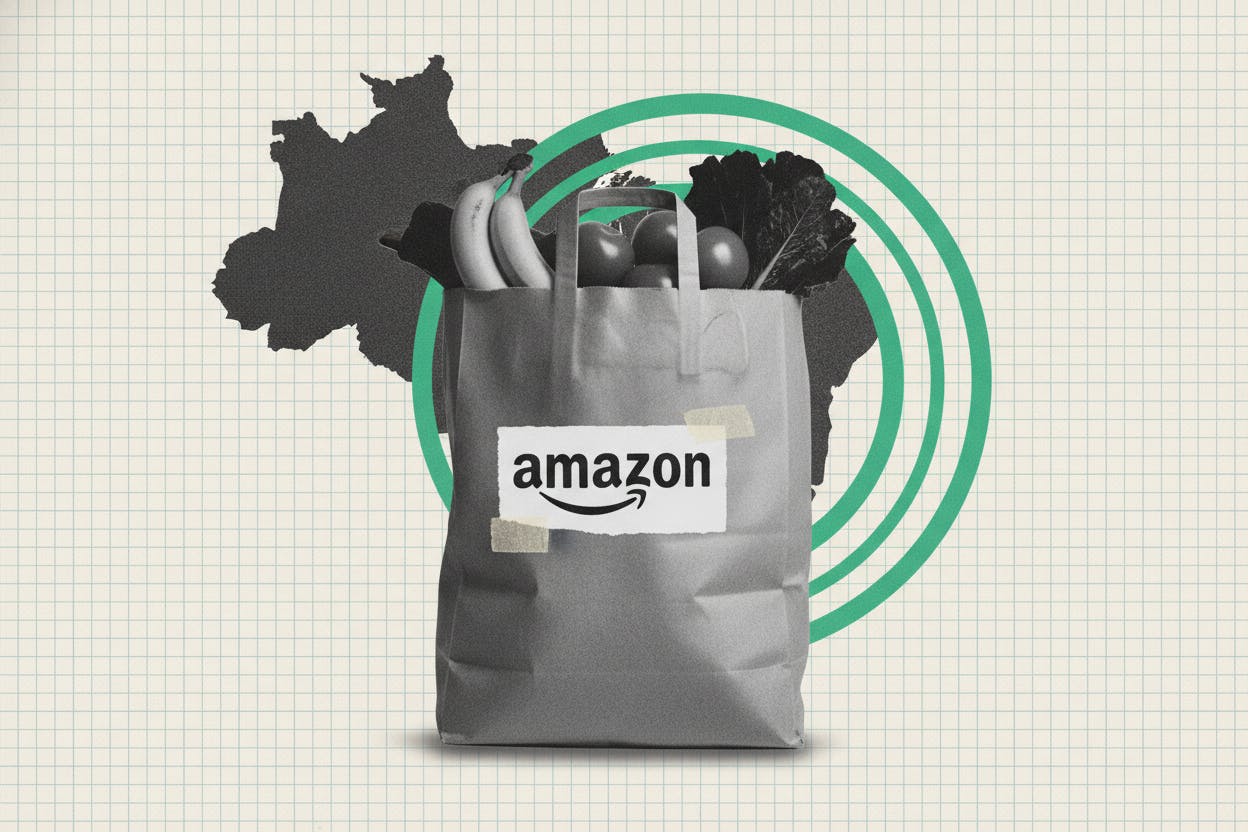
Amazon.com, Inc. is finding its fastest growth in an unexpected place: Brazil's fresh food aisle. The company's 15-minute delivery service, Amazon Now, has seen a surge in demand for fruit, vegetables, and frozen items, prompting a 15% expansion of its local selection, according to a Reuters report.
Amazon Now is the e-commerce giant's quick-commerce arm, designed to deliver everyday essentials within a quarter of an hour. In Brazil, it marks Amazon's first significant push into fresh and frozen groceries, a category that has traditionally been dominated by local supermarkets and delivery apps. An Amazon executive told Reuters the company was "very positively surprised" by how quickly Brazilian shoppers adopted items it previously didn't sell there, such as fresh produce and frozen staples.
Why Brazil's Fresh Food Market Matters
Brazil is one of the world's largest agricultural producers, but its online grocery market has been slower to develop compared to other regions. Consumers have historically preferred to buy fresh food in person, visiting local markets or supermarkets. However, the pandemic accelerated a shift toward online grocery shopping, and that trend appears to be sticking.
Amazon Now's success in Brazil suggests that quick-commerce—delivery in under 30 minutes—can work for fresh food, even in markets where it wasn't previously a major player. The company's expansion of its selection by 15% indicates that demand is strong enough to justify additional investment in inventory and logistics.
This move also puts Amazon in direct competition with local players like Rappi, iFood, and traditional retailers such as Carrefour and GPA, which have been expanding their own delivery services. For context, other global players are also eyeing Brazil's energy and infrastructure assets, as seen in Equatorial and Iberdrola circling Enel's Brazil assets, highlighting the country's growing appeal for international investment.
What It Means for Investors
For Amazon shareholders, the Brazil fresh food push represents a potential new growth engine. The company's core e-commerce business has matured in many developed markets, and international segments like Brazil offer room for expansion. Fresh and frozen groceries are particularly attractive because they drive higher order frequency and customer loyalty—shoppers who buy fresh food tend to order more often than those buying only non-perishables.
However, quick-commerce is a capital-intensive business. It requires a dense network of fulfillment centers, a reliable cold chain for perishables, and efficient last-mile delivery. Amazon's existing logistics infrastructure gives it an advantage, but the profitability of fresh food delivery remains a challenge for the entire industry. Many quick-commerce startups have struggled to turn a profit, and Amazon will need to balance growth with cost control.
The broader context for Amazon's international operations is mixed. While Brazil shows promise, other markets face headwinds. For example, Trent shares slid 9.4% on disappointing same-store sales growth, reminding investors that retail performance can vary widely by region and category.
What to Watch Next
Investors should monitor how Amazon scales its fresh food operations in Brazil. Key metrics include delivery times, customer acquisition costs, and repeat purchase rates. If the company can achieve unit economics that work, it could expand the model to other countries where fresh food delivery is still underpenetrated.
Another factor is competition. Local players are not standing still. iFood, owned by Prosus, has been investing heavily in its own quick-commerce service. Traditional retailers are also improving their online offerings. Amazon's brand recognition and logistics expertise give it a leg up, but it will need to execute well to maintain its growth trajectory.
Finally, broader economic conditions in Brazil matter. The country's inflation rate and currency stability affect consumer spending power. A strong real and low inflation would support demand for premium services like quick-commerce, while economic headwinds could slow adoption. For comparison, China's growth slowed to 4.6%, showing how macroeconomic factors can influence consumer behavior in emerging markets.
In summary, Amazon Now's expansion in Brazil's fresh food market is a positive signal for the company's international growth prospects. It demonstrates that quick-commerce can work for perishables, a category that has been difficult to crack online. For everyday investors, the key takeaway is that Amazon is finding new ways to grow beyond its core business, but the path to profitability in fresh food delivery remains uncertain. As always, diversification and a long-term perspective are important when evaluating any single company's prospects.