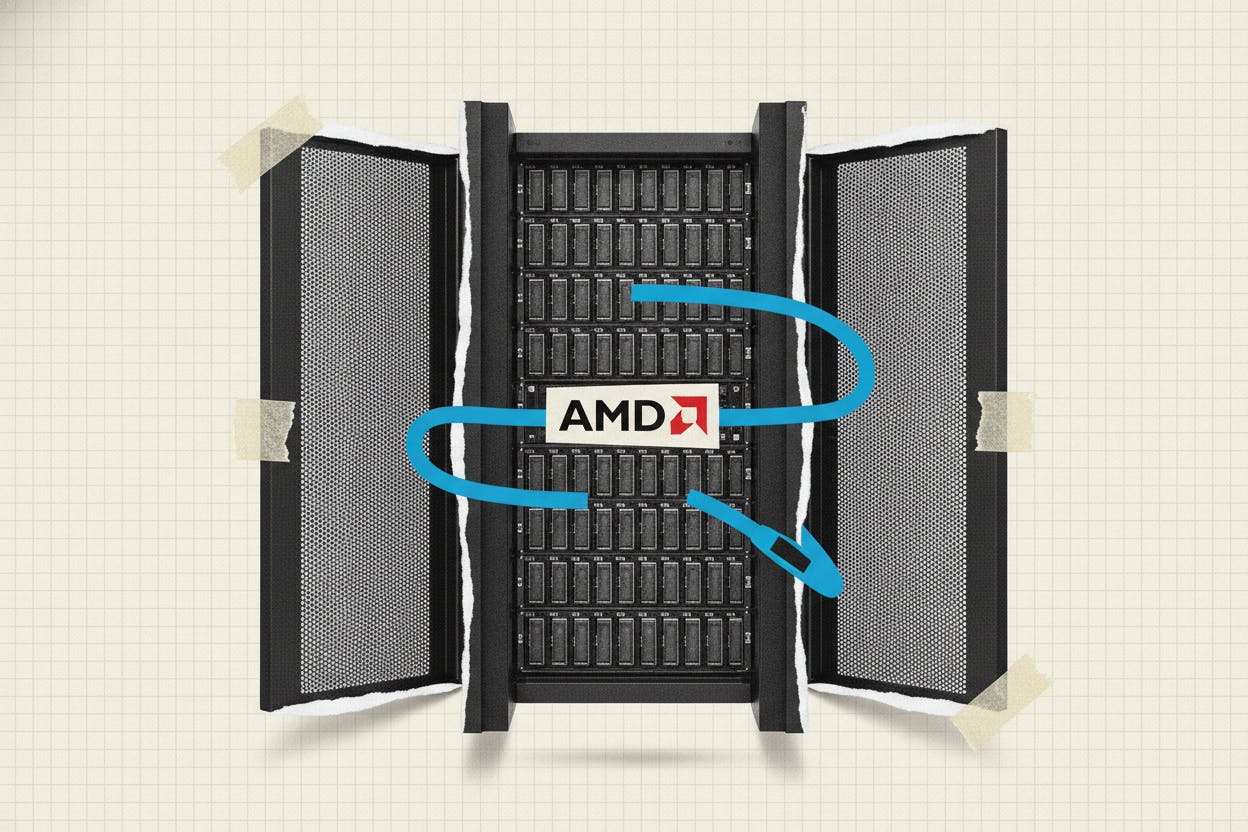
Advanced Micro Devices (AMD) is expanding its collaboration with Microsoft, moving beyond individual chips to supply a more integrated hardware package for the tech giant's Azure cloud AI services. The deal now covers graphics processing units (GPUs), central processing units (CPUs), and networking components, with AMD's new Helios Rackscale Solution scheduled to begin shipping in the second half of 2026.
What the Expanded Partnership Entails
Cloud providers like Microsoft don't just pick a single AI chip—they standardize entire "recipes" for how racks of servers are built, connected, and managed. AMD's Helios Rackscale Solution is designed to be one such recipe, combining its latest GPUs, CPUs, and networking technology into a pre-integrated system that can be deployed at scale in data centers. Microsoft says it will use the Helios Rackscale Solution to run "frontier model" AI inference—the process where a trained AI model generates answers to user queries—on Azure.
This is a significant step up from AMD's previous role as a supplier of individual chips. By offering a complete rack-scale solution, AMD is positioning itself as a more strategic partner for cloud providers, potentially capturing more value from the AI boom. The deal also includes Azure adding new virtual machines powered by AMD hardware, giving customers more options for running AI workloads.
Why This Matters for the AI Chip Race
The AI chip market has been dominated by Nvidia, whose GPUs are widely used for training and running large language models. However, AMD has been aggressively expanding its portfolio to compete, and partnerships like this one with Microsoft signal that cloud providers are looking for alternatives to reduce dependency on a single supplier. The Helios Rackscale Solution is AMD's attempt to offer a more comprehensive package that can compete with Nvidia's own data center platforms.
Microsoft's Azure is one of the world's largest cloud-computing platforms, and its choice to standardize on AMD's solution for frontier model inference is a vote of confidence. It also reflects the broader trend of cloud providers designing their own infrastructure to optimize performance and cost for AI workloads. As CoreWeave's recent results have shown, the ability to activate data center capacity quickly is critical for AI-focused companies, and integrated solutions like Helios could help speed up deployment.
What It Means for Investors
For everyday investors, this deal underscores the growing importance of AI infrastructure spending. AMD is not just selling chips anymore—it's selling complete systems that make it easier for cloud providers to deploy AI at scale. This could help AMD capture a larger share of the AI hardware market, which has been a key growth driver for the semiconductor industry.
However, investors should note that the Helios Rackscale Solution won't ship until the second half of 2026, meaning the financial impact won't be felt for some time. In the near term, AMD's revenue will still depend on its existing product lines and the broader demand for AI chips. The partnership also highlights the intense competition in the AI chip space, where pricing power is a key factor for companies like ASML and TSMC.
For Microsoft, deepening ties with AMD gives it more leverage in negotiations with other chip suppliers and helps ensure a steady supply of hardware for its Azure AI services. This is part of a broader strategy where cloud providers are investing heavily in custom and semi-custom chips to differentiate their offerings. The deal also comes amid a surge in energy IPOs driven by AI's power hunger, highlighting the massive infrastructure buildout underway.
Looking Ahead
The expanded AMD-Microsoft partnership is a clear sign that the AI hardware market is evolving from a single-chip focus to more integrated solutions. As AI models grow larger and more complex, the efficiency of the underlying hardware becomes critical. AMD's Helios Rackscale Solution aims to address that by optimizing the entire server rack for AI inference workloads.
Investors should watch for further announcements from both companies about the specific performance metrics and pricing of the Helios system. The success of this partnership could also influence other cloud providers, like Amazon Web Services and Google Cloud, to deepen their own relationships with AMD or other chipmakers. For now, the deal positions AMD as a more central player in the AI infrastructure story, even if the payoff is still a couple of years away.