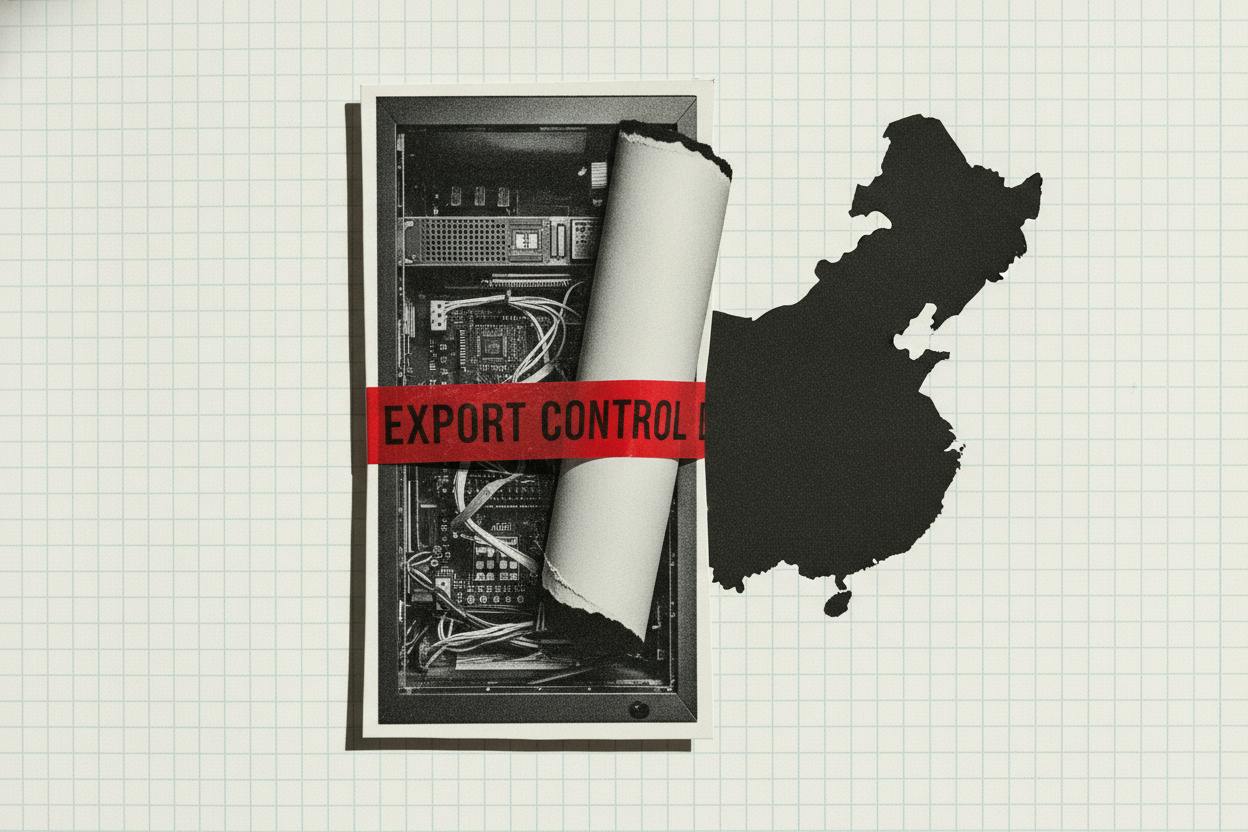
AMD shares slipped on Tuesday after a report from Hunterbrook Media alleged that the chipmaker's server firmware was used by a Chinese server maker that the US government has blacklisted. The report, which was tied to a short-selling fund, raised fresh questions about how much of AMD's business could be exposed to US export controls.
Hunterbrook Media said it found AMD firmware in servers made by IEIT Systems, a company the US Department of Commerce added to its trade blacklist in March 2025. The report also claimed that other firms closely tied to IEIT used the same firmware. AMD pushed back, telling Reuters that the report misrepresents its relationships and that it has strong compliance processes and follows US export-control laws.
Why this matters
For investors, the immediate concern isn't just the allegation itself—it's what it could mean for AMD's ability to sell into China, one of the world's biggest chip markets. The US has been tightening restrictions on advanced semiconductor exports to China for years, and any hint that a major chipmaker might be skirting those rules can spook the market.
Hunterbrook Capital, a short-selling fund affiliated with the publisher, said it holds a short position in AMD. The report also alleged that AMD recorded $67 million in licensing revenue in 2025 that it traced to two Chinese chip ventures that were blacklisted in 2019. Reuters said it could not independently verify those findings.
AMD's response was quick and firm. The company said it complies with applicable export-control laws and has robust compliance processes. But the damage to investor sentiment was already done, at least in the short term.
What it means for investors
The key question for AMD shareholders is whether this report triggers additional scrutiny—like audits, license reviews, or shipment holds—just as the market is watching whether AMD can grow its China business while rival Nvidia faces tighter US restrictions.
AMD's stock trades at about 31.3 times forward earnings, according to LSEG data. That's a relatively rich valuation, which means the market is pricing in strong future growth. When a stock trades at that level, headlines that add uncertainty can pressure the price even before anything changes in the fundamentals.
That's because export-control claims raise the perceived odds of disruptions like delayed shipments or lost licenses, which makes future revenue and margins harder to forecast. Markets typically respond to that kind of regulatory overhang by demanding a higher risk premium, which shows up as a lower price-to-earnings multiple.
So AMD's forward P/E becomes the first pressure point. If investors start to worry that China sales could be at risk, they may be less willing to pay a premium for the stock.
It's worth noting that this isn't the first time AMD has faced questions about its China ties. The company has long sold chips into China, and it has navigated export controls before. But the stakes are higher now, as the US-China tech rivalry intensifies and regulators on both sides take a harder line.
For everyday investors, the takeaway is to watch how AMD handles this situation in the coming weeks. If the company can convincingly show that its compliance is solid and that its China business is unaffected, the stock may recover. If not, the regulatory overhang could linger.
This story also fits into a broader pattern of US-China tensions affecting the tech sector. TSMC has halted advanced chip orders for some China-linked customers, and Lenovo's AI server surge shows how much of the industry's growth depends on China demand. Meanwhile, AI stocks remain skittish even as the sector overall continues to attract investment.
For now, AMD's slide is a reminder that in the chip industry, geopolitics can be just as important as product roadmaps. Investors should keep an eye on any regulatory developments and on AMD's next earnings report for signs of how the company is navigating these crosswinds.