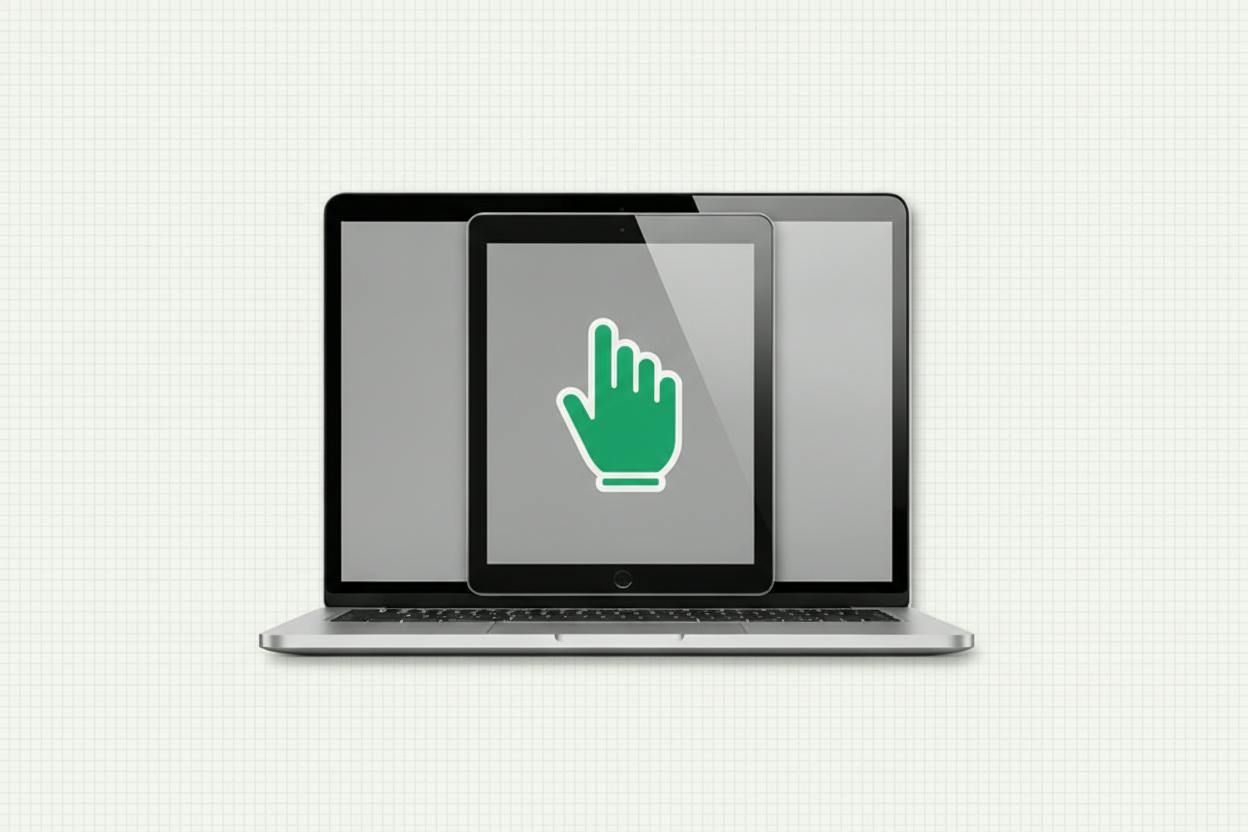
Apple is widely expected to unveil its first touchscreen MacBooks at Wednesday's Los Angeles event, a move that would mark a dramatic reversal of the company's long-held position that touch input and Mac computers should not mix. For years, Apple executives argued that reaching up to tap a screen is ergonomically awkward and that the iPad already serves as the company's touch-first computer. Now, with touchscreens standard on Windows laptops for over a decade, Apple appears ready to change course.
What's happening
The new laptops could debut at the event, according to reports, though Apple has not confirmed specifics. The shift is notable because it contradicts the company's previous public stance. In the past, Apple's leadership, including the late Steve Jobs, dismissed touchscreens on laptops as impractical. The company instead pushed the iPad as the touch device, while Macs remained keyboard-and-trackpad-centric.
But the computing landscape has evolved. Consumers have grown accustomed to tapping, swiping, and pinching on their phones and tablets, and many expect the same flexibility on a laptop. Windows-based competitors have offered touchscreen displays for years, and Apple's move could be seen as an effort to catch up with user expectations.
The event in Los Angeles is expected to focus on new Mac hardware, and the touchscreen feature would be a headline addition. It would also align with Apple's broader push into on-device artificial intelligence, as seen in recent Mac models that emphasize AI capabilities. A touchscreen could make those AI features more intuitive to use.
Why the change now?
Apple's reversal likely reflects both consumer demand and competitive pressure. The company has faced slowing Mac sales in some quarters, and a significant design change could spur upgrades. Touchscreens are a familiar feature on rival devices, and their absence on Macs has become a talking point for critics.
There is also the question of the iPad. Apple has positioned the iPad as a touch-first device, but it has struggled to fully replace the laptop for many users. Adding touch to the Mac could blur the line between the two product lines, but Apple may see it as a way to make Macs more versatile rather than cannibalizing iPad sales.
From a technical standpoint, adding touch to macOS is a significant software challenge. Apple would need to ensure that its operating system and apps respond well to finger input, not just mouse clicks. The company has already added some touch-friendly features to macOS in recent years, such as larger buttons and gestures, which suggests it has been preparing for this transition.
What it means for investors
For investors, the introduction of touchscreen MacBooks could be a positive catalyst for Apple's hardware business. Macs are a meaningful part of Apple's revenue, and a major redesign could drive a new upgrade cycle. If the touchscreen feature is well-received, it could boost sales and help offset weakness in other product categories.
However, the move also carries risks. Adding touchscreens could increase manufacturing costs, which might squeeze profit margins unless Apple raises prices. It could also complicate the company's product lineup, potentially confusing customers about the difference between a Mac and an iPad.
Investors will be watching Wednesday's event for details on pricing, availability, and how Apple positions the new feature. They will also look for signs that the touchscreen Macs are part of a broader strategy to integrate AI and other innovations, which could support long-term growth.
Apple's stock has historically reacted to major product launches, though the impact is often muted unless the news includes surprising financial guidance. The touchscreen MacBooks are unlikely to be a massive revenue driver on their own, but they could signal that Apple is willing to adapt to changing market trends, which is generally viewed favorably.
For everyday investors, the key takeaway is that this is a product evolution, not a revolution. Apple is playing catch-up in a feature that has been standard elsewhere, but the company's strong brand and loyal customer base could still make it a success. As with any product launch, the real test will be whether consumers actually buy the new MacBooks in large numbers.
Wednesday's event will also be an opportunity for Apple to showcase its latest chips and AI capabilities, which are increasingly central to its product strategy. The company has been investing heavily in on-device AI, and a touchscreen Mac could make those features more accessible. Investors should listen for any commentary on how Apple plans to differentiate its touchscreen experience from competitors.
In the broader context, Apple's move reflects a wider industry trend toward more flexible, multi-modal computing. As devices become more powerful and software more intelligent, the lines between laptops, tablets, and phones are blurring. Apple's decision to embrace touch on the Mac is a recognition that the future of computing may not be tied to any single input method.
For now, investors will have to wait for the official announcement. If the touchscreen MacBooks debut as expected, it will be a historic moment for Apple, ending a decade-long resistance. Whether it translates into stronger sales and higher profits remains to be seen, but it is certainly a development worth watching.