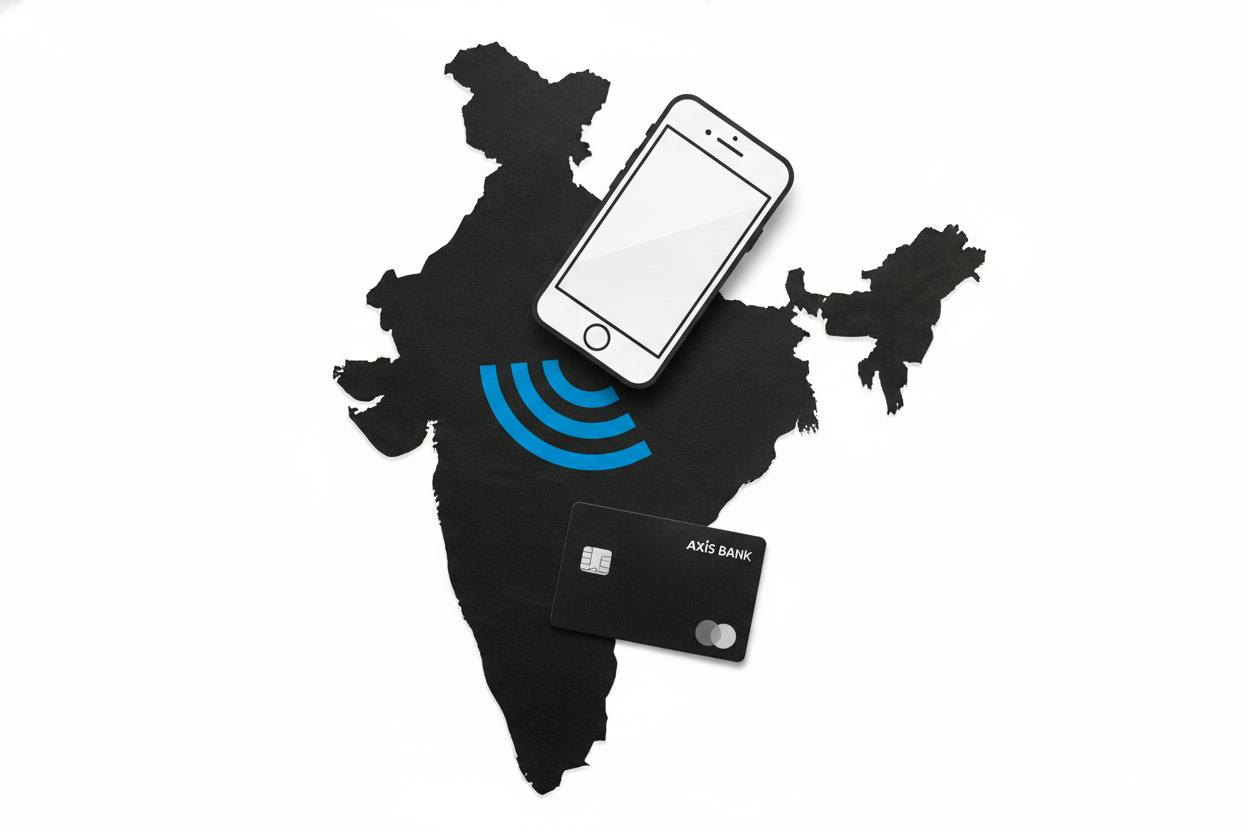
Apple is finally bringing its mobile wallet to India, with a rollout that could begin as early as next month, according to a Reuters report. The initial launch will be limited to Axis Bank credit cards, with Apple reportedly in talks with other major lenders to expand support over time.
The news ends years of speculation about when Apple Pay would arrive in the world's second-most-populous country, a market where digital payments have exploded but are dominated by a homegrown system called UPI.
How Apple Pay works
Apple Pay lets iPhone users pay by holding their phone near a contactless terminal, using a device-specific “token” instead of sharing their actual card number. Purchases are confirmed with Face ID or Touch ID, adding a layer of security that many card users don't get with a physical swipe.
For banks, the appeal is clear: Apple Pay can encourage more card usage, especially for higher-value purchases where credit cards offer rewards and buyer protection. But in India, the payment landscape is different from the US or Europe.
The UPI factor
India's digital payments run largely through UPI (Unified Payments Interface), a government-backed system that lets people transfer money instantly between bank accounts using a mobile app. UPI accounts for roughly 84% of digital payment volumes in the country, according to industry data. It's free, instant, and works across nearly every bank, which has made it the default for everything from street vendors to online shopping.
That dominance is a challenge for any new payment method, including Apple Pay. Credit cards themselves are a minority payment method in India, with many consumers preferring UPI or cash. By starting with Axis Bank credit cards, Apple is taking a cautious, bank-by-bank approach rather than trying to launch nationwide overnight.
Reuters reports that Apple is also in talks with HDFC Bank and ICICI Bank, two of India's largest card issuers, over commercial terms. Those negotiations will be key to whether Apple Pay can gain meaningful traction beyond the initial Axis Bank base.
What it means for investors
For everyday investors, the launch is a signal of Apple's broader ambitions in India, a market where the company has been expanding its manufacturing footprint through partners like Tata. The move also highlights the growing importance of India's digital economy, which has attracted investment from global tech firms and chipmakers alike.
For holders of Apple stock, the India rollout is a potential long-term growth driver, but it's unlikely to move the needle in the near term. Apple Pay generates revenue through transaction fees, but those fees are small compared to iPhone sales. The bigger opportunity may be in deepening the ecosystem that keeps users loyal to Apple devices.
For investors in Indian banks, the news is a modest positive. Axis Bank, HDFC Bank, and ICICI Bank could see increased card usage if Apple Pay encourages more contactless payments. However, the impact will depend on how quickly Apple expands beyond credit cards and whether it can integrate with UPI, which many analysts see as essential for any payment service to succeed in India.
There's also a broader tech angle: Apple's entry into India's payments market comes as the country positions itself as a global manufacturing and technology hub. Recent developments, such as Applied Materials' $5 billion commitment and Nexperia's partnership with Tata, underscore the trend of global tech companies deepening their India presence.
What to watch next
Investors should watch for official announcements from Apple and Axis Bank, as well as any updates on talks with HDFC and ICICI. The pace of expansion beyond credit cards will be a key indicator of Apple's long-term strategy in India.
Also worth monitoring is whether Apple Pay eventually supports UPI, which would be a game-changer for adoption. For now, the launch is a first step, and the real test will be whether Indian consumers, accustomed to the simplicity of UPI, see enough value in Apple Pay to change their habits.
As with any new product launch, there are risks. Regulatory hurdles, competition from established UPI apps, and the need to convince merchants to accept contactless payments could slow adoption. But for Apple, getting a foothold in India's payments market is a strategic move that could pay off for years to come.