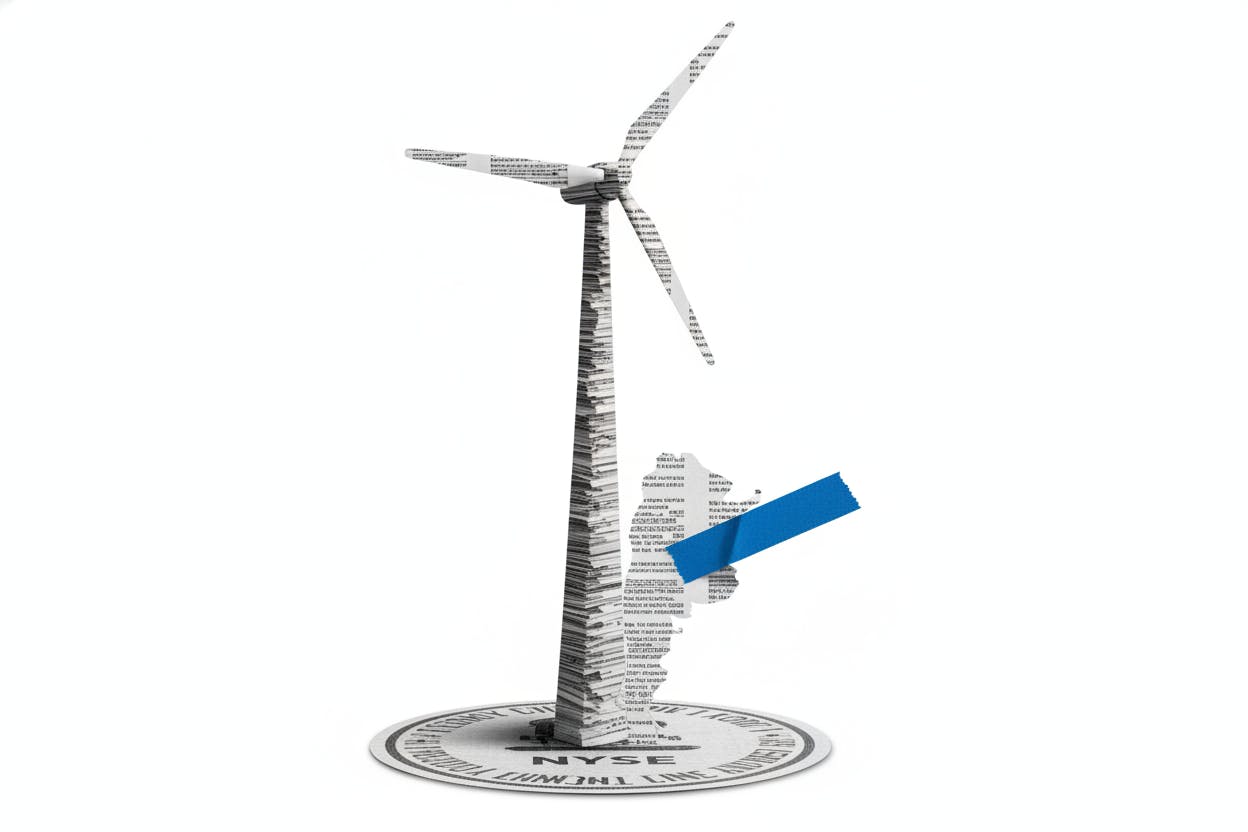
Argentine renewable power producer Genneia has taken a major step toward international capital markets, filing for a dual listing on the New York Stock Exchange and Argentina's Bolsas y Mercados Argentinos (BYMA). The company, which reported $361.3 million in revenue and $94.5 million in net profit for 2025, will trade under the ticker symbol GENN.
The filing includes both primary shares from the company and secondary shares from existing holders, a common structure in initial public offerings that allows early investors to cash out while the company raises fresh capital. Genneia's move to list in New York signals its ambition to tap deeper pools of global capital, particularly from investors focused on renewable energy and emerging markets.
From Gas to Green: Genneia's Transformation
Genneia, headquartered in Olivos, Argentina, has undergone a significant transformation since its founding in the 1990s. Originally a gas-focused energy business, the company has pivoted aggressively into renewables. Today, it operates 2,128 megawatts (MW) of installed capacity across wind, solar, and thermal generation. That shift mirrors a broader trend in the energy sector, where traditional fossil fuel companies are increasingly diversifying into cleaner sources to meet decarbonization goals and capture growing demand for renewable power.
The company's portfolio includes wind farms in Argentina's wind-rich Patagonia region and solar installations in the sun-drenched northwest. Thermal generation provides a backup for when the wind doesn't blow or the sun doesn't shine, a common hybrid model among renewable developers. This mix helps stabilize revenue and makes the company more attractive to risk-conscious investors.
Why a Dual Listing Matters
Dual listings are relatively rare but offer distinct advantages. Listing on the NYSE gives Genneia access to the world's largest and most liquid stock market, where renewable energy stocks often command higher valuations than in local markets. The Buenos Aires listing keeps the company accessible to domestic investors and may be required by Argentine regulations. The dual structure also provides a hedge against currency risk—a key consideration given Argentina's history of high inflation and peso volatility.
For everyday investors, a NYSE listing means easier access to trade Genneia shares through standard brokerage accounts, without needing to navigate Argentina's capital controls or currency restrictions. It also subjects the company to U.S. Securities and Exchange Commission (SEC) disclosure standards, which typically require more detailed financial reporting than local markets.
What It Means for Investors
Genneia's IPO arrives at a time of growing global appetite for renewable energy investments. Governments and corporations worldwide are committing to net-zero emissions targets, driving demand for wind, solar, and other clean power sources. Argentina, with its vast natural resources, is well-positioned to become a major renewable energy producer, though political and economic instability remain risks.
The company's financials show a profitable operation: $94.5 million in net profit on $361.3 million in revenue gives a net profit margin of about 26%, which is healthy for a utility-scale power producer. However, investors should consider the broader context. Argentina's economy faces persistent inflation, currency devaluation, and regulatory uncertainty, which could impact Genneia's future earnings and the value of its shares.
Genneia's move also reflects a wider trend of energy companies seeking public listings to fund expansion. For comparison, China Resources New Energy's shares nearly tripled in a record $3.4 billion IPO debut, highlighting strong investor demand for renewable energy stocks. Similarly, Chevron's Kilby Power deal with Microsoft shows how traditional energy giants are partnering with tech firms to power data centers with clean energy, a trend that could benefit renewable producers like Genneia.
Risks to Watch
Investors should keep an eye on several factors. First, Argentina's government policies on energy subsidies and tariffs can directly affect Genneia's revenue. Second, the company's reliance on thermal generation exposes it to natural gas price fluctuations. Third, currency risk is real: while Genneia reports in U.S. dollars, its costs and revenues are partly in Argentine pesos, which have depreciated sharply in recent years.
The IPO market for renewable energy has been mixed. While some listings have soared, others have struggled amid rising interest rates and competition from cheaper fossil fuels. Genneia's success will depend on its ability to execute its growth plans and navigate Argentina's challenging business environment.
Looking Ahead
The company has not yet set a price range or date for the IPO, but the filing is a clear signal of its intentions. For investors interested in emerging market renewables, Genneia offers a pure-play opportunity with a proven track record. However, as with any IPO, due diligence is essential. The prospectus will contain detailed risk factors and financial statements that should be carefully reviewed.
In the meantime, the broader energy sector continues to evolve. Aecon's consortium winning a C$4 billion Alberta gas plant deal and oil prices dipping while energy stocks hold steady both illustrate the complex dynamics at play. Genneia's dual listing could be a bellwether for other Latin American renewable companies considering international listings.