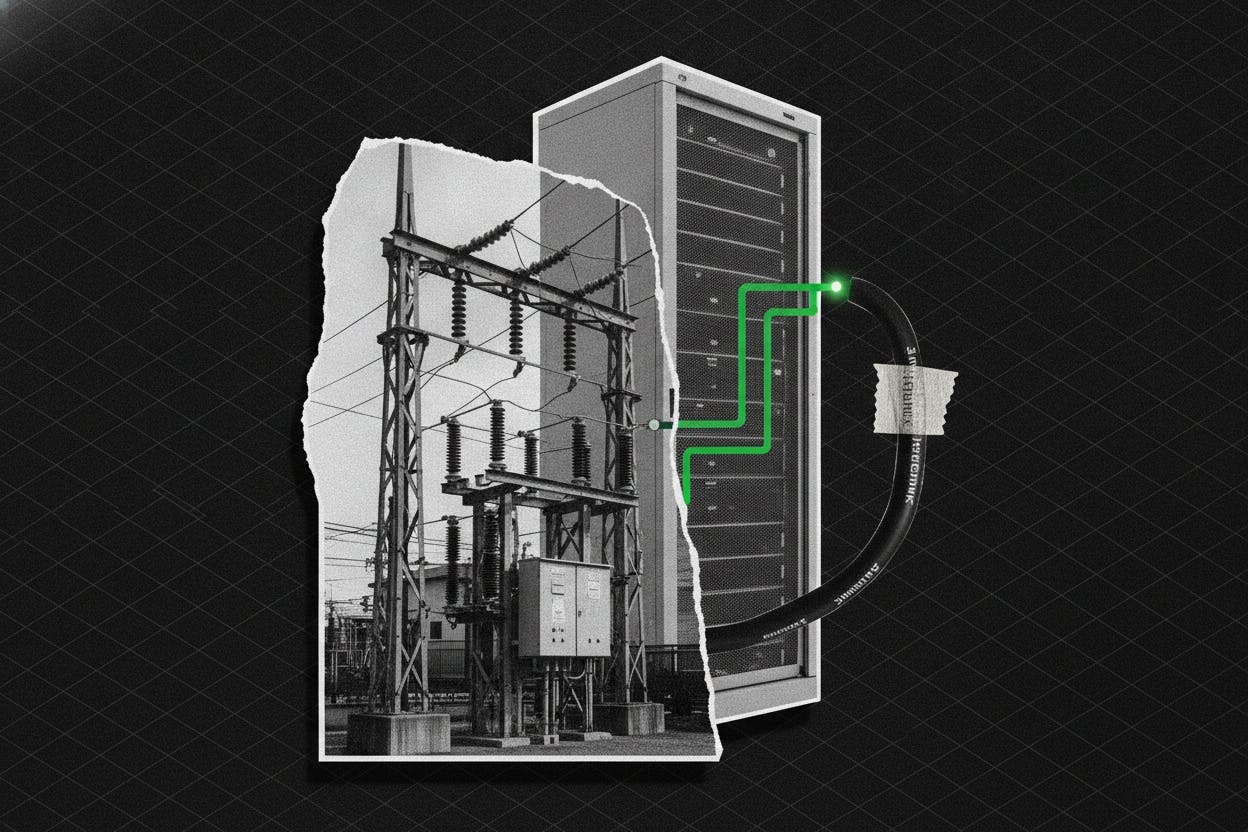
Aecon Group, a major Canadian construction and infrastructure company, announced that a consortium it belongs to has secured a C$4 billion contract to build a 932-megawatt (MW) natural gas-fired power plant in Sturgeon County, Alberta. The facility is designed to supply electricity to data centers, which are experiencing rapid growth in power consumption.
Aecon's portion of the contract is valued at approximately C$1.7 billion, and the company expects to add that amount to its backlog in the third quarter. The project underscores the increasing demand for reliable, large-scale power generation driven by the expansion of cloud computing, artificial intelligence, and other digital services.
What Is a Backlog and Why Does It Matter?
In the construction and infrastructure sector, a company's backlog represents the total value of contracts it has won but has not yet completed. It is a key indicator of future revenue and workload. When Aecon adds C$1.7 billion to its backlog, it signals that the company has a substantial pipeline of work ahead, which can provide visibility into earnings over the coming quarters and years.
For investors, a growing backlog often suggests that a company is winning new business and has a solid foundation for revenue growth. However, it is important to note that backlog figures are not guaranteed revenue—projects can be delayed, modified, or canceled. Still, large, long-term contracts like this one typically offer a high degree of certainty.
Why Data Centers Need More Power
Data centers are the physical facilities that house computer servers and networking equipment used to run websites, apps, and cloud services. They consume enormous amounts of electricity, both to power the servers and to cool the equipment. As more companies and consumers rely on digital services, and as technologies like artificial intelligence require ever more computing power, the demand for electricity from data centers is surging.
Natural gas plants are often chosen for their ability to provide steady, dispatchable power—meaning they can be turned on or off as needed—unlike renewable sources such as wind or solar, which are intermittent. This makes natural gas a popular choice for meeting the base-load and peak power needs of data centers, especially in regions like Alberta where natural gas is abundant.
The 932-MW capacity of this new plant is significant. To put it in perspective, one megawatt can power roughly 800 to 1,000 homes in the U.S., depending on the region and time of year. So this plant could theoretically supply electricity to nearly a million homes, though its primary purpose is to serve data center demand.
What It Means for Investors
For Aecon shareholders, this contract win is a positive development that strengthens the company's project pipeline and reinforces its position in the energy infrastructure market. The C$1.7 billion contribution to backlog will likely be closely watched by analysts as a driver of future revenue growth.
More broadly, the deal highlights a growing trend: the intersection of the technology and energy sectors. As data center operators race to secure power for their facilities, companies involved in building power plants, transmission lines, and related infrastructure stand to benefit. This includes not only construction firms like Aecon but also equipment suppliers, engineering companies, and natural gas producers.
Investors may also want to consider the regulatory and environmental context. Natural gas is a fossil fuel, and while it burns cleaner than coal, it still produces carbon emissions. In Canada, where there is a push toward net-zero emissions by 2050, large new gas plants could face scrutiny or require carbon capture technology. However, the immediate demand from data centers is so strong that many jurisdictions are approving new gas capacity as a bridge fuel.
For everyday investors, this story is a reminder that infrastructure spending often follows technological shifts. The rise of AI and cloud computing is not just a tech story—it has real-world implications for energy, construction, and materials sectors. Keeping an eye on such cross-sector trends can help identify opportunities beyond the obvious tech stocks.
Looking ahead, Aecon will report its third-quarter results later this year, and investors will be able to see the impact of this contract on the backlog and overall financial health. The company's ability to execute on large projects like this one will be key to maintaining investor confidence.
In related news, other infrastructure and energy deals are also making headlines. For example, Cumberland Farms has filed for a Nasdaq IPO, while Ultra Clean Holdings has seen a surge in optimism tied to chip-fab supplier demand. These stories, along with the Aecon contract, illustrate the diverse ways in which technology and infrastructure are converging.